

Key Takeaways
-
Doing SEO right means plastic surgeons can get more patients by being more visible, more authoritative, and more trustworthy online.
-
Rounding out your content strategy with educational content, testimonials, and case studies bolsters your authority and builds patient trust.
-
Reputation: Taking care of your reviews and responding to them in a timely fashion can differentiate your practice and increase trust.
-
Local SEO strategies, including Google Business Profile optimization and local citations, are key to targeting local patients.
-
Regular technical maintenance, such as rapid site speed, mobile-friendliness, and secure connections, keeps users happy and rankings high.
-
Tracking your SEO with analytics and periodic strategy reviews lets you optimize your strategy for sustainable growth and success.
SEO for plastic surgeons is the art and science of increasing the number one Google rankings of a plastic surgery clinic. Clinics that commit to powerful SEO can experience quantifiable increases in appointment conversions and online presence.
Today’s patients search for surgeons online, so having a well-optimized site establishes credibility and trust. In the following sections, we’ll explore actionable tactics specific to plastic surgery offices.
Why SEO for Plastic Surgeons?
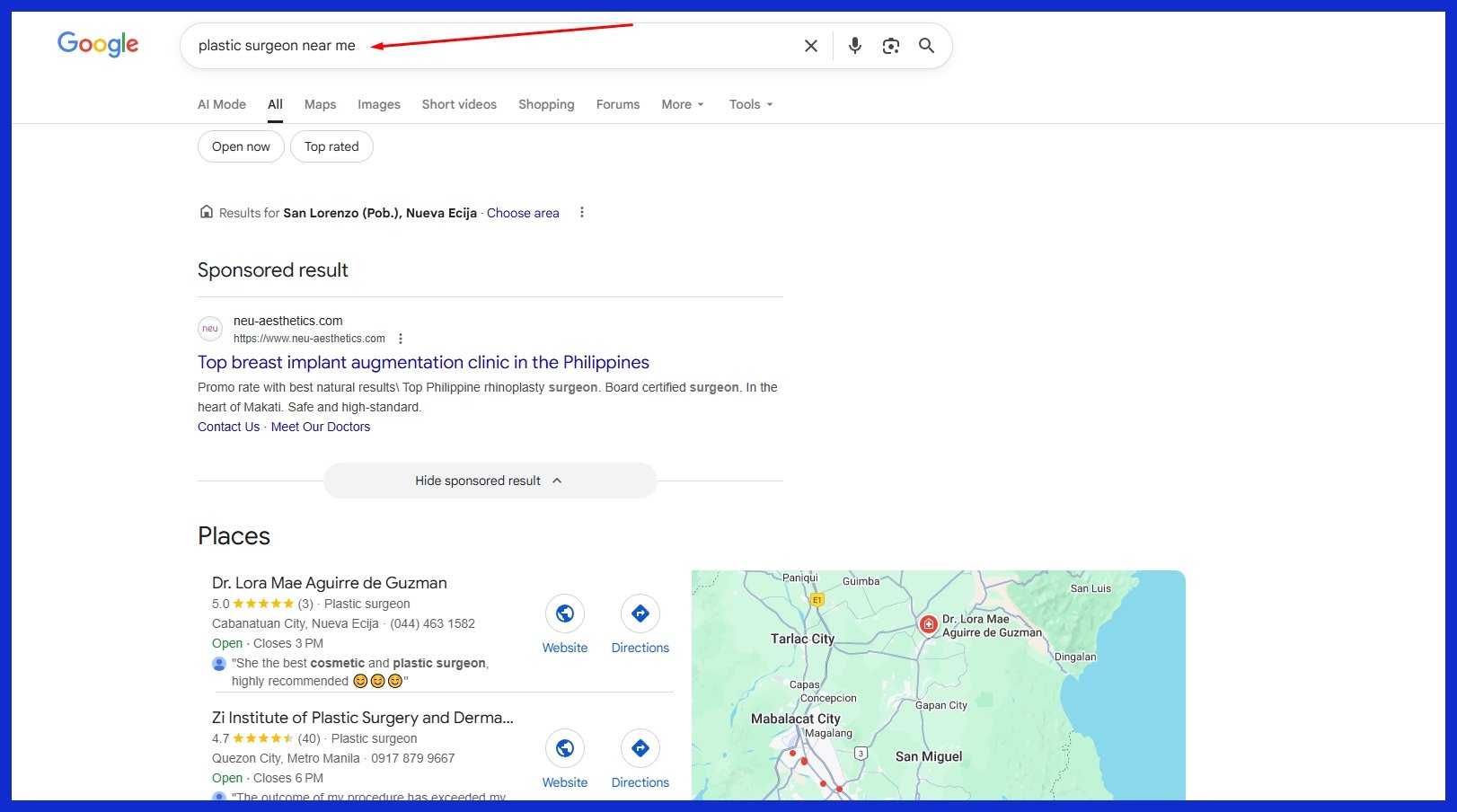
Why is plastic surgery SEO essential for plastic surgeons? In today’s digital landscape, a strong online presence is crucial. Patients often turn to the web first to find procedures like nasal reshaping or breast augmentation; thus, effective SEO strategies ensure that your practice is visible. This connection between your expertise and potential patients searching for services is key to attracting new clients.
1. Patient Acquisition
Keyword optimization is step one. Patients aren’t googling ‘plastic surgery.’ They’re googling stuff like ‘facelift in Toronto’ or ‘best liposuction surgeon near me.’ By aiming for these specific, high-intent keywords, you allow your practice to appear for people actively looking for your services.
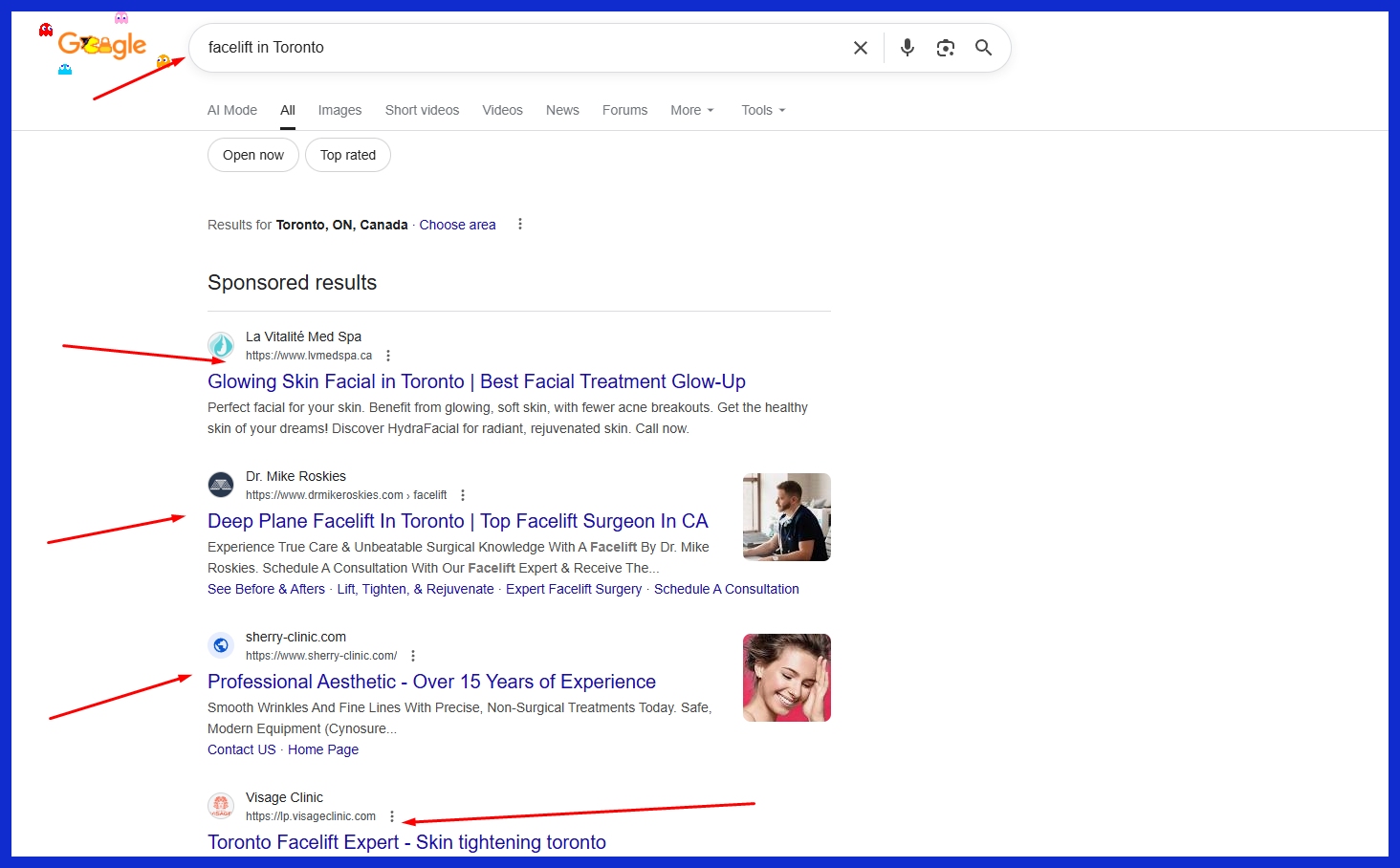
Local SEO is the lever that puts you on the map, figuratively. When someone searches for a procedure in their city or region, your practice has to appear in the local pack and Google Maps. Your Google Business Profile optimization, local reviews, and consistent business listings all help you reach patients locally.
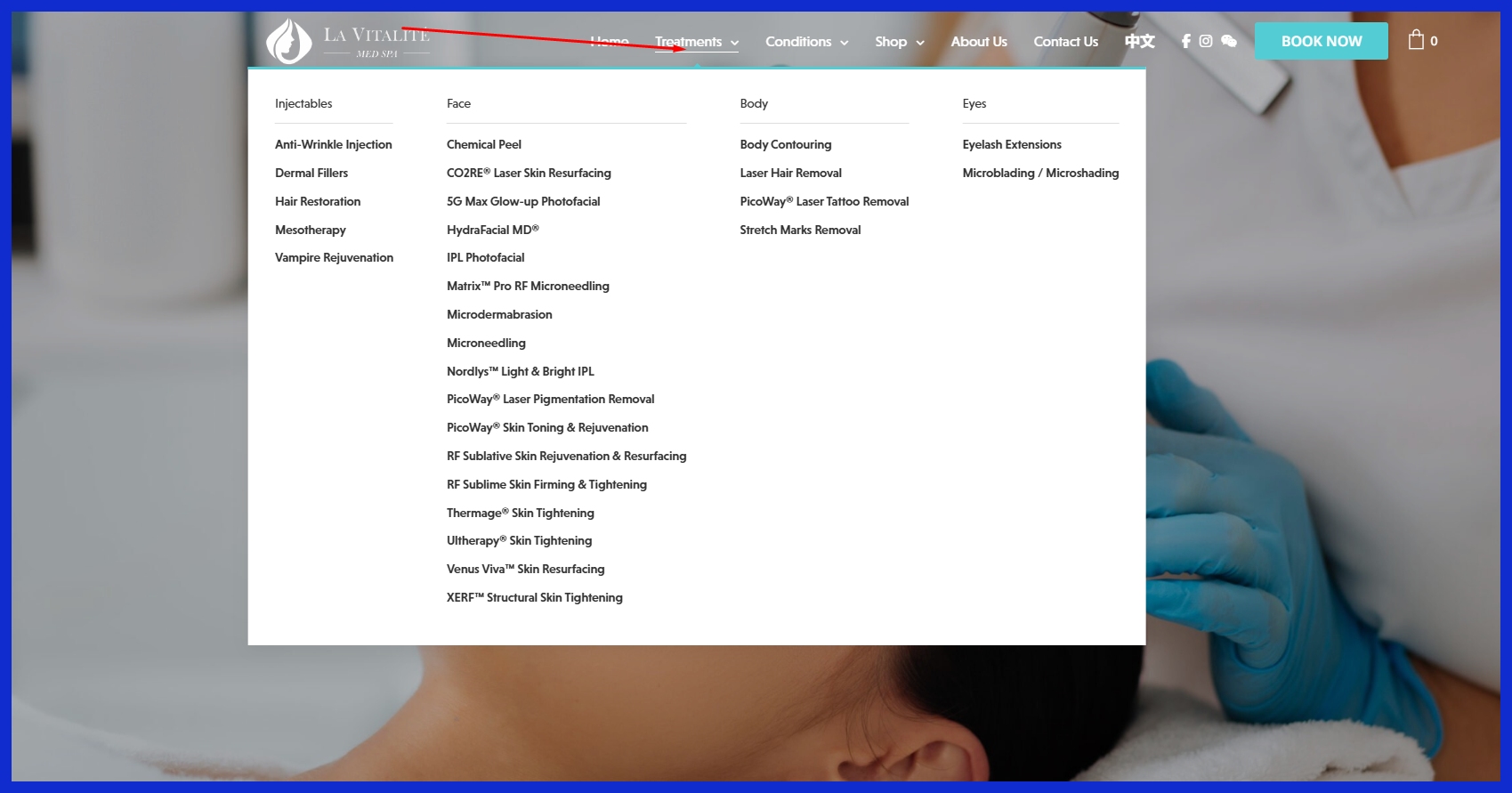
Specialized landing pages, each for a procedure, do the heavy lifting in transforming tentative visitors into actual leads. These pages can highlight before-and-afters, address FAQs, and facilitate consultation bookings.
Tracking inquiries, be it forms, calls, or chats, allows you to fine tune your strategy. Analytics complete the circle and reveal what keywords or pages are really attracting potential patients.
2. Authority Building
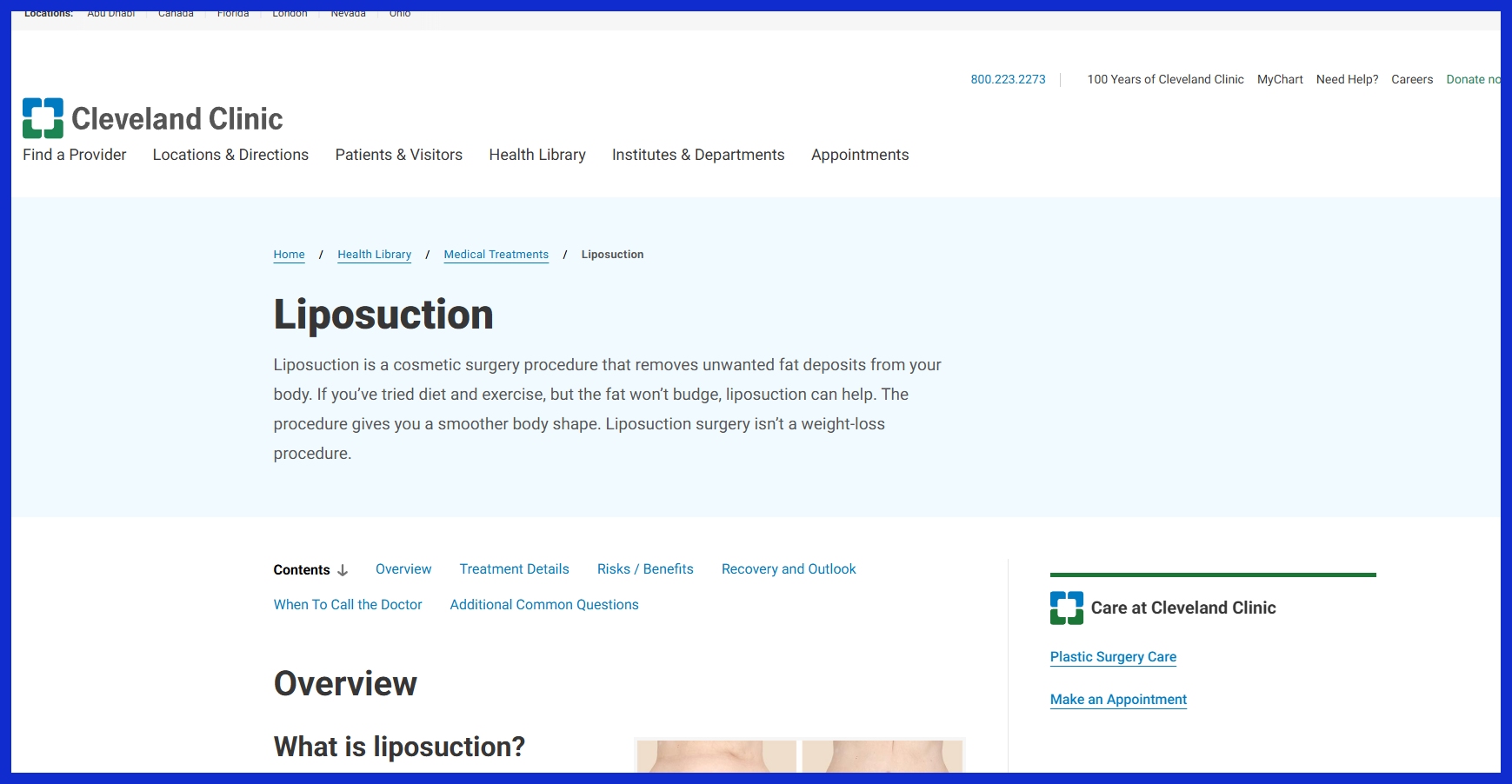
Informational content is your friend in this arena. Answering common questions such as “What does recovery from a tummy tuck look like?” or “Is non-surgical rhinoplasty safe?” demonstrates to potential patients that you are knowledgeable and care about their concerns.
Authority building doesn’t end with your website. Backlinks from respected medical directories, journals, or health news sites tell search engines and people that your expertise is trusted beyond your own borders.
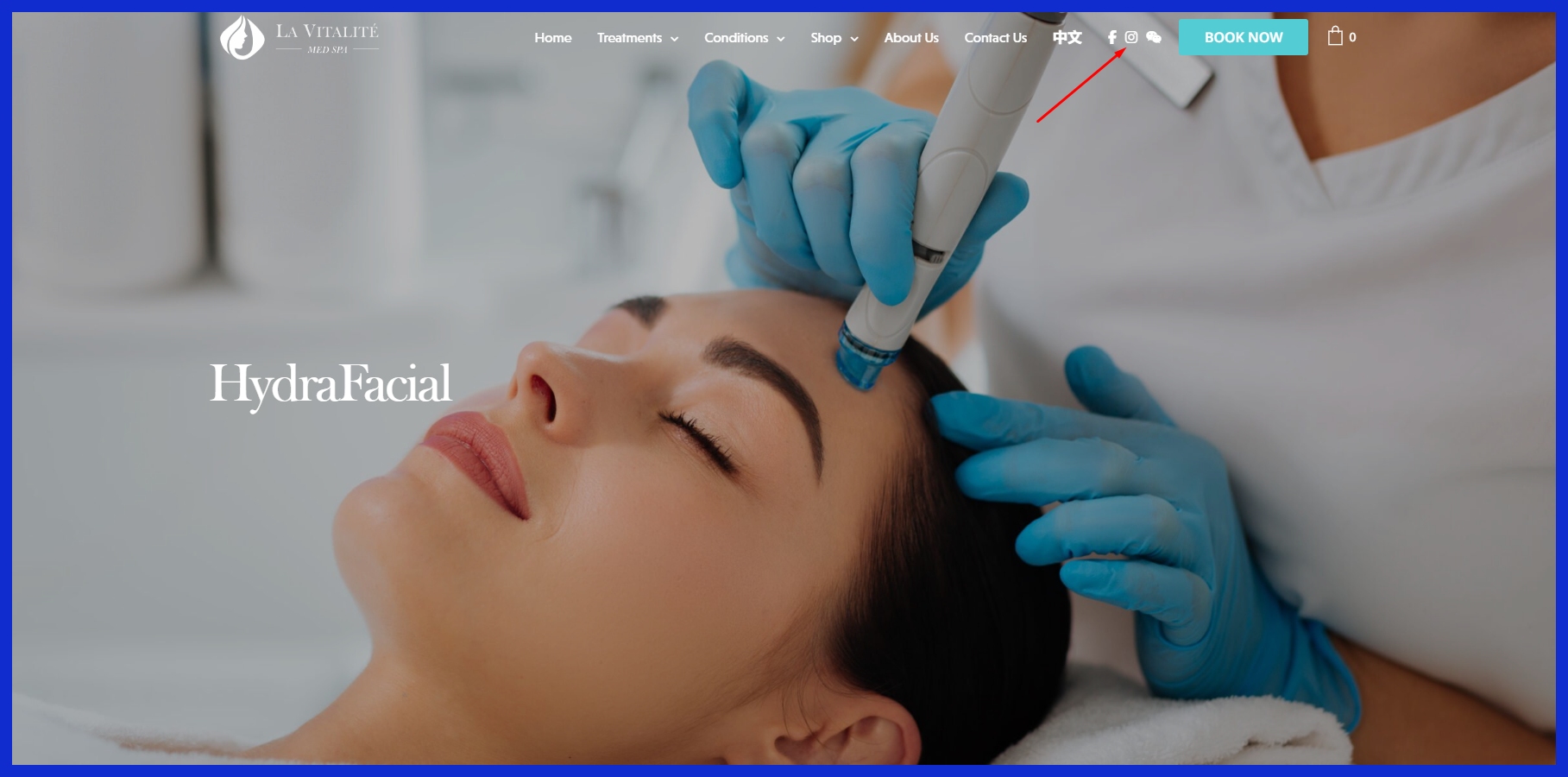
Social media is an incredible megaphone for your thought leadership. The best part is that by sharing articles, publishing case studies, and participating in professional forums, you reinforce your credibility and keep your practice top of mind.
3. Reputation Management
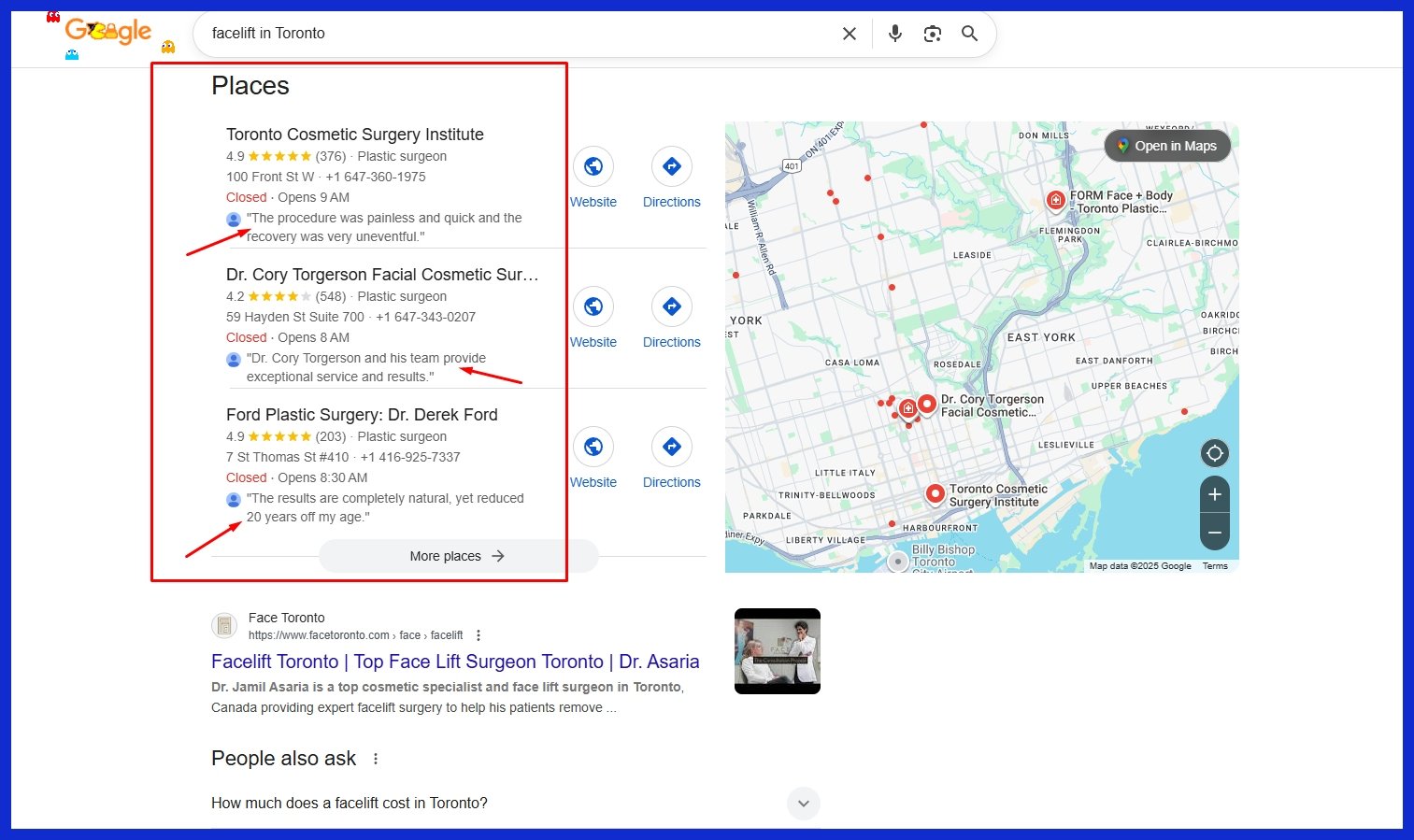
Review monitoring and response matters. Patients want to see a practice that’s active, engaged, and cares about feedback. Inviting delighted patients to write reviews increases your status and your rankings.
Bad reviews aren’t fatal; they’re a chance. Handling concerns professionally demonstrates your dedication to care for future patients. Displaying testimonials and success stories on your site creates even greater faith.
4. Competitive Edge
Looking at what the other surgeons are doing shows holes. Perhaps they’re not optimizing for “scarless facelift” or their mobile site loads slowly. Identify these vulnerabilities and transform them into advantages for your practice.
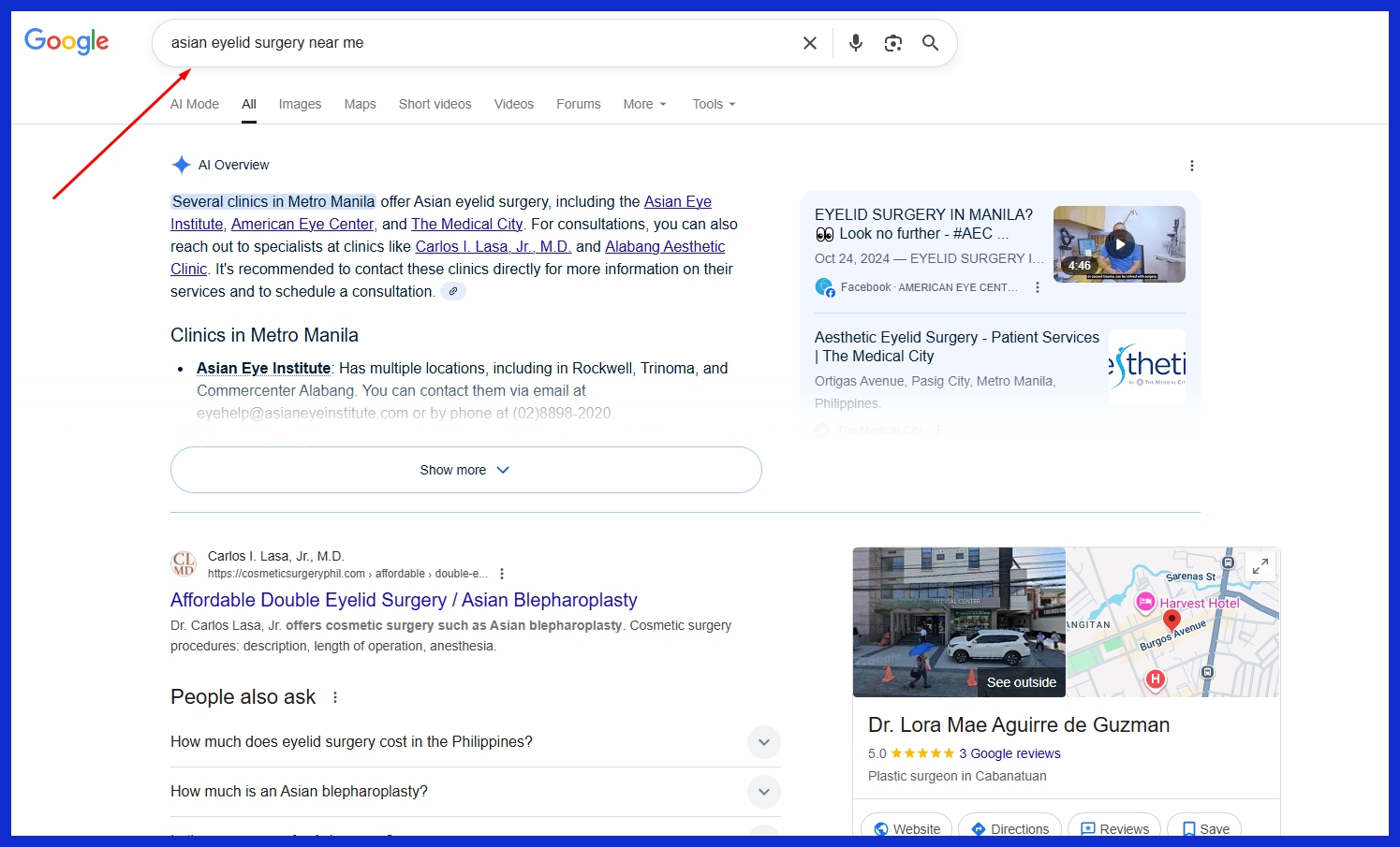
Specialized keywords distinguish you. Targeting “Asian eyelid surgery” or “male chest contouring” as examples will allow you to appeal to underserved markets. Keep your website experience fluid and fast so visitors linger longer than at your competitor’s.
SEO is not set in stone. Ongoing updates keep your strategy aligned with constantly shifting algorithms and market trends.
5. Cost Efficiency
Patient privacy is non-negotiable. Go crazy — within reason and respecting confidentiality when using before/afters or testimonials. Visuals—photos, videos, infographics—fuel engagement in this visual industry.
With competition fierce, emphasize your unique selling proposition, which includes board certification, years of experience, and advanced technology. SEO changes all the time, so keep flexible and your practice will stay visible and relevant.
Unique SEO Challenges
Plastic surgery SEO is a unique playing field where effective SEO strategies are crucial. Privacy, local trust, and visuals are as important as keyword rankings in the plastic surgery market.
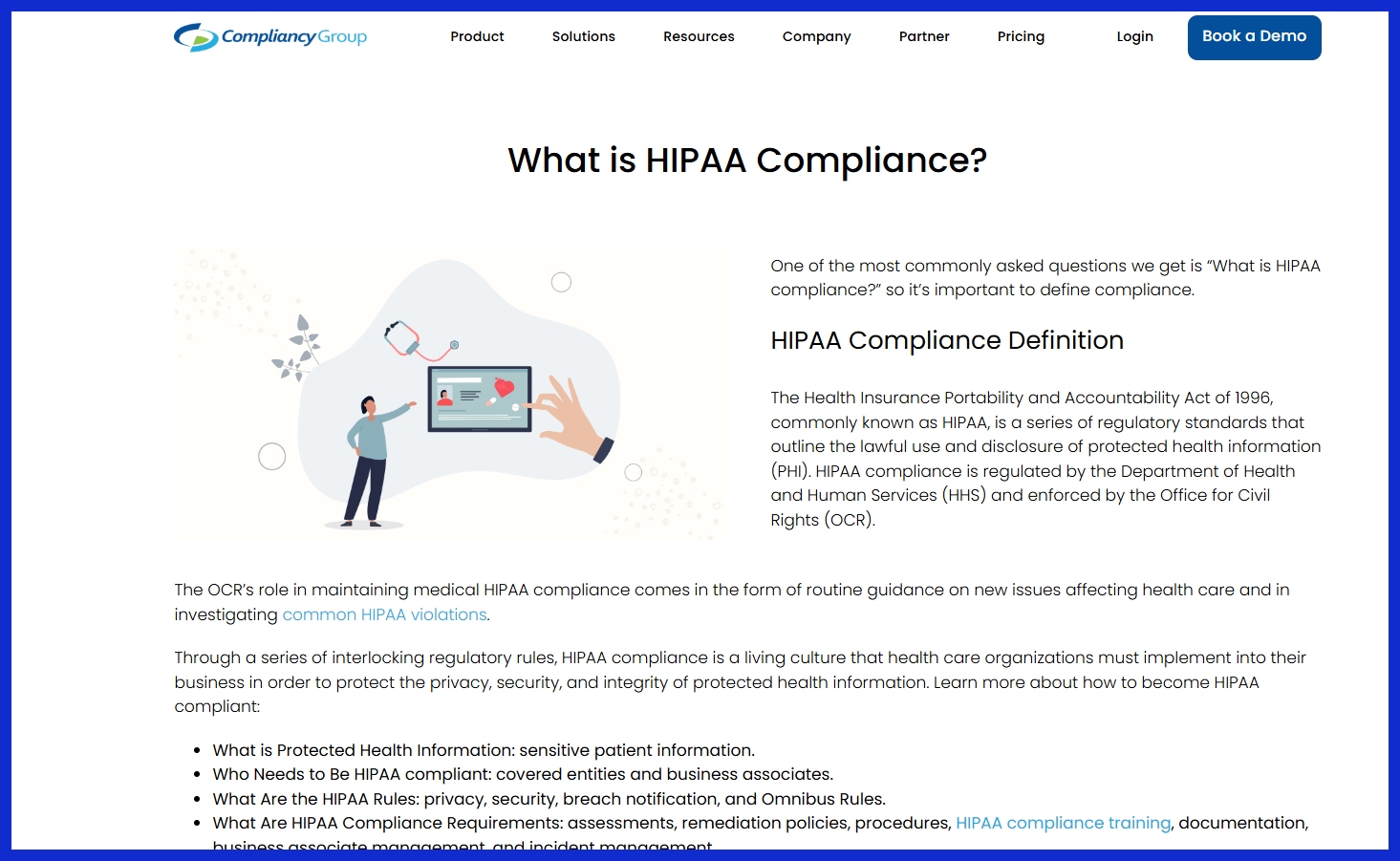
Factors like HIPAA compliance, ethical storytelling, and the need for original content require a different approach than what works for e-commerce or general healthcare. Surgeons must navigate legal issues while showcasing results and differentiating themselves in a field crowded with clinics and aggregators.
Patient Privacy
Patient privacy is paramount. HIPAA compliance rules the day, and every case study, testimonial, or before-and-after gallery must use only anonymized data—no names, faces, or identifying features without consent. Even then, best practice is to present results in a narrative-driven manner that doesn’t sacrifice patient identity.
Transparent privacy policies foster confidence, acting as more than simple legal jargon; they’re an indicator to visitors and search engines alike that your practice prioritizes discretion. Employees require frequent education on secure communication, handling data, and the ethical ‘gray areas’ of sharing patient stories online.
It’s not about checkboxes; it’s about creating a reputation of honesty.
Visual Content
In plastic surgery, images aren’t fluff—they’re evidence. Unique SEO Challenges Video—whether it’s a walkthrough of a procedure or patient FAQs—provides a human face to your practice and allays fears. Each photo you upload requires descriptive, keyword-rich alt text—that’s how search engines view your images and is critical for accessibility.
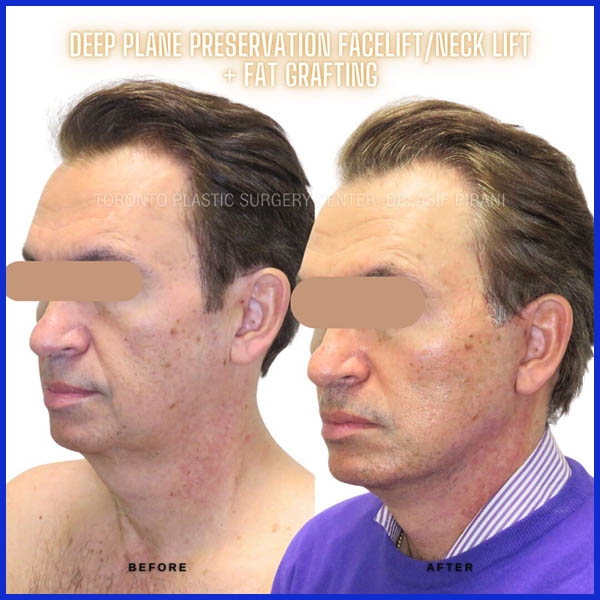
Infographics dissect medical speak into palatable, visual chunks, rendering even the most complicated procedures accessible. The above the fold portion of your site should have impactful visuals and headlines; this is your initial and best opportunity to persuade a visitor to stick around.
I know how tempting it is to use stock photos or resort to tired images, but genuine authenticity always prevails.
High Competition
Plastic surgeons are in a high-stakes, ultra-competitive SEO environment. Keyword research has to get more sophisticated than basic. Longtail, low-competition phrases such as “rhinoplasty for athletes” or “scarless facelift techniques” attract targeted traffic.
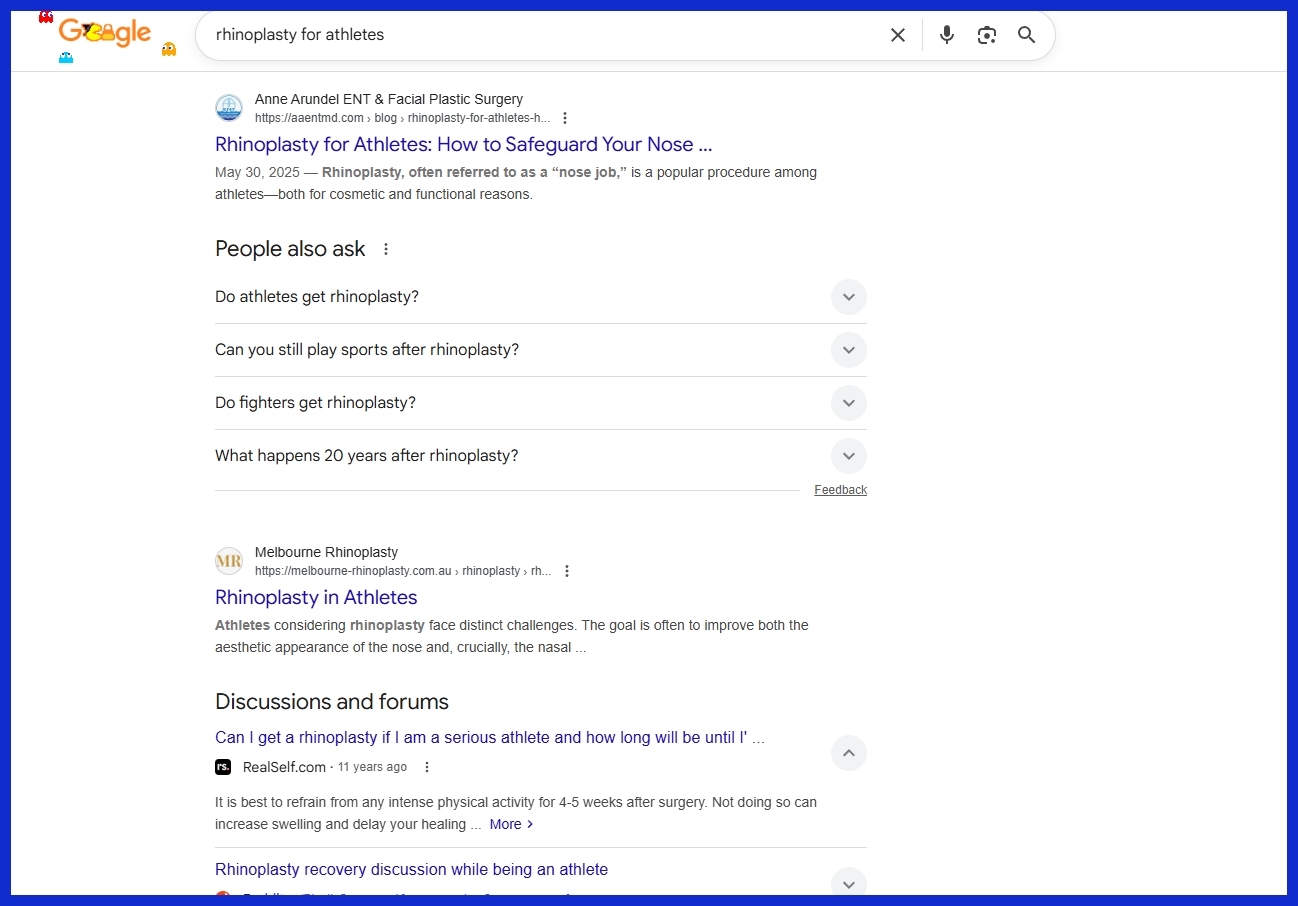
Whether it’s highlighting a unique procedure or simply using patient-friendly language, these little touches make your practice stand out from cookie-cutter sites. Local SEO is not about stuffing your city onto keywords; it’s about garnering reviews, appearing in map packs, and partnering with local businesses.
Keep an eye on their unique SEO challenges as well. Regularly analyzing competitors’ SEO moves lets you pivot when trends shift. Modern SEO isn’t just about optimizing individual terms; it’s about clustering related keywords across topic clusters, which is more difficult, but it’s what Google anticipates.
Technical and Content Hurdles
A seamless, responsive website is key. Mobile users are the default and if your site falters on a phone or tablet, you’re losing business. Technical SEO audits catch issues like slow page speed or broken links. These small things can quietly tank rankings.
Meta descriptions, headers, and structured data all help signal relevance to search engines. A content strategy that combines in-depth service pages, educational blog posts, and compelling above-the-fold content keeps users and algorithms happy.
Steer clear of old-school tricks like keyword stuffing or clickbait. These worked ten years ago, but now they get you penalized and disrespected. Metrics and strategies can all feel overwhelming, but your regular reports take the mystery out of numbers and make clear what’s actually working.
Crafting Your Digital Presence
A plastic surgeon’s digital presence isn’t simply an online brochure. It’s the cornerstone of trust, discoverability, and patient conversion. With 60% of searches occurring on mobile devices, your site must be responsive, blazingly fast, and beautiful.

Slow load times of more than 3 seconds can drive away 7% of possible patients and unsecured sites without HTTPS threaten patient data and your reputation. Structured data markup, beyond the basics, provides the clarity search engines crave. Broken links are a silent user-experience killer. Routine audits make the ride slick.
Technical Health
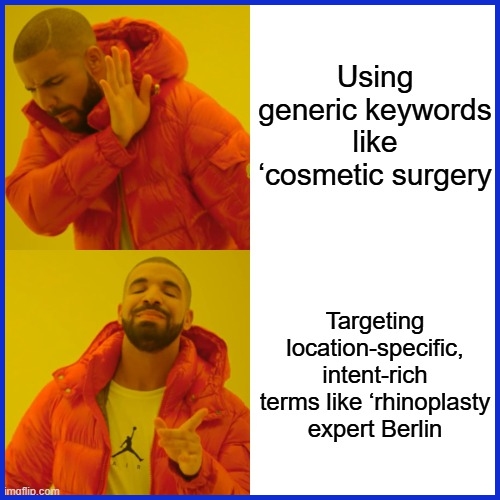
Title tags and meta descriptions are your online handshake in the plastic surgery market. Targeting with keywords, such as “rhinoplasty expert Berlin” instead of “cosmetic surgery,” attracts the right audience and provides higher click-through rates for your plastic surgery website. Headers (H1, H2, H3) disrupt dense text, allowing users and search engines to scan content efficiently, which is essential for effective SEO.
Internal links let visitors jump from “breast lift” to “recovery timelines” without friction, increasing both engagement and search engine rankings. Optimized images are key to a strong plastic surgeon marketing funnel. High-res before and after photos, scaled, compressed, and tagged with descriptive alt text, don’t just load fast; they pop up in image searches, drawing in new leads.
Broken links, unchecked, undercut credibility and create frustration. A routine crawl with link-check tools keeps things tidy and enhances your overall SEO strategy. This attention to detail can significantly impact your local search rankings and organic search engine results.
On-Page Elements
Educational blog posts unglamourize procedures, answer frequently asked patient questions, and keep your site updated. An article on “What to expect after eyelid surgery” can bring targeted visitors and lower pre-op anxiety.
Service pages should detail benefits, risks, and recovery times, assisting potential patients in making educated decisions. Nothing constructs credibility quite like real-world feedback and test cases. True stories with photos provide authenticity and engender confidence.
Your content should grow as your medical advances and patient interest evolve, and regular updates not only keep you ahead of the competition but in Google’s good graces.
Content Strategy
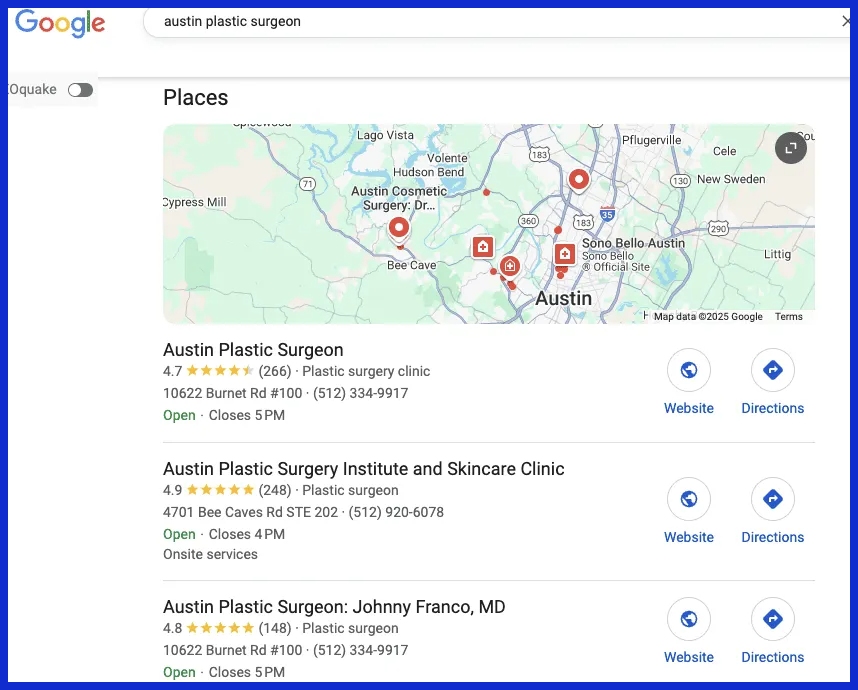
Your Google Business Profile optimized, local searches lead to booked consults because 46% of Google searches are local and 78% actually turn into real business. Consistent NAP details across directories and your site reinforce trust.
Local SEO landing pages, such as ‘chin augmentation Manhattan’ or ‘facelift consultations in Dubai,’ appeal to locality-specific traffic. Being out in the community at events and sponsorships demonstrates that you are more than a clinic.
You’re woven into the very fabric of your city. Social media, with its billions of users, amplifies your reach and builds touchpoints beyond your website. Rave reviews and reputation management finish off a digital presence that builds trust and converts.
Dominating Local Search
Local search is where plastic surgeons win or lose the poker game. Nearly 50% of consumers begin their search on the web, so appearing for local, intent-driven queries is a must. For plastic surgeons, what separates a booming practice from a silent phone is all about whether your clinic shows up at the right place at the right time—particularly on mobile, where more than 60% of local searches take place.
Ranking well for local search is more than just optimizing a few keywords. It is about establishing credibility, being informative, and making sure your online presence is representative of your practice.
Google Profile
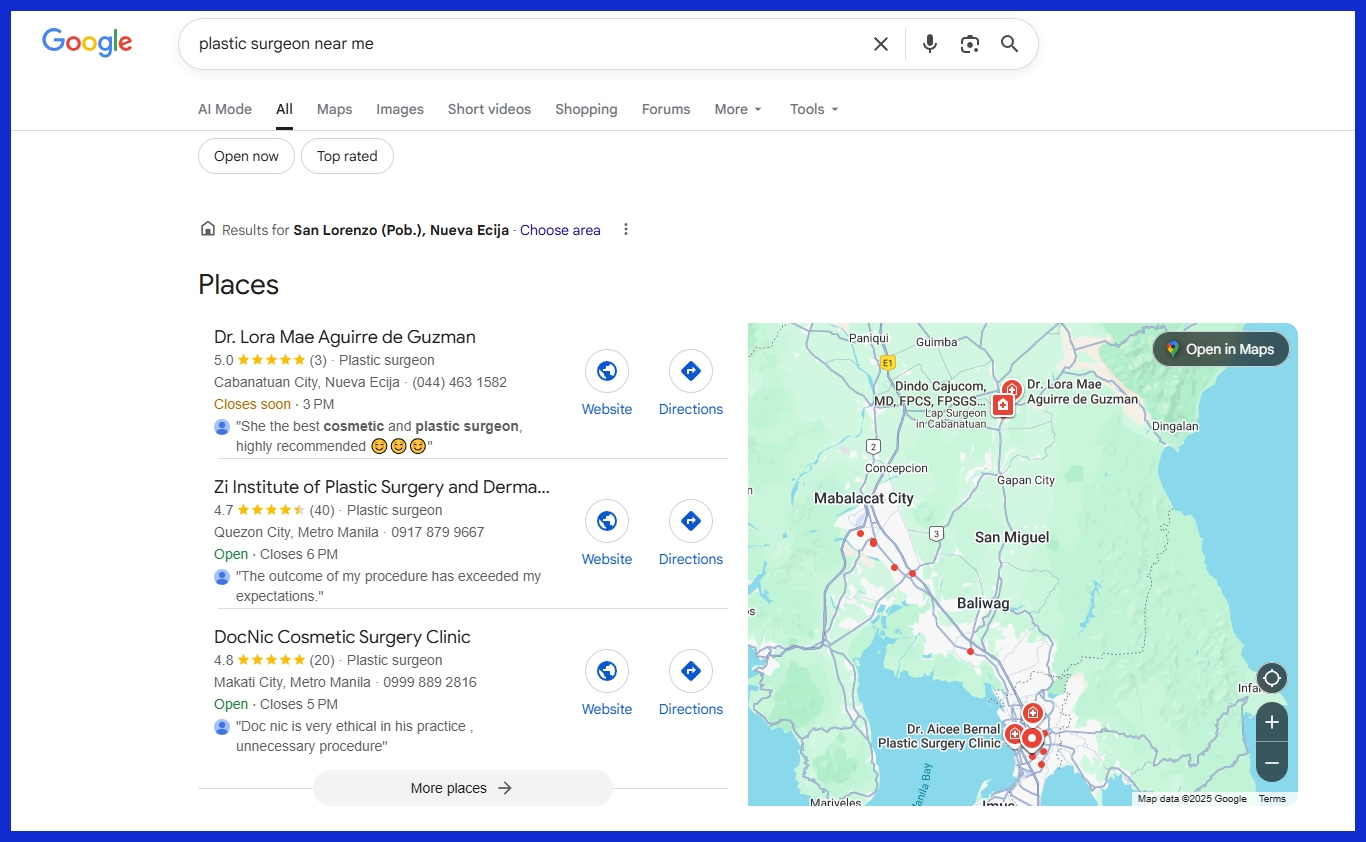
Your fully populated Google Business Profile is your clinic’s digital front door. Complete every segment—description, hours, services, and attributes—so Google’s algorithm knows precisely what you provide and when you’re open.
Upload professional photographs and videos of your facilities, before and after galleries, and staff to assist potential patients in visualizing their experience. Google loves fresh content, so give it by posting new procedures, promotions, or events often.
Patient reviews are gold—65% of consumers trust Google reviews as much as a friend’s recommendation—so inspire happy patients to post, preferably within 48 hours of their appointment. Replying to every review, good or bad, demonstrates you’re both paying attention and caring.
Local Citations
Listing your clinic on credible directories is one of the basics for local SEO. Consider Healthgrades, RealSelf, Zocdoc, Vitals, WebMD, and Yelp along with Bing Places.
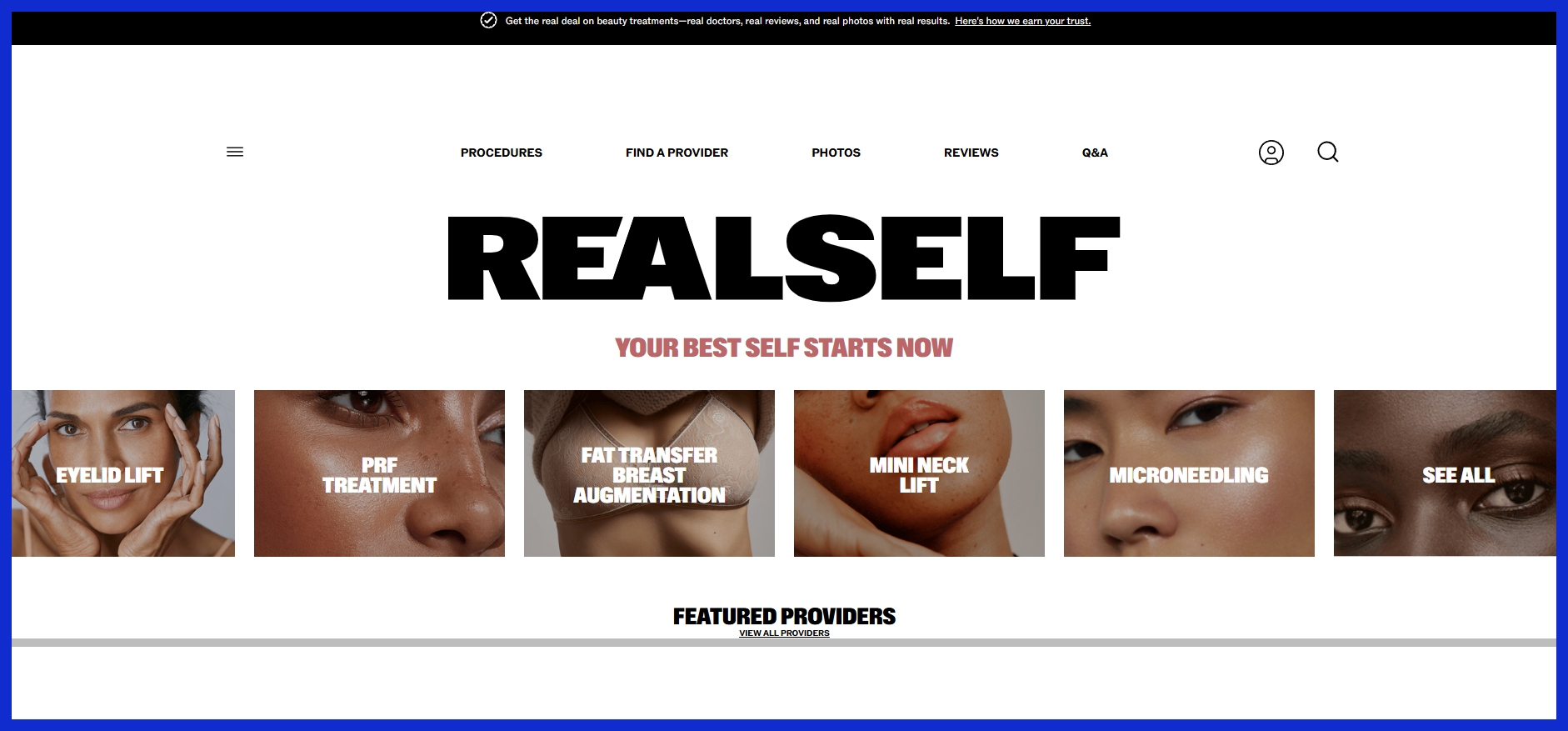
All citations must have consistent NAP information. A single typo can confuse Google and it can knock you down the rankings. Use citation management tools to monitor where you’re listed and correct inconsistencies fast.
Once you’re on these directories, don’t set and forget. Pull up your listings periodically and make sure they’re accurate and complete. Google pays close attention to citation quality as a ranking factor.
Patient Reviews
Establishing a formidable review profile isn’t simply vanity—it’s a conversion driver. Request feedback from patients following every appointment, preferably by email or text within 24 hours.
Feature your best reviews on your site and social media to demonstrate real-world impact. Employ review management software to simplify review gathering and reply.
Be sure to respond to the compliments and the complaints. These engaged responses showcase openness and concern, which generate goodwill among prospective patients who are reading every word.
Ethical SEO Practices
Honesty isn’t only moral; it’s useful. Have good expectations for how long SEO takes to improve, particularly in competitive markets.
Stay away from hype and bogus promises, as claiming ‘overnight results’ simply damages credibility. Train your team on what ethical local SEO should be so your messaging remains consistent across each interaction.
Patients can sniff out phony marketing a mile away, so keep it authentic from your website copy to your face-to-face consults.
Conclusion
SEO for plastic surgeons is a long game, not a quick fix. Every single clinic – solo or team – confronts a crowded field and lofty patient expectations. Getting found online takes more than a pretty site or a handful of keywords; it is about establishing trust, maintaining presence, and demonstrating expertise in an ethical framework with rigid rules. It is not always glamorous work, but consistent effort generates actual outcomes.
With the right strategy and using tools like SERPninja, getting in front of the local patients who appreciate your skills is a lot more achievable. Pulling all the pieces into place, plastic surgeons smart enough to invest in smart SEO keep their phones ringing and calendars booked, poised to create long-term success in an increasingly digital-first world.
Frequently Asked Questions
What is SEO for plastic surgeons?
SEO for plastic surgeons is the process of improving a plastic surgery website’s visibility on search engines. Effective SEO drives patient traffic by ranking more prominently for relevant keywords.
Why is local SEO important for plastic surgeons?
Local SEO is crucial for effective plastic surgery marketing, helping plastic surgeons get found by potential patients searching nearby, resulting in more local leads and appointment requests.
How long does it take to see SEO results for a plastic surgery clinic?
Most plastic surgery practices experience SEO results within three to six months due to effective SEO strategies, site quality, and continual optimization.
What are common SEO challenges in the plastic surgery field?
Specific difficulties in plastic surgery marketing include advertising restrictions, intense competition, and the requirement for medically accurate information, where trust and credibility are crucial.
How can plastic surgeons measure SEO success?
Plastic surgeons can track plastic surgery SEO success by monitoring website traffic, new patient inquiries, and keyword rankings.
Are there ethical concerns in SEO for plastic surgeons?
Yes, honest plastic surgery SEO doesn’t use false claims, instilling patient confidence and complying with medical ad regulations.
What type of content works best for plastic surgery SEO?
Informative blog posts and patient reviews enhance content marketing for plastic surgery practices, boosting SEO and attracting new patients.


