


Key Takeaways
- Retrieval augmented generation (RAG) is the two-step process behind many AI search answers: first retrieve relevant web pages, then generate an answer using those sources.
- Ranking #1 in traditional search helps, but it does not guarantee your page will be retrieved, used, or cited by AI systems.
- AI search rewards semantic relevance, clear entities, complete topical coverage, and easily extractable facts—not keyword repetition.
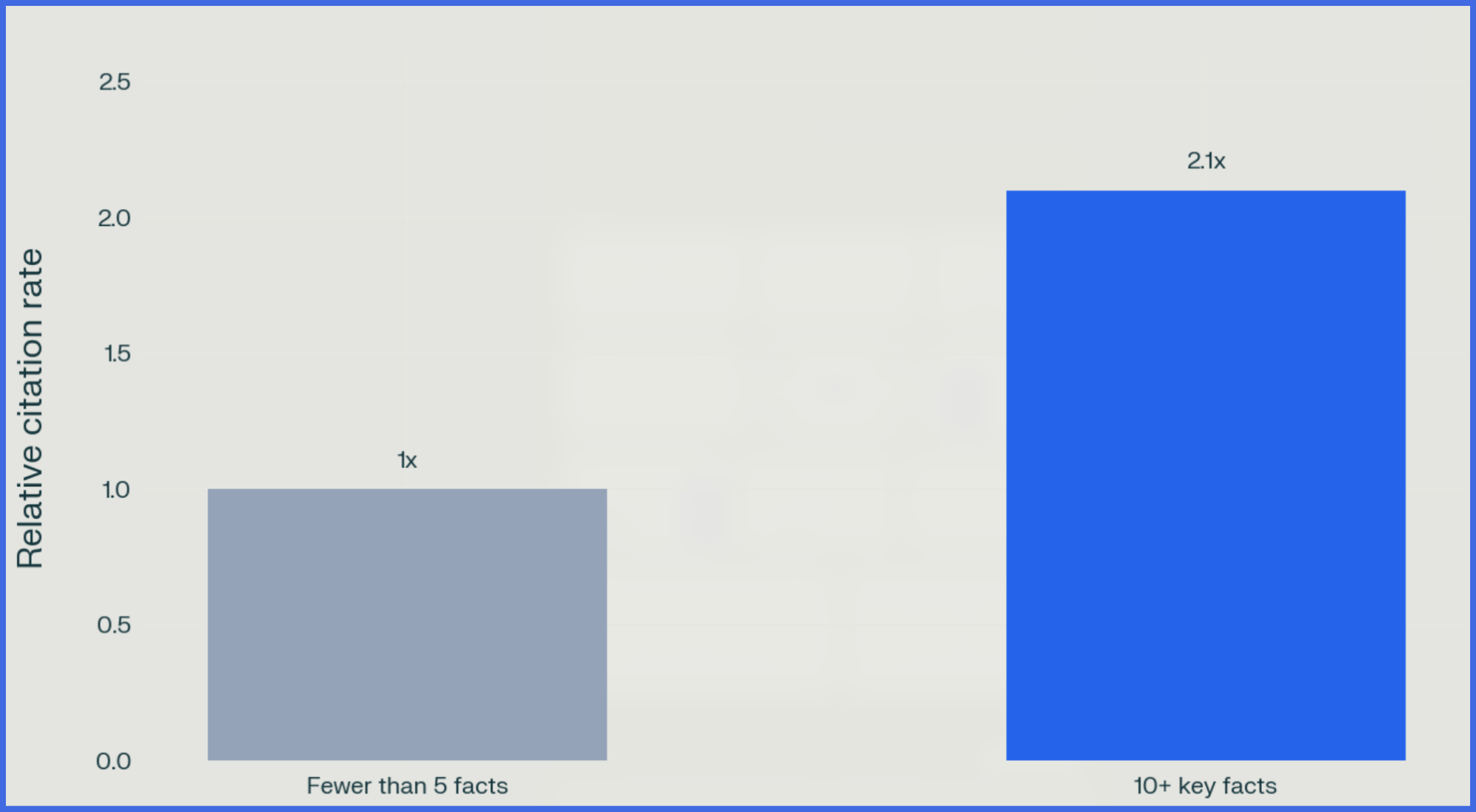
- Research on more than 57,000 URLs found cited pages had 31% fact coverage versus 24% for non-cited pages; pages with 10+ key facts were cited at more than double the rate of pages with fewer than five.
- Different AI platforms can retrieve different sources for the same question, so brands need strong content and strong domain trust.
- SERPninja helps build the off-page authority that can make your fact-rich pages the ones AI engines retrieve and cite.
For years, SEO had a simple goal: rank #1.
If you reached the top of Google, you won attention, clicks, and leads. But AI search has changed the game. Today, a user may never scroll through ten blue links. They may ask ChatGPT, Perplexity, Gemini, or Google AI Overviews a question—and receive one summarized answer with only a handful of sources.
That creates a new problem.
Your page can rank well in traditional search and still be ignored by an AI answer. Why? Because many AI systems use retrieval augmented generation, or RAG. They do not simply generate an answer from memory. They first retrieve relevant pages, then use those pages to create a grounded response.
So the new visibility question is no longer just:
“Can I rank #1?”
It is:
“Will AI retrieve my page, trust my facts, and cite me in the answer?”
Let’s break down how that works—and what you need to do about it.
The Two-Step AI Search Process: What Is RAG?
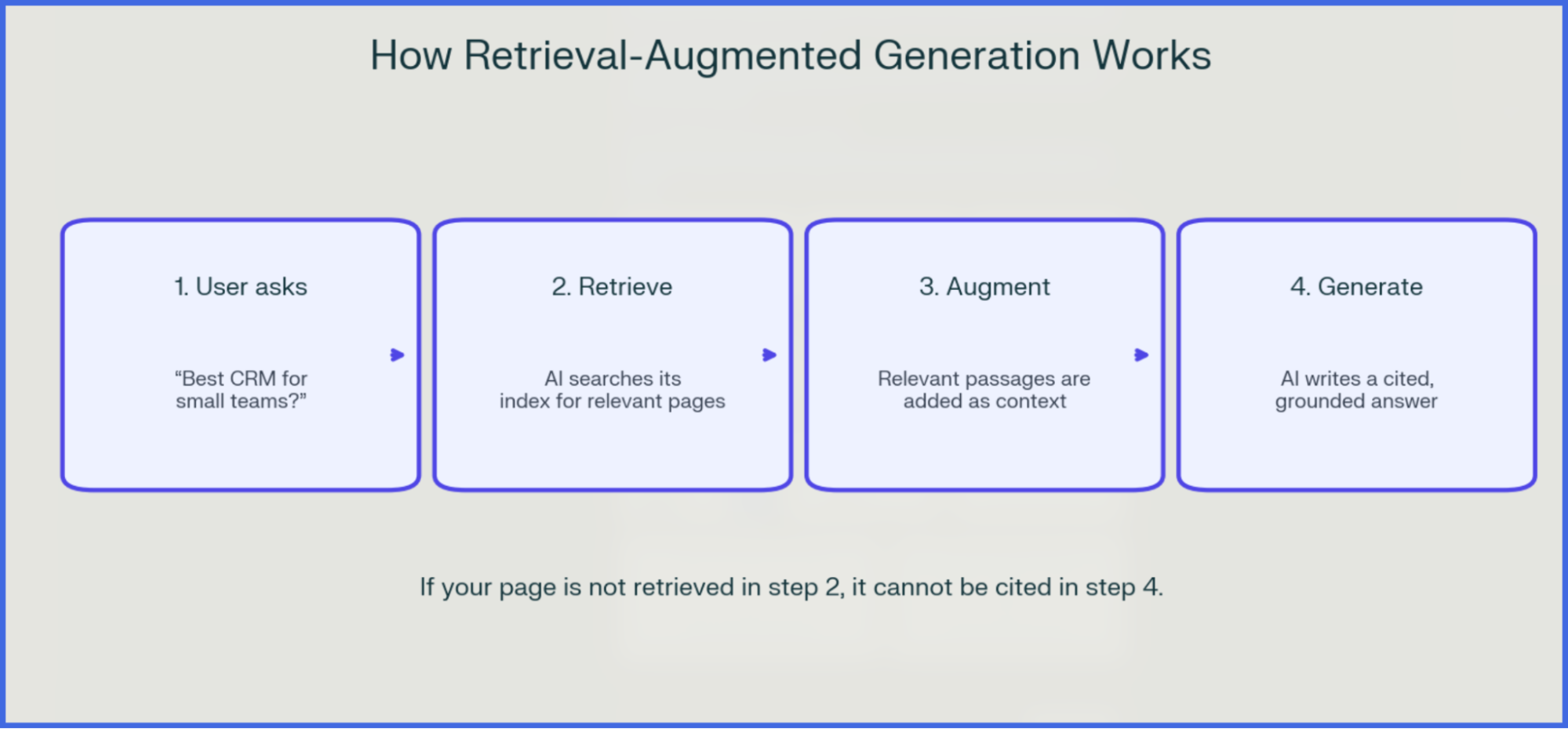
Retrieval augmented generation sounds technical, but the idea is simple.
Imagine you ask an AI assistant: “What are the best CRM tools for small businesses?”
The AI does not only rely on what it learned during training. It searches for current, relevant information, pulls useful passages from those sources, and then writes an answer based on that material.
Google describes RAG as a technique that improves the quality, accuracy, and freshness of AI responses by retrieving relevant, up-to-date web pages from its Search index. Its systems then review information from those pages to generate a response and show links to the sources that support it.
The process usually looks like this:
- A user asks a question.
- The AI retrieves relevant pages or passages from its index or knowledge sources.
- It augments the prompt by adding those retrieved passages as context.
- The model generates an answer grounded in that retrieved information.
- It may cite the sources it used.
This is the harsh reality of AI search:
- In traditional SEO, you compete to rank.
- In AI search, you first compete to be retrieved.
- If your page is not retrieved, it cannot be used in the answer.
- If it is not used, it cannot be cited.
Google’s AI Overviews use RAG capabilities to access up-to-date information and search the web before generating responses. That means your visibility now depends on more than a strong position in the classic search results.
The Death of Keyword Density
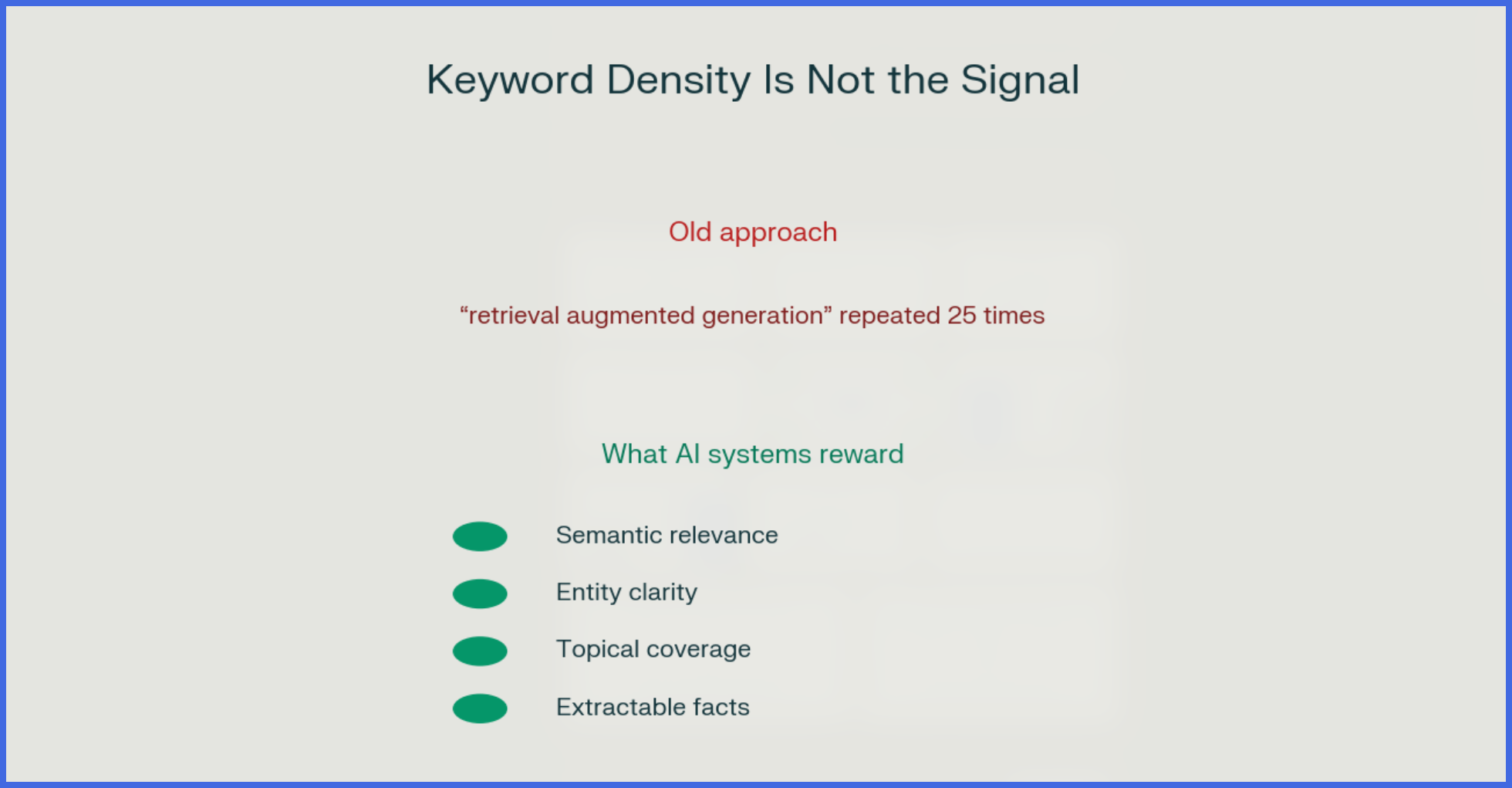
Old-school SEO often focused on repeating a target keyword enough times. You may remember advice like “use your keyword in the title, first paragraph, headings, and throughout the article.”
That approach is no longer enough.
RAG systems are looking for meaning, not repetition. They want to understand whether your page actually answers the user’s question and whether it contains useful, specific information.
Semantic relevance
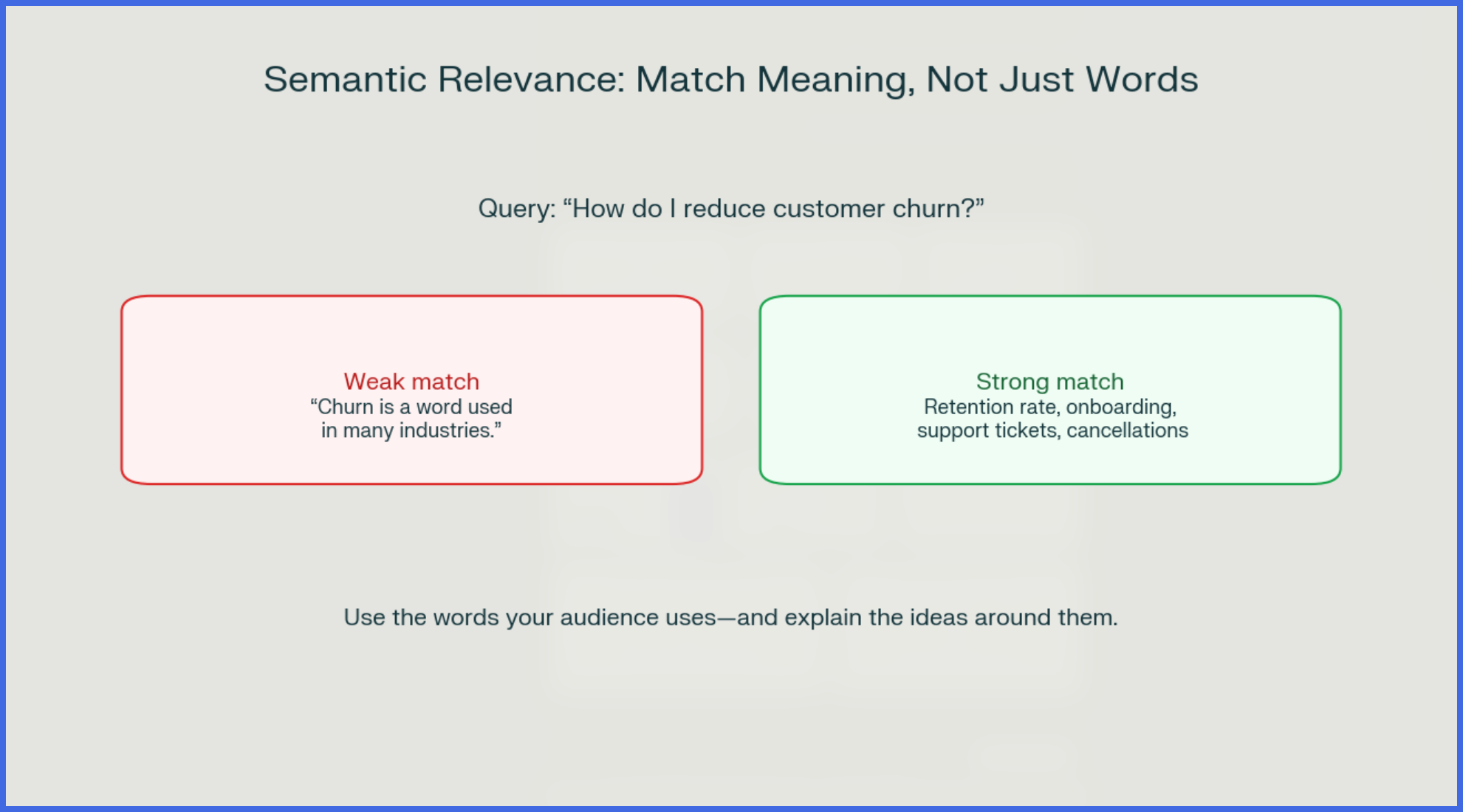
Semantic relevance means your content matches the meaning behind a search, not just the exact words.
For example, someone searching “how do I reduce customer churn?” may also be interested in:
- Customer retention strategies
- Onboarding improvements
- Support response times
- Subscription cancellations
- Customer success workflows
A page that only repeats “customer churn” without explaining these connected ideas is less useful than a page that covers the full topic.
Entity clarity
Entities are the people, places, products, companies, concepts, and categories that AI systems can recognize.
If you write about “Project management software,” make it clear:
- What type of software it is
- Who it is for
- What problems it solves
- Which features matter
- How it compares with alternatives
Clear entities help AI understand your page faster. Vague writing forces the system to guess.
Topical coverage
Topical coverage means answering the question completely.
If someone asks, “How does solar power work?”, a strong page may explain:
- How solar panels capture sunlight
- How inverters convert the energy
- How homes use the electricity
- What happens during cloudy weather
- Cost, maintenance, and battery-storage considerations
You do not need to cover everything on one page. But your page should answer its specific promise thoroughly.
The Hard Data on AI Citations
Here is where the strategy becomes concrete.
A recent study analyzed more than 57,000 URLs to understand what influences AI citations. The findings point to one major theme: AI systems favor pages with dense, structured, extractable facts.
Cited pages contain more usable facts
According to the study:
- Cited pages had 31% fact coverage.
- Non-cited pages had 24% fact coverage.
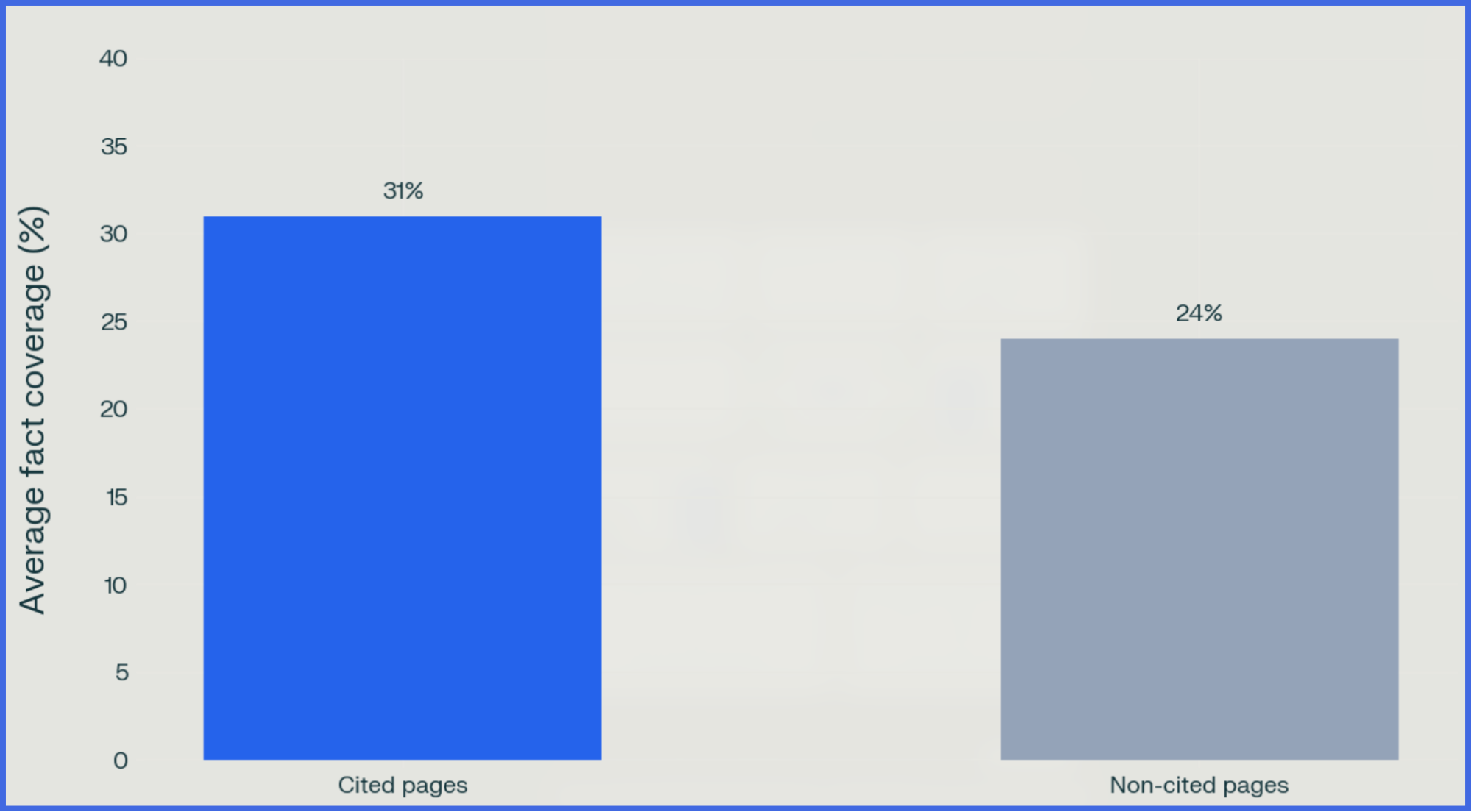
That seven-point difference may sound small, but across thousands of pages it is meaningful. AI systems need information they can lift, verify, and reuse in an answer.
More facts means more citations
The study also found that pages with 10 or more key facts were cited at more than double the rate of pages with fewer than five facts.
Think about what that means in practice.
A vague article might say:
“Email marketing can help businesses increase revenue.”
A fact-rich article might say:
“Email marketing can support revenue growth through segmented campaigns, automated welcome sequences, cart-recovery emails, and post-purchase follow-ups. Businesses often measure success through open rate, click-through rate, conversion rate, and revenue per email.”
The second version gives an AI system clear, reusable pieces of information.
Frequently reused sources are fact-dense
The research also found that the most frequently reused sources showed nearly 2x higher fact coverage than pages that were never cited.
This does not mean you should stuff your page with random statistics. It means you should include facts that genuinely help the reader:
- Definitions
- Comparisons
- Step-by-step processes
- Pricing ranges
- Research findings
- Practical examples
- Pros and cons
- Common mistakes
- Clear recommendations
The new SEO signal is not “Did I use the keyword enough?” It is: “Did I give the AI something useful and specific to extract?”
The Multi-Platform Problem
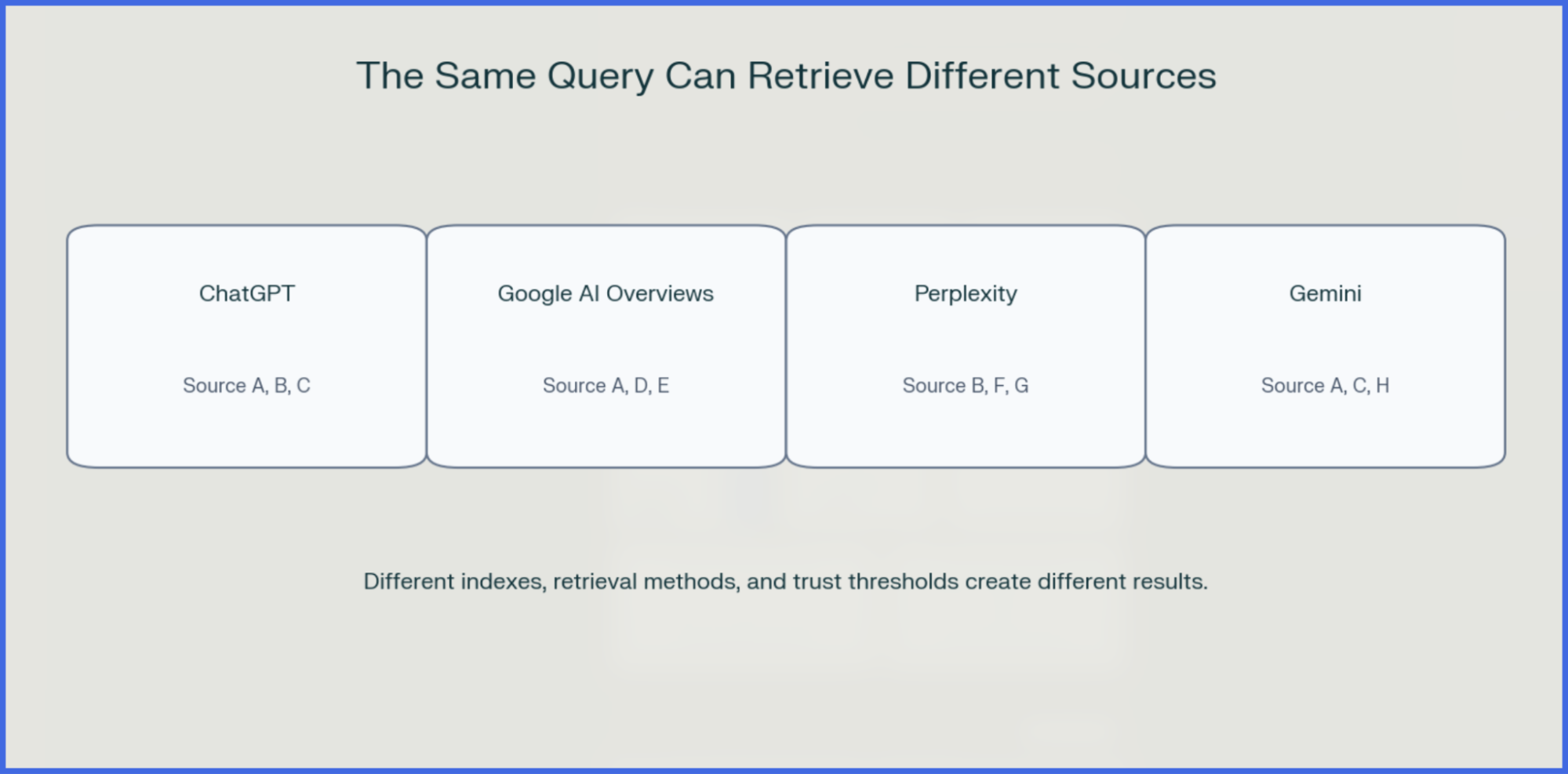
Here is another challenge: AI platforms do not always retrieve the same sources.
A page cited by ChatGPT for one query might be ignored by Perplexity, Gemini, or Google AI Overviews for the same question.
Why does this happen?
- Each platform uses different indexes and data sources.
- Each has its own retrieval method.
- Each weighs freshness, relevance, authority, and trust differently.
- Each may break a question into smaller sub-questions before retrieving information.
Google, for example, explains that AI features rely on its core Search ranking systems to retrieve relevant pages before generating a response. Other AI tools may combine web search, their own indexes, partner data, and user context in different ways.
So there is no single, guaranteed “AI SEO checklist” that works identically everywhere.
But there is a common denominator: trust.
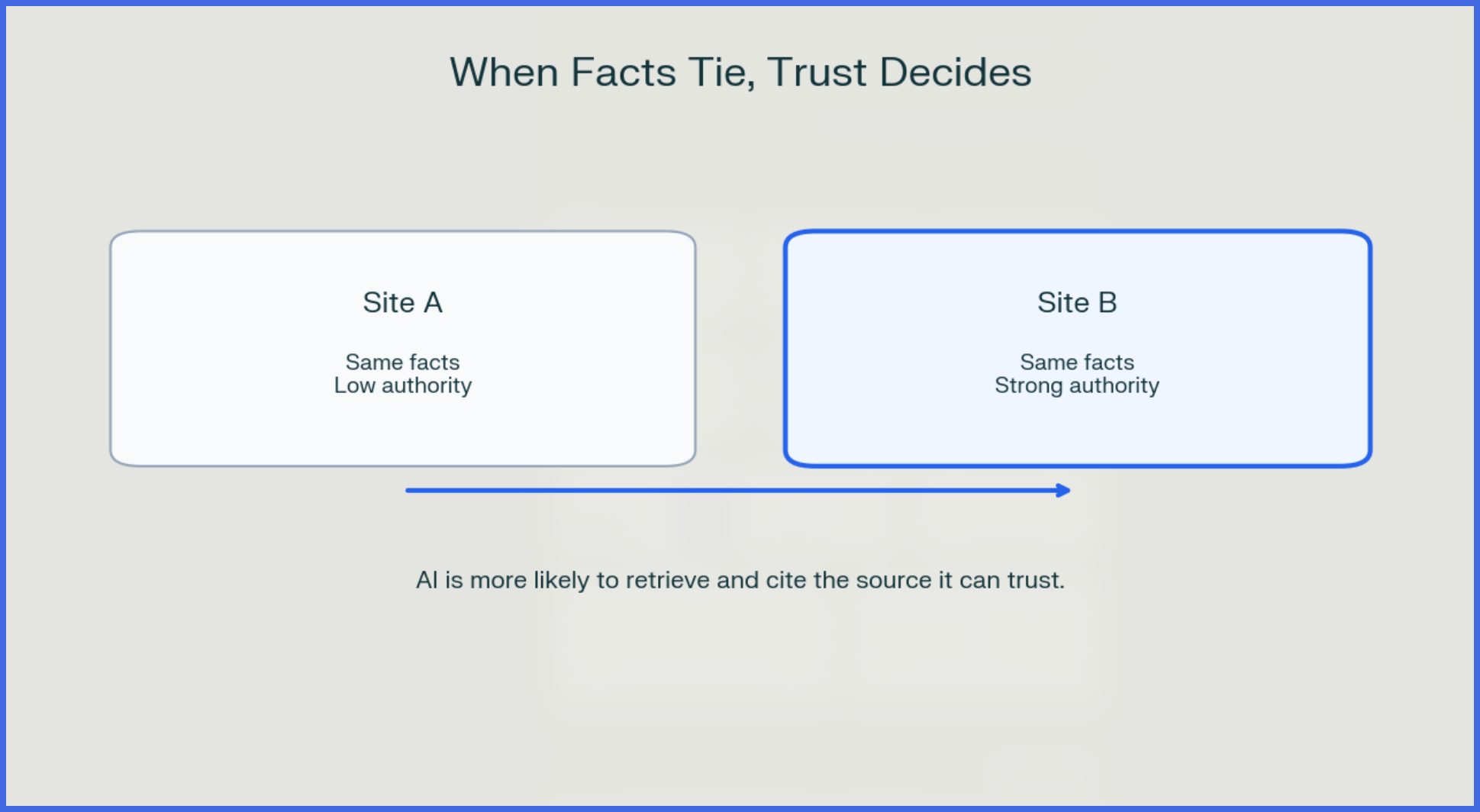
When multiple pages contain similar facts, the AI system needs a tie-breaker. It asks, in effect: “Which source is more reliable?” That is where your domain’s overall reputation becomes critical.
The Trust Tie-Breaker: Build Authority With SERPninja
Let’s say you have done the content work well.
Your page clearly answers the question. It includes definitions, examples, comparisons, statistics, and practical steps. It has 10+ extractable facts. It is structured with headings and written for humans.
That is excellent—but it may still not be enough.
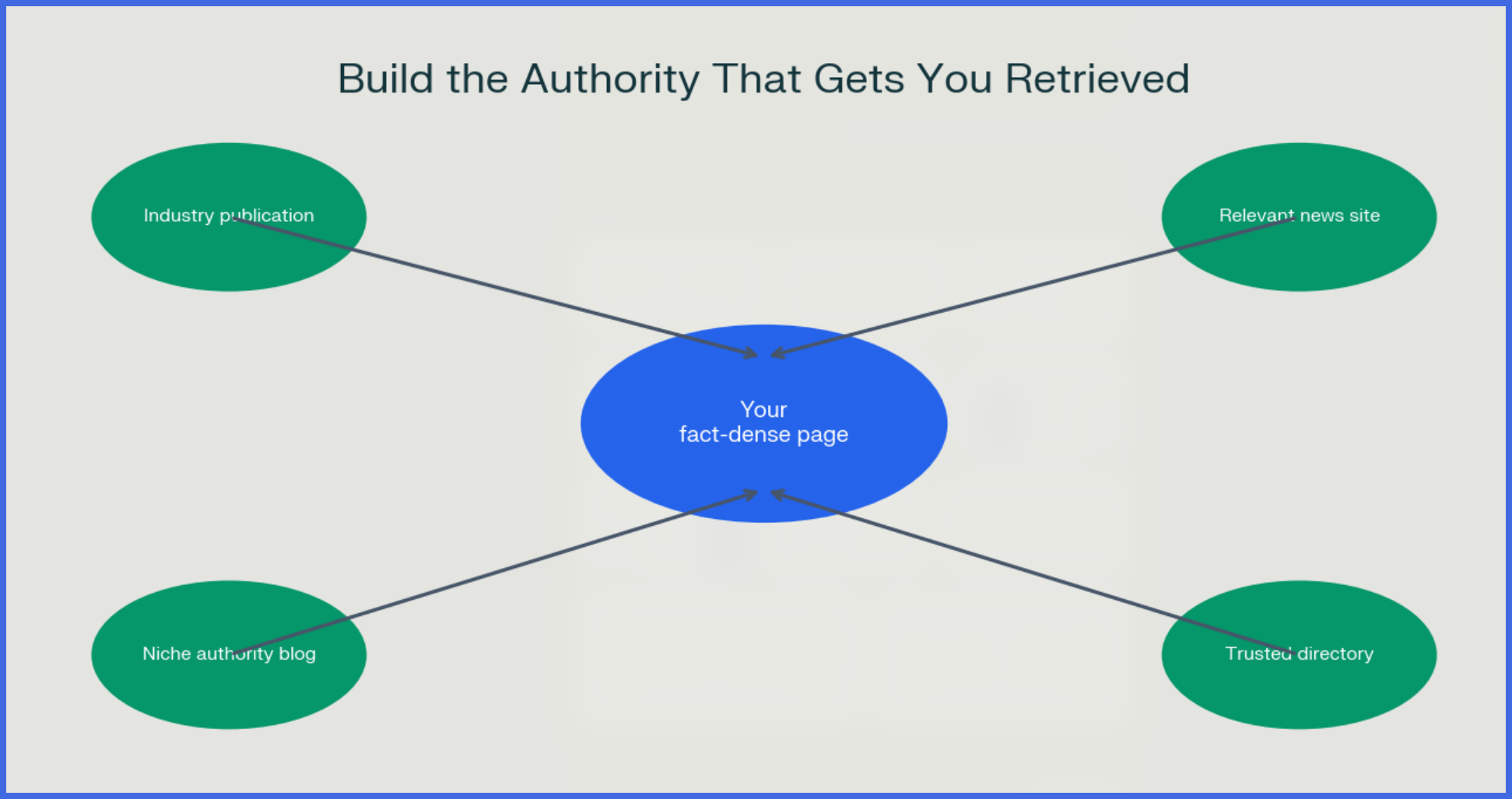
If another website offers the same facts, the AI must decide which source to trust. That decision is influenced by the strength of your overall web presence: relevant links, brand mentions, rankings, and recognition from other credible sites.
Research on AI citations found that authority measures were associated with 21–30% more citations across websites. Other industry research also shows a strong relationship between the number of keywords a domain ranks for and the AI citations it receives.
This is where SERPninja becomes the missing piece of the RAG puzzle.
SERPninja helps brands build the off-page authority needed to compete in AI-driven search. Through premium guest posts and high-powered niche edits, SERPninja helps your site earn relevant links from established domains.
Why does that matter?
- Relevant backlinks act like external validation for your expertise.
- Strong domains are more likely to be retrieved for competitive queries.
- Authority helps AI systems distinguish between two pages with similar information.
- Links support traditional rankings, which still feed many AI retrieval systems.
In simple terms: fact-dense content gets you considered; authority helps get you chosen.
A Practical AI Search Workflow
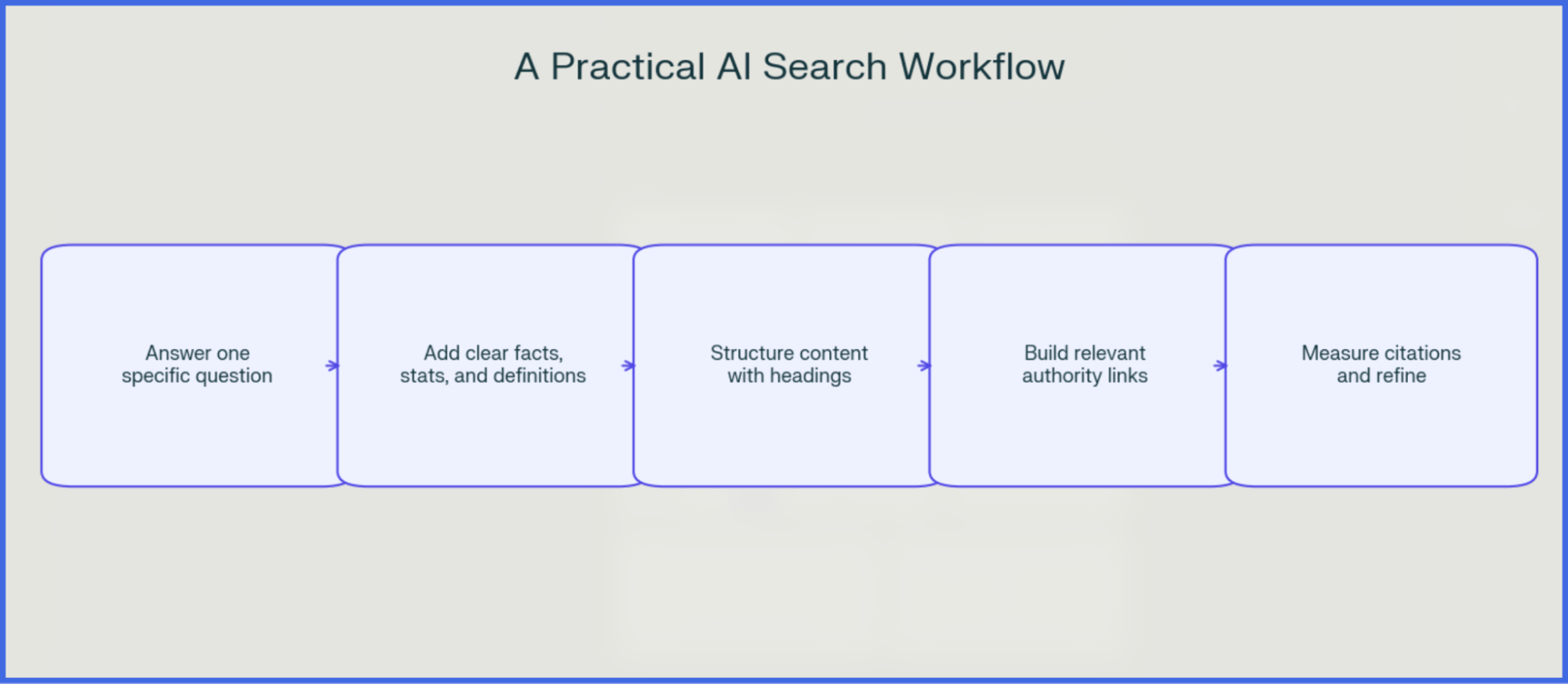
You do not need to abandon SEO. You need to upgrade it.
1. Answer one specific question per page
Instead of writing “The Complete Guide to Email Marketing,” write “How Can Small Businesses Automate Email Follow-Ups?” Specific pages are easier to retrieve for specific questions.
2. Add extractable facts
Include clear definitions, comparisons, numbers, steps, and examples. Make each fact easy to understand without surrounding confusion.
3. Structure content for machines and humans
Use descriptive headings, short paragraphs, bullet points, tables, and FAQ sections. A well-organized page helps both readers and retrieval systems find what they need.
4. Build topical clusters
Create supporting articles around your main topic. If your cornerstone page is about “retrieval augmented generation,” supporting pages might cover AI citations, semantic SEO, entity optimization, and AI Overviews.
5. Strengthen domain authority
Publish excellent content, then earn relevant links from credible websites. This is where SERPninja helps turn strong content into a strong candidate for AI retrieval.
6. Measure and improve
Track which pages receive AI citations, which queries trigger AI answers, and which competitors are being cited instead. Then improve fact density, clarity, and authority where needed.
Conclusion
Ranking #1 is still valuable—but it is no longer the whole prize.
AI search has added a new layer between ranking and visibility: retrieval. With retrieval augmented generation, AI systems first find relevant pages, then generate answers using those sources. If your page is not retrieved, it may never appear in the answer, no matter how strong its traditional ranking is.
To win in this environment, create pages with semantic relevance, clear entities, complete topical coverage, and facts AI can easily extract. Then reinforce those pages with the domain authority needed to win the trust tie-breaker.
That is the modern visibility formula:
Fact-rich content + semantic clarity + off-page authority = AI retrieval and citations.
SERPninja helps brands build that final, decisive layer of authority through premium guest posts and niche edits—so your best content is not just published, but retrieved, trusted, and cited.
FAQs
What is retrieval augmented generation?
Retrieval augmented generation, or RAG, is an AI method that retrieves relevant information from external sources before generating an answer. It helps AI systems provide more current, accurate, and source-backed responses.
Does ranking #1 still matter for AI search?
Yes. Strong rankings still matter because many AI systems rely on search indexes and ranking systems to retrieve candidate pages. But ranking alone does not guarantee that your page will be selected or cited.
Why is keyword density less important now?
Because AI systems evaluate meaning, context, and usefulness. Repeating a keyword does not prove expertise. Clear explanations, related concepts, and extractable facts are more valuable.
How many facts should a page include?
There is no exact number, but research found that pages with 10 or more key facts were cited at more than double the rate of pages with fewer than five. Focus on relevant, accurate, useful facts rather than padding.
How can SERPninja help with AI visibility?
SERPninja helps build off-page authority through premium guest posts and niche edits. That authority can support retrieval, strengthen trust, and help your fact-rich pages compete for AI citations.


