

Key Takeaways
- Agentic SEO means giving a defined SEO job to an AI that pulls its own data and follows a written method.
- Four layers make it work: a project, skills, live-data connectors (MCPs), and a short prompt.
- Long prompts drift and invent details. Layers keep the AI on track.
- Start with one workflow, and keep the AI’s access read-only.
Ever typed “audit my SEO” into a chatbot and hoped for the best? Ask again tomorrow, and you’ll probably get a different answer.
That’s the problem agentic SEO solves.
Instead of one giant prompt, you give an AI a defined job, a written method, and live data. Then it does the job the same way every time.
What Is Agentic SEO?
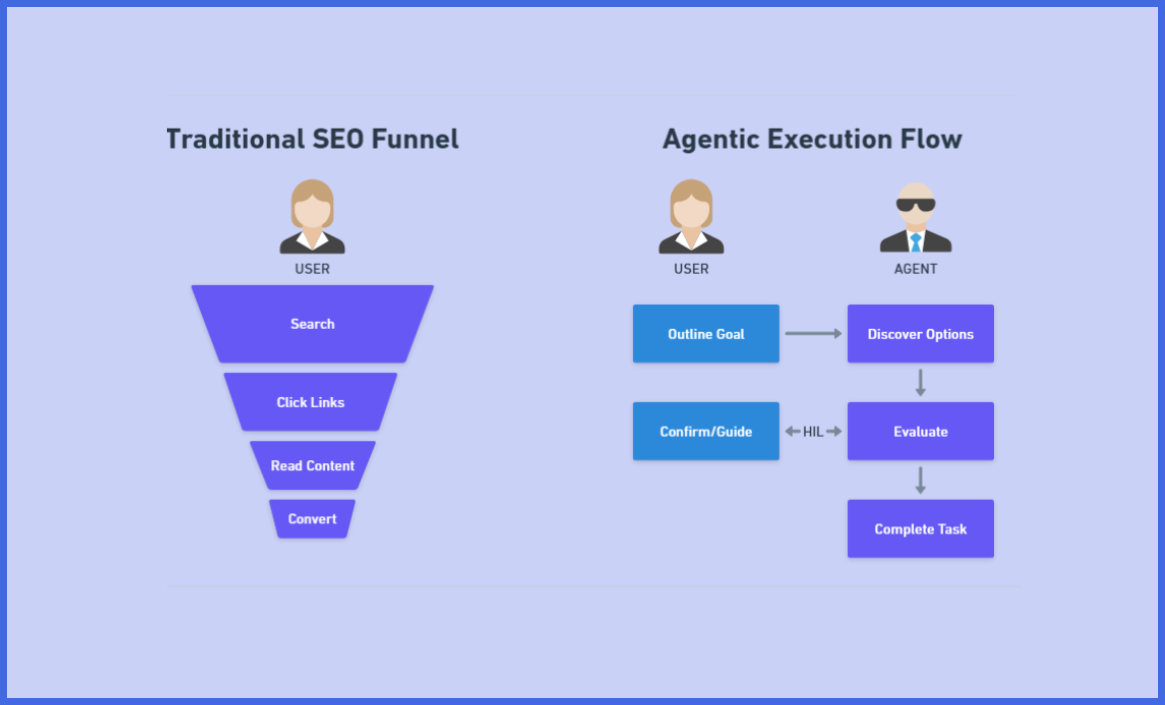
Agentic SEO means handing a specific SEO job to an AI agent that grabs its own data, follows a written playbook, and delivers consistent results on every run.
Two things set it apart from a clever prompt:
- It fetches its own data. No pasting old exports. It reads this week’s numbers.
- It follows a method stored outside the chat. Key checks happen even when you forget to ask.
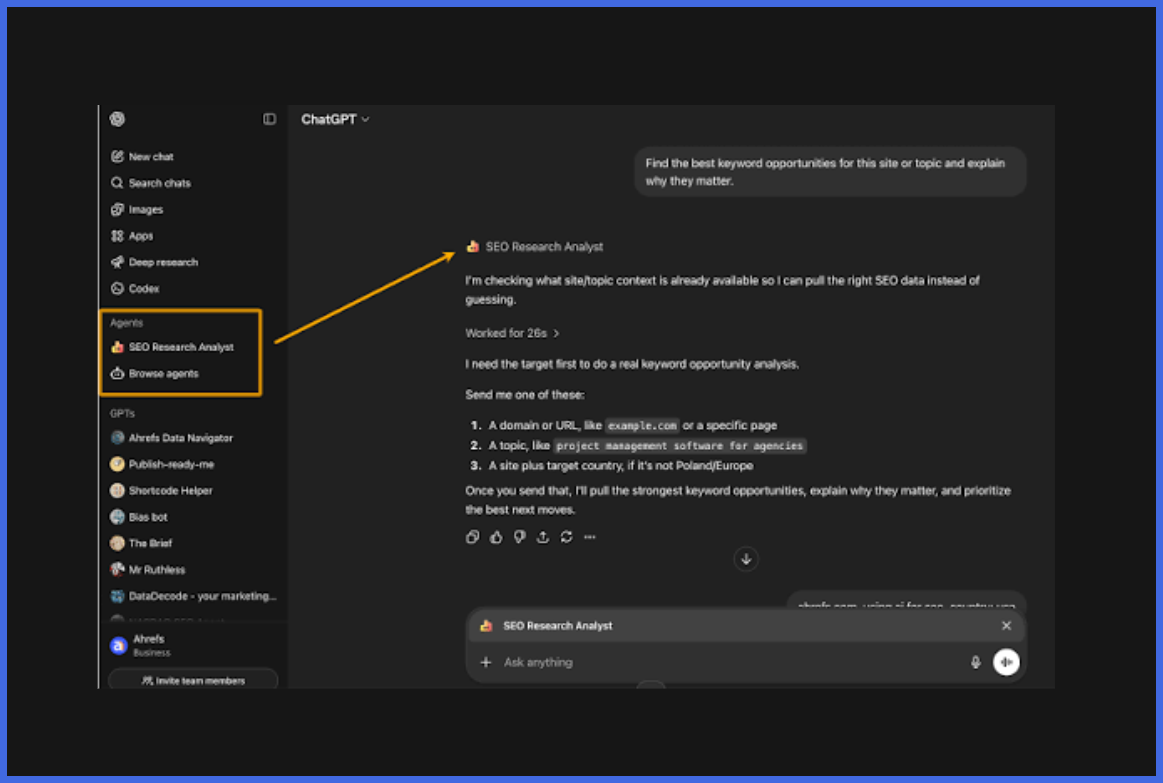
Picture a restaurant kitchen. Agentic SEO works in four layers:
- Project (the house style): A folder of background info the AI reads every run, like your brand rules, content guidelines, and ideal customer.
- Skills (the recipes): The written method, including steps and checks the AI must never skip.
- MCPs (the fresh ingredients): Model Context Protocols are connectors that pull live data from tools like Semrush, Google Search Console, and Google Analytics.
- Prompt (tonight’s order): Your short request for this run. The other layers carry the heavy lifting.
Why One Big Prompt Falls Short
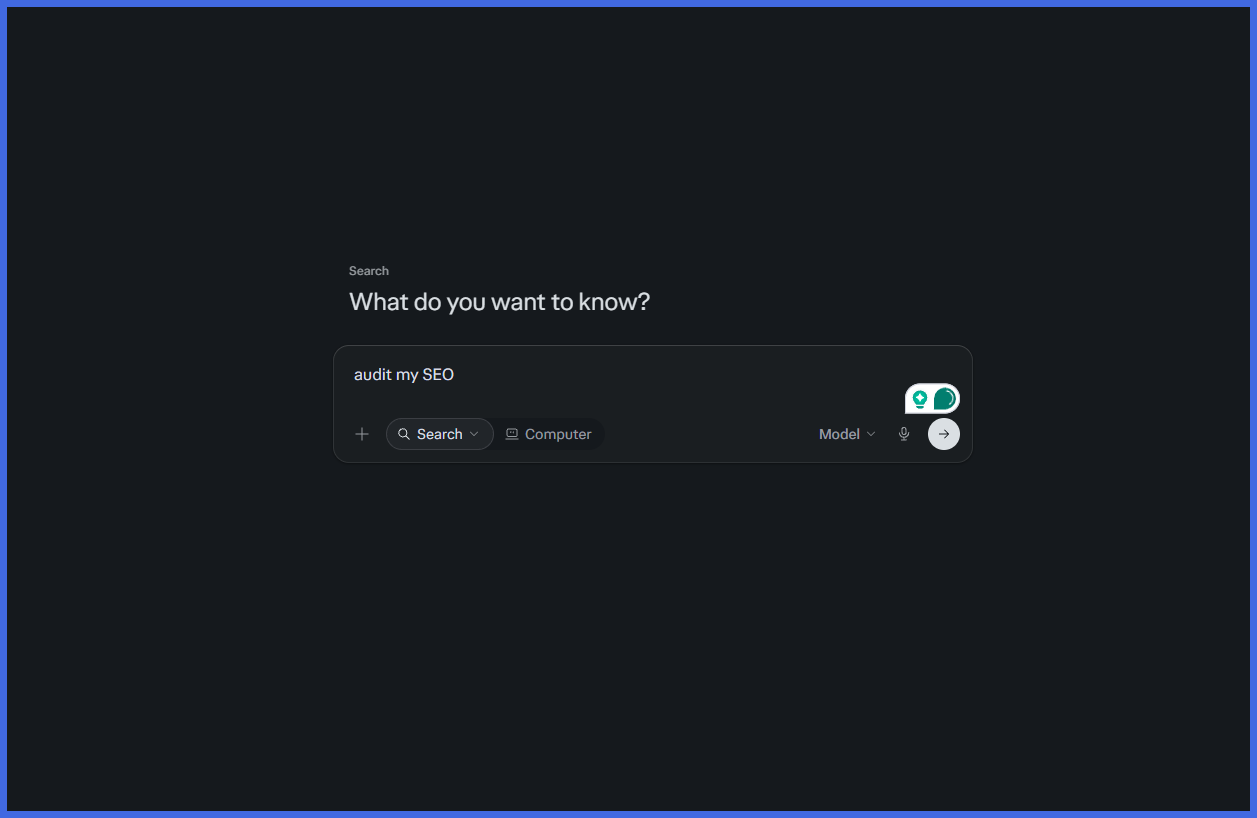
Asking an AI to “audit my SEO” puts everything on one conversation. Rephrase it tomorrow, and you may get different, even made-up, findings.
A longer prompt doesn’t fix it. Faizan Ali, an SEO and AI search strategist, says one giant prompt means repeating yourself every run. As it grows, the AI starts wandering off, forgetting details, and inventing facts to fill the gaps.
Layers solve that. When something breaks, you know which layer to fix, instead of untangling a wall of text.
Consistency is the real goal. A great report today and a totally different one next month isn’t real automation.
5 Agentic SEO Workflows, Tested on a Live Site
Here are workflows based on our research from different sites that tested it:
Workflow 1: Find Content Decay
This workflow spots pages losing organic traffic. It compares two time periods in Search Console, then ignores small dips (by default, anything under a 30% drop or 100 lost clicks).
Next, it checks whether Google still has the page indexed. Then it studies rankings, demand, links, and cannibalization (your own pages competing with each other) and ranks the fixes.
Real example: Three pages dropped in a 90-day year-over-year comparison. One lost 230 clicks, but that was a deliberate redirect after a page merge, which the indexation check caught. Another was indexed but missing from the sitemap, a five-minute fix.
Workflow 2: Triage Technical SEO Fixes
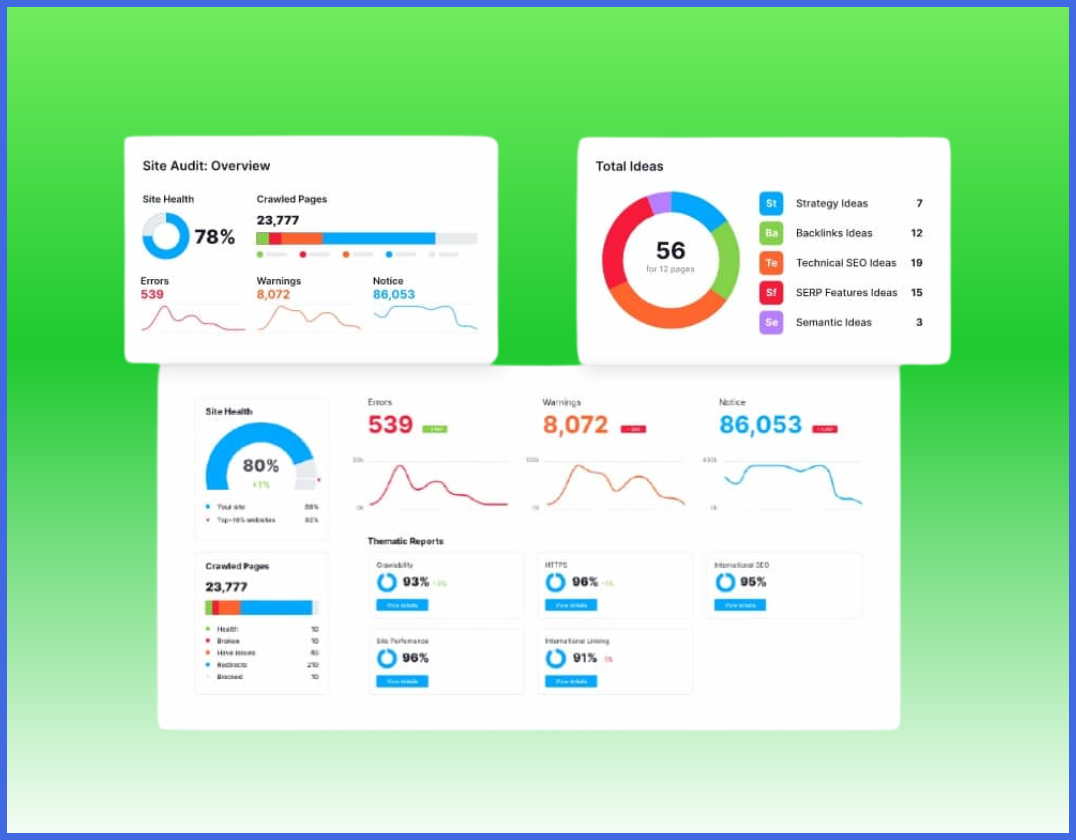
The agent reads an existing Site Audit and groups problems by root cause, not by issue type. Then it scores each fix by impact, effort, and confidence.
Each fix gets acceptance criteria: a plain checklist a developer can use to confirm it worked, even without SEO knowledge.
Real example: Ten “temporary redirect” warnings traced back to one cause: internal links missing a trailing slash. Two of the five reported errors were the same placeholder link on a page with no traffic.
Workflow 3: Investigate a Competitor’s Growth
When a rival’s traffic jumps, this workflow finds the pages and keywords behind it, then tests the cause: new content, better rankings, seasonality, a migration, or a data glitch.
It also scores its confidence and relevance to you.
Real example: One competitor got most of its high-intent traffic from just two pages, despite a similar backlink profile. That showed where to build comparable pages on the client’s site.
Workflow 4: Build a Content Brief
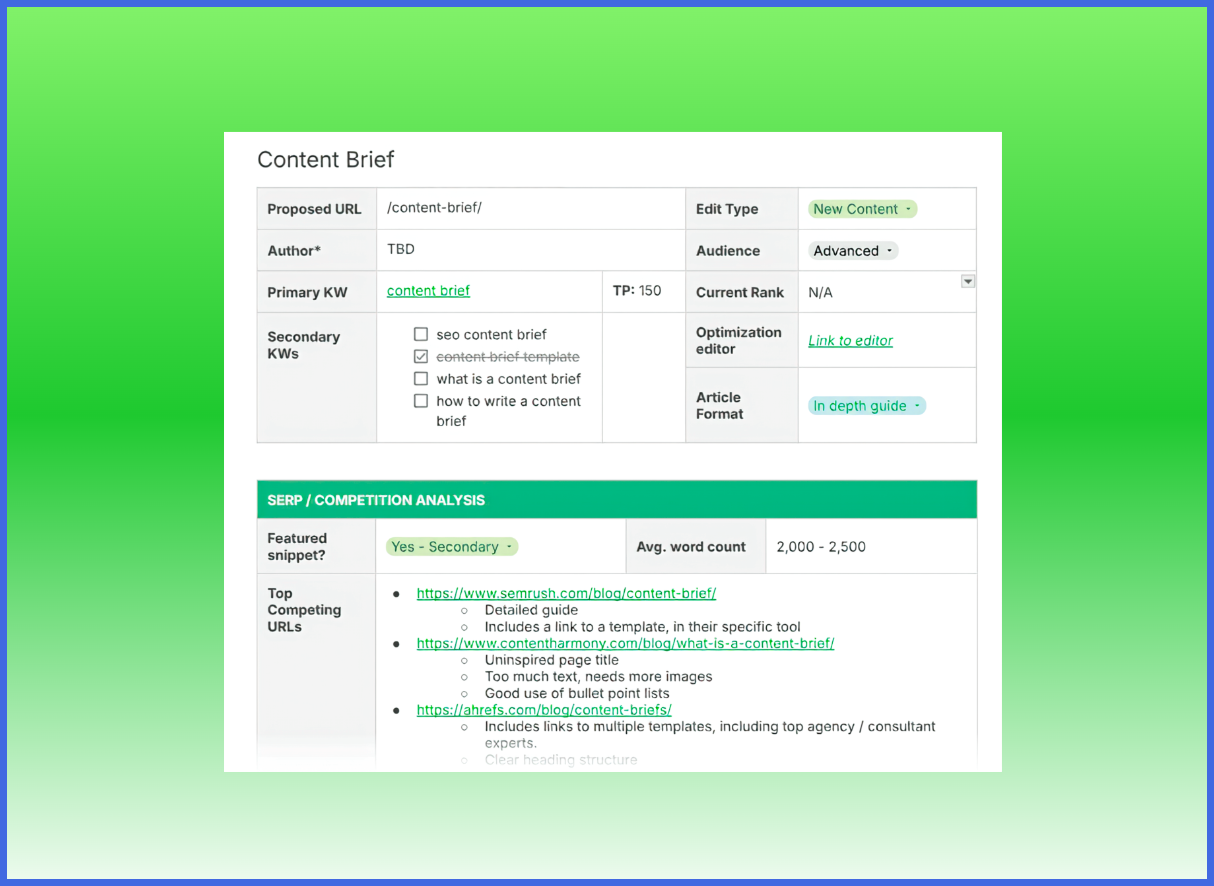
First, the agent checks what your site already covers, then decides: create, update, consolidate, or do nothing.
If a page makes sense, it groups searches by the problem your reader wants solved. The brief lists headings, internal links, and needed evidence.
Real example: Semrush tested it on the human-written brief for its own article. The agent agreed the topic was worth writing, then caught four misses, including a keyword that triggers a different kind of search result and three questions people only recently started searching for. A human still chose the structure.
Workflow 5: Rescue Your Internal Links
The agent finds pages that already rank, then scans them for passages related to your priority pages. It tells you the exact sentence where each new link should go.
It also flags structural mistakes, like orphaned pages (pages nothing links to).
Real example: Four pages brought in 96% of one site’s traffic. The agent found the second-biggest page, worth 27% of all traffic, had no internal links pointing to it. It sat in the sitemap and nowhere else.
How to Start Without Overdoing It
You don’t need eight skills and a scheduler on day one. An expert’s advice is simple: prove one workflow first.
- Connect one data source.
- Install one skill. Technical triage is quickest: point it at a Site Audit you already have and judge the result in minutes.
- Keep tools read-only, and require your approval before the AI publishes, redirects, or deletes anything.
Also know when to skip it. If a task changes every time, there’s no method to write down. And for simple jobs, like checking 50,000 URLs for a status code, a script beats an agent.
Conclusion
Agentic SEO won’t replace your judgment. It takes repeatable work off your plate so you can focus on decisions.
But on-site fixes are only half the story. Your pages also need strong links from other sites. That’s where SERPninja comes in. We’re a white-label link building partner for SEO agencies and consultants, with services like niche edits and guest posts. Pair them with your agentic SEO workflows to cover both sides.
Want to start with cannibalization? Try our free Keyword Cannibalisation Checker.
FAQs
Is agentic SEO the same as SEO automation?
No. Automation follows fixed steps and breaks on surprises. Agentic SEO follows a documented method and suits recurring analysis that needs judgment.
Do I need Claude to do it?
No. SEO experts used Claude, but say any capable chatbot can run a version of this setup.
Is agentic SEO only for big teams?
No. SEO experts say its tools are free or offer trials, and the free credits suit most smaller sites.
Will the AI change my site on its own?
Not if you set rules. Experts like Semrush recommend read-only access and your approval before anything gets published, redirected, deleted, or edited.


