

Key Takeaways
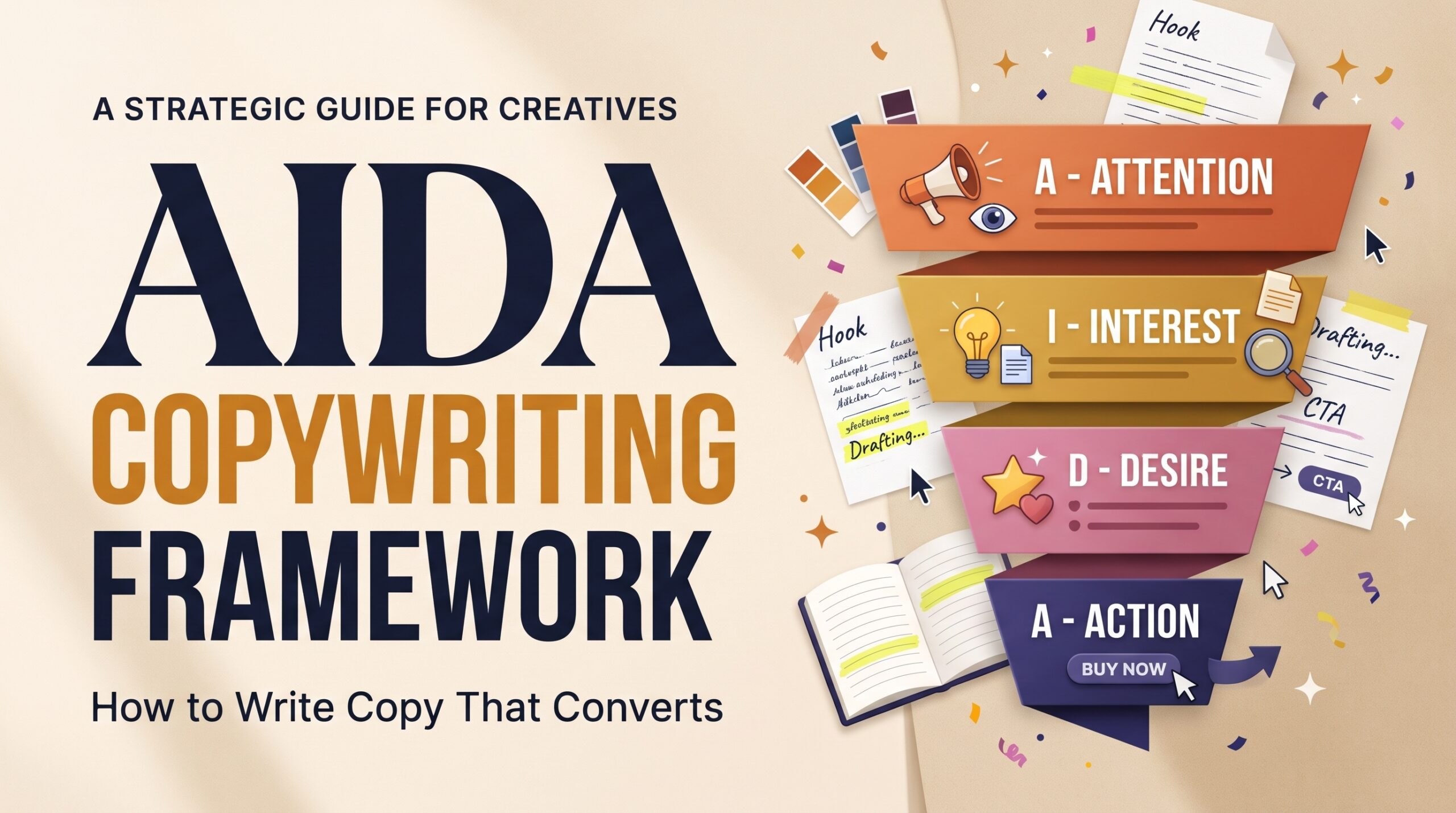
- The AIDA copywriting framework moves readers through Attention, Interest, Desire, and Action.
- Most people won’t read past your first line, so your headline does the heaviest lifting.
- Desire grows from relatable examples and clear benefits, not a pile of features.
- A clear, compelling call-to-action (CTA) turns that desire into a sale.
- The bonus step, Result, shows readers what they’ll get after they buy.
Let’s be honest: in today’s fast-paced digital world, grabbing attention is hard. Keeping it is even harder.
Your reader has a phone buzzing, ten tabs open, and a thousand other things asking for a click.
Nielsen Norman Group, a respected web research firm, has found that people often leave a web page within 10 to 20 seconds. That’s your window.
So how do you cut through the noise?
Meet the AIDA copywriting framework. It’s a simple, proven structure that guides readers from “never heard of you” to “take my money.” Advertising pioneer E. St. Elmo Lewis is credited with creating it way back in 1898, and marketers still lean on it today.
The best part? It’s easy to customize. You can use it to shape any marketing campaign: landing pages, emails, ads, and social posts.
In this guide, we’ll break down each step in plain language, with real examples, so you can start writing better sales copy today.
What Is the AIDA Copywriting Framework?
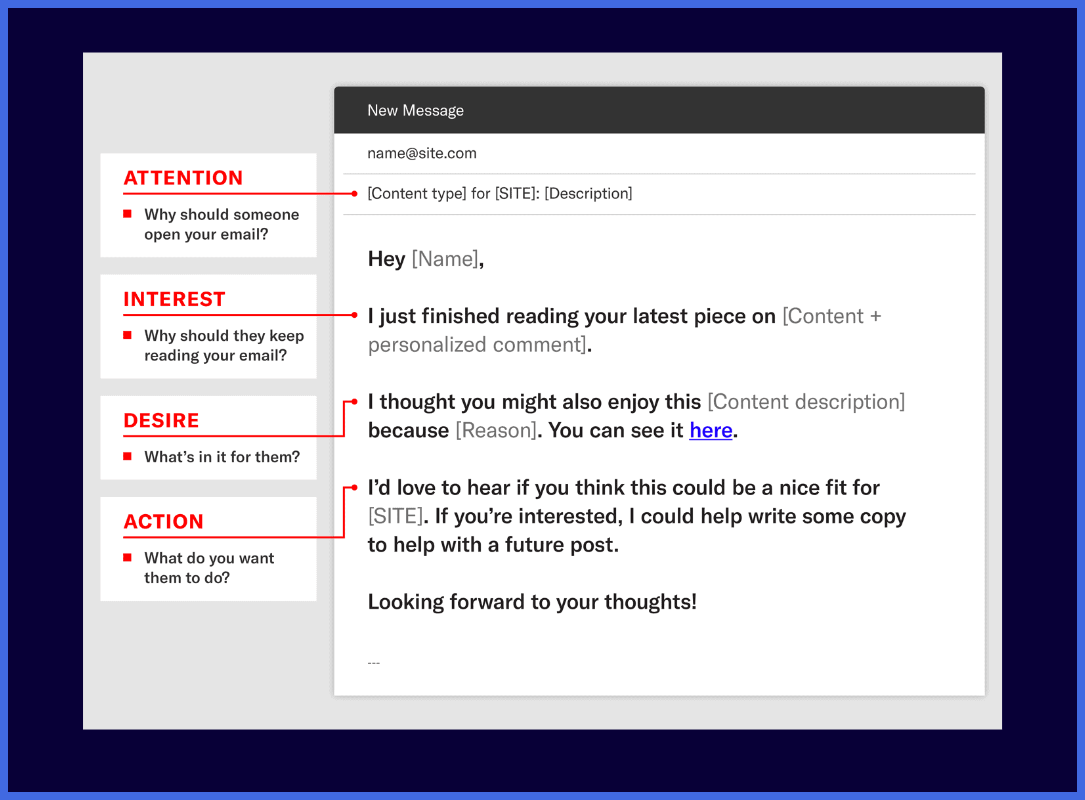
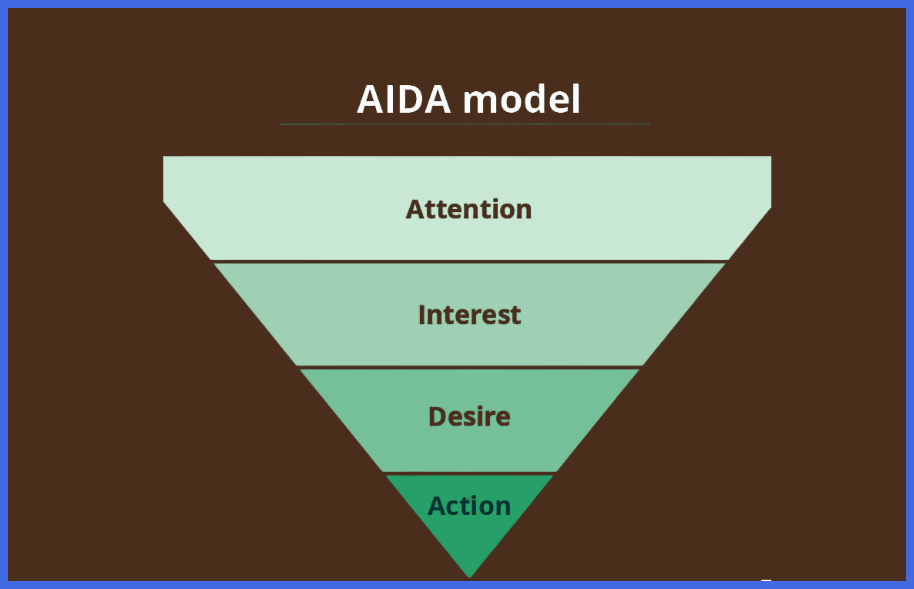
The AIDA copywriting framework is a four-part formula that shapes how you write sales copy. AIDA stands for Attention, Interest, Desire, and Action.
Think of it like helping a shopper in a store. First, you say hello. Then you show them something interesting, help them fall in love with it, and finally, make the sale.
Here’s the quick version:
- Attention: Stop the scroll with a headline that speaks straight to your target market.
- Interest: Keep them reading by showing what’s coming and why it matters to them.
- Desire: Help them picture life with your product, so they truly want it.
- Action: Tell them exactly what to do next, like “Buy now” or “Start your free trial.”
- Result (bonus): Show them what they’ll get after buying, using previews or happy customer stories.
So why does a formula from 1898 still work? Because people still make decisions the same way. They notice something, get curious, start wanting it, and then decide.
And since AIDA is just a skeleton, you can bend it to fit your brand, your product, and your voice.
How to Build a Page That Grabs Attention Fast
Before we dive into each AIDA step, let’s look at how an attention-grabbing page is built. Picture a staircase: every piece pulls your reader a little further down.
Here’s the order that works best:
- The headline. This is your front door. Make it clear, specific, and focused on your reader’s biggest want or problem.
- The subheadline. This is your headline’s sidekick. It adds detail and answers the big question: “What’s in it for me?”
- Feature headings. Most people skim before they read. Clear headings help them spot the benefits fast.
- The introduction paragraph. Now you can talk to your reader directly. Name their problem, hint at the fix, and promise what’s coming.
Real brands do this all the time. Apple’s product pages usually open with a short, punchy headline, add a one-line subheadline, then use bold feature headings you can skim in seconds.
A made-up meal-kit page might read like this: headline “Dinner in 15 Minutes,” subheadline “Fresh, ready-to-cook meals delivered weekly,” and feature heading “No More Grocery Runs.”
The 5 AIDA Steps, Explained With Real Examples
Now for the main event. Let’s walk through each step, one at a time.
Step 1: Attention (Stop the Scroll)
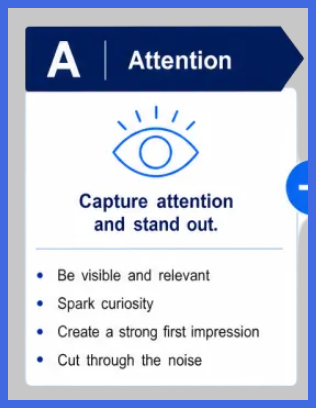
This is the most important step, because most people won’t read past your first line. Advertising legend David Ogilvy once pointed out that headlines get read about five times more often than the copy beneath them.
Here’s how to make yours count.
First, speak straight to your target market. Name who the page is for, like “busy parents” or “first-time homebuyers.”
Second, add urgency, such as a real deadline or limited stock.
Third, be specific. Ogilvy’s 1958 Rolls-Royce ad didn’t just say the car was quiet. It said the loudest noise at 60 miles an hour came from the electric clock. That one detail is hard to forget.
Step 2: Interest (Keep Them Curious)
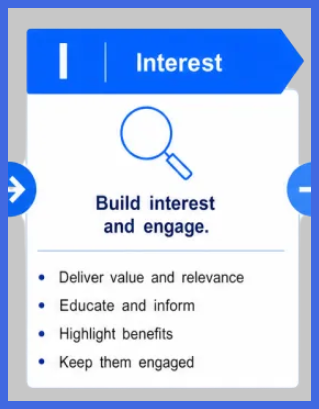
You’ve got their attention. Now give them a reason to stick around.
Build curiosity by giving a clear overview of what’s coming and exactly why they should care. Speak to their problem, not your product.
A quick trick is a preview line, like “In this guide, you’ll learn three easy ways to save.”
Dollar Shave Club nailed this in 2012. Its launch video spoke to guys tired of overpaying for razors, and it made them laugh. The company reportedly landed about 12,000 orders in 48 hours.
Step 3: Desire (Make Them Want It)
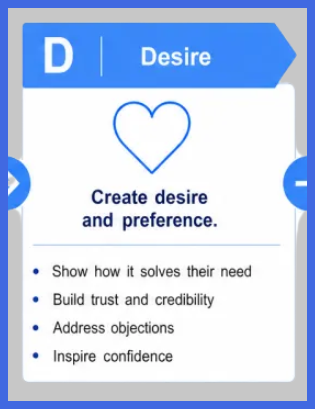
Now it’s time to make the case for why they want what you’re selling.
Don’t just list features. Turn them into benefits people can picture. Use analogies, personal stories, and relatable examples that say, “This is for someone like me.”
Apple did this with the first iPod in 2001. The tech spec was 5GB of storage. Apple’s pitch was “1,000 songs in your pocket.” Which one makes you want it?
Personal insight helps, too. If you’ve lived the problem, say so. People trust writers who’ve been in their shoes.
Step 4: Action (Tell Them What to Do Next)
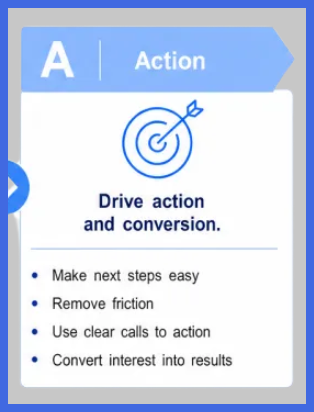
Your reader is warmed up. Now ask for the sale. Use one clear, compelling call-to-action (CTA) so they know their next move.
Start with a strong verb, like “Get,” “Start,” or “Join,” and spell out the payoff. “Start my free trial” usually beats “Submit.”
Ease any worries, too. Netflix’s sign-up page has long kept it simple: a clear button and a reminder that you can cancel anytime.
Step 5: Result (The Bonus Step)
Here’s the step many writers skip. After the sale, show readers exactly what they’ll get.
Use previews, before-and-after shots, or testimonials from happy customers. Real voices build trust fast.
Apple’s “Shot on iPhone” campaign, launched in 2015, doesn’t just claim the camera is great. It shows stunning photos taken by real people. That’s the result, right on display.
Common AIDA Mistakes (and How to Dodge Them)
AIDA is simple, but it’s easy to trip up. Watch out for these common slip-ups:
- Writing about yourself. Talk about your reader’s problems and goals, not your company’s history.
- Skipping the “why.” Every feature needs a benefit. Ask yourself, “So what?” after each one.
- Burying your CTA. Make it easy to spot, and repeat it on long pages.
- Piling on CTAs. Pick one main action so readers stay focused.
- Faking urgency. Real deadlines work. Made-up ones cost you trust.
Finally, test everything. Try two headlines, compare the results, and keep the winner. Small tweaks can lead to big gains.
Conclusion
The AIDA copywriting framework has survived for more than a century for one simple reason: it works.
Whether you’re writing a landing page, an email, an ad, or a social post, the flow holds up: grab attention, build interest, spark desire, and ask for action. Add the bonus result step, and your copy gets even stronger.
But here’s the catch. Even the best AIDA sales copy in the world won’t generate a single dime if nobody sees it.
That’s where SERPninja comes in. Think of SERPninja as your growth partner. The team builds your authority, secures top-tier backlinks (links from trusted websites to yours), and drives highly targeted traffic to your site.
You write the high-converting AIDA copy. SERPninja makes sure the right audience is there to read it and take action.
Ready to put your words in front of the right people? Check out SERPninja and let your copy do what it was built to do: sell.
FAQs
What does AIDA stand for in copywriting?
AIDA stands for Attention, Interest, Desire, and Action. It’s a four-step formula that guides readers from first glance to final click.
Is the AIDA copywriting framework still relevant today?
Yes. It follows the way people naturally make decisions, so it works on websites, emails, ads, and social media. The tools change, but human behavior stays pretty much the same.
Is the Result step required?
No. Result is a bonus step. The original AIDA has four parts, but adding Result can build trust by showing buyers what they’ll get.
How is AIDA different from PAS?
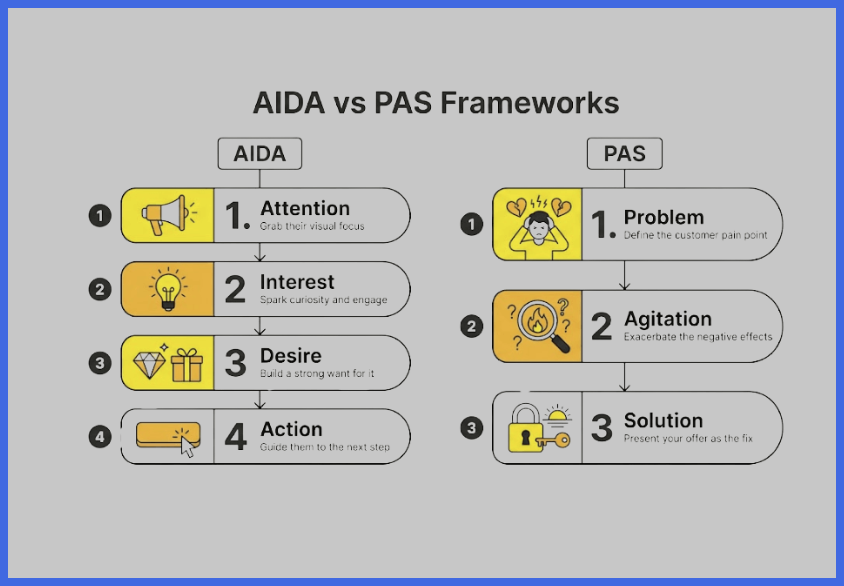
PAS stands for Problem, Agitate, Solution. It zooms in on a pain point first, while AIDA starts by grabbing attention. PAS suits problem-driven products, and AIDA works for almost anything.
Can I use AIDA for emails and social media?
Absolutely. In an email, your subject line grabs attention. On social media, your first line does the job. After that, the same steps apply.


