

Key Takeaways
-
Generative engine optimization leverages AI tools and natural language processing to craft content that aligns with user intent, enhancing search visibility and patient engagement.
-
Healthcare SEO success now lies in harmonizing automation with organic, expert-checked messaging to establish patient confidence and trust.
-
Local optimization, including region-specific keywords and Google Business Profile, increases visibility and community engagement.
-
Ethical responsibility and regulatory compliance are paramount, necessitating precise, current information and rigorous respect for data privacy regulations.
-
A strong content ecosystem driven by actionable data, constant feedback, and multiple formats fuels continuous improvement and tangible outcomes.
-
By embracing new trends such as predictive search and personalized content, healthcare organizations can stay ahead of the curve and adapt to the changing needs of patients and the digital landscape.
Healthcare generative engine optimization (GEO) is the application of AI-powered tools to enhance online presence for healthcare professionals via content creation and search optimization.
Healthcare organizations are leveraging GEO to simplify complicated content strategies, connect with patients more effectively, and satisfy stringent industry regulations.
As technology advances, GEO is changing how medical practices think about digital marketing. The next two sections examine GEO’s significance and use cases in healthcare.
What is Generative Engine Optimization?
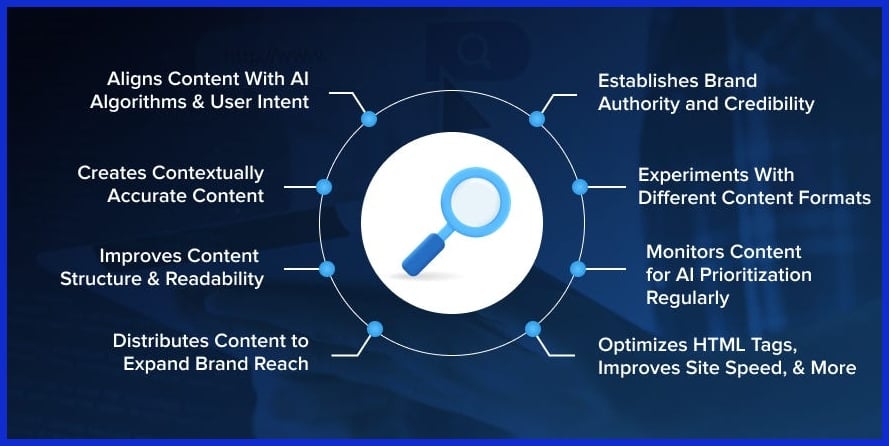
Generative engine optimization, or GEO for short, is a contemporary strategy centered around enhancing online visibility specifically on AI-driven platforms such as chatbots and virtual assistants. Rather than pursuing blue links, GEO focuses on placing healthcare content as a referenced source in AI search results, generating brand visibility and patient confidence even when there’s no click, ultimately supporting a digital marketing strategy.
1. The Core
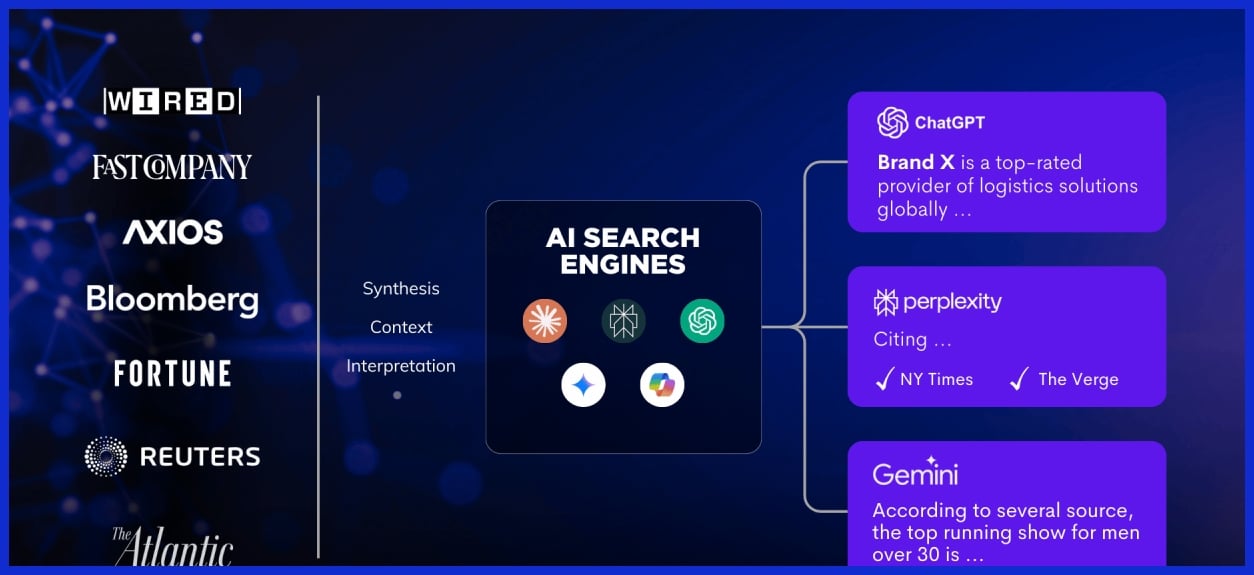
The core of GEO is sophisticated AI algorithms and natural language processing. These tools create human-like answers to user prompts, extracting from sources considered credible and pertinent. Quality content creation is non-negotiable.
AI systems strongly prefer long-form content of two thousand words or more that delivers clear, neutral, and encyclopedic information. GEO is fueled by a user-focused mentality, particularly in healthcare where patients seek relief and transparency.
By developing content that directly answers user intent and emulates Wikipedia’s style, healthcare brands increase their chances of being referenced by ChatGPT or AI Overviews. Data analytics is the engine room for GEO, tracking what content is being cited.
AI-referred sessions are up 527% in H1 2025, and understanding how users are interacting with the data keeps it relevant and accurate. Ongoing analysis informs refreshes, keeping pillar content fresh 90 to 180 days apart as AI platforms rapidly rotate their trusted sources.
2. The Difference
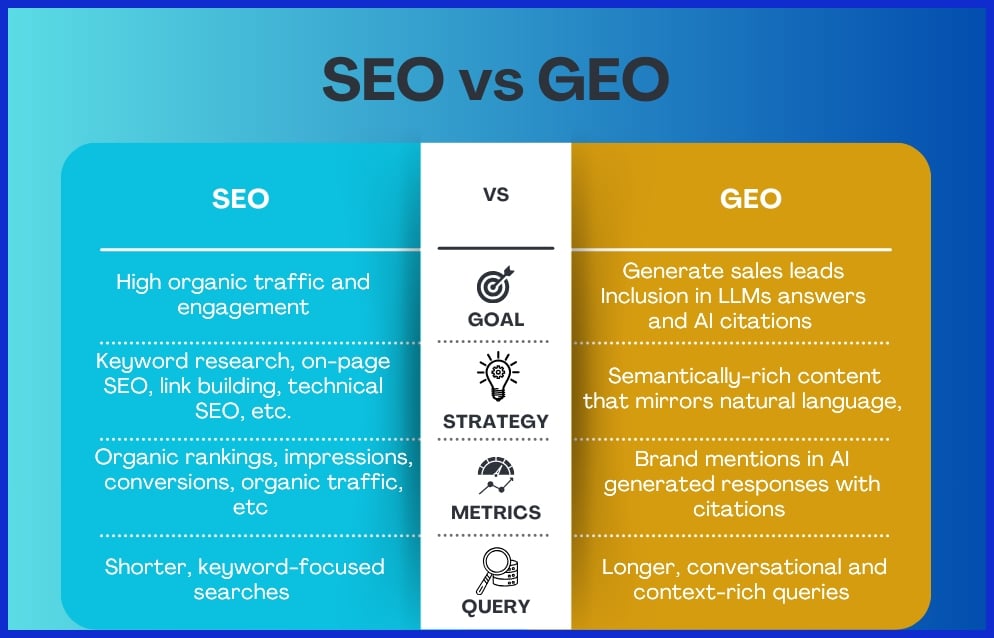
How is GEO different from SEO? GEO stands apart from traditional SEO by leveraging AI-driven content creation and optimization. Conventional SEO is about positioning on SERPs for target keywords.
GEO is about being a reference for AI platforms that answer conversational queries live.
|
Element |
Traditional SEO |
Generative Engine Optimization |
|---|---|---|
|
Target Platform |
Search Engines (Google) |
AI Systems (Chatbots, Assistants) |
|
Content Focus |
Keywords, On-Page SEO |
Comprehensive, Authoritative, Updated Content |
|
User Query Format |
Short, Transactional |
Conversational, Intent-Based |
|
Measurement |
Clicks, SERP Ranking |
AI Citations, AI-Driven Sessions |
Generative engines respond dynamically, adjusting to user interactions and popular health queries. Personalization is a huge opportunity. AI customizes answers by context, so personalized health content is more likely to be surfaced to the right person.
3. The Goal
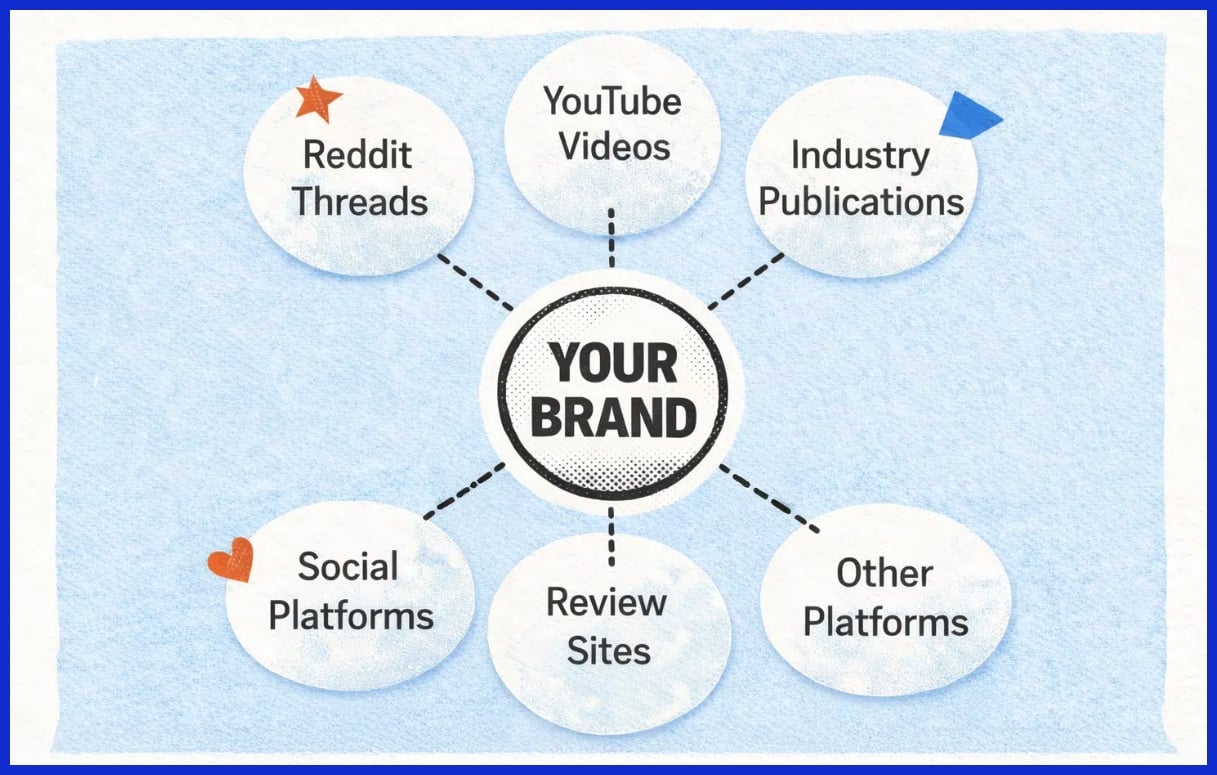
GEO’s objectives are clear: increase search visibility, drive patient acquisition, and foster meaningful interactions. Optimized content must answer health questions, thereby creating confidence and providing gratification.
Never-ending upgrades are key. Performance metrics, including how often patients cite our clients and AI-referred traffic, drive strategy and content updates, keeping healthcare organizations a trusted, cited source.
4. The Impact
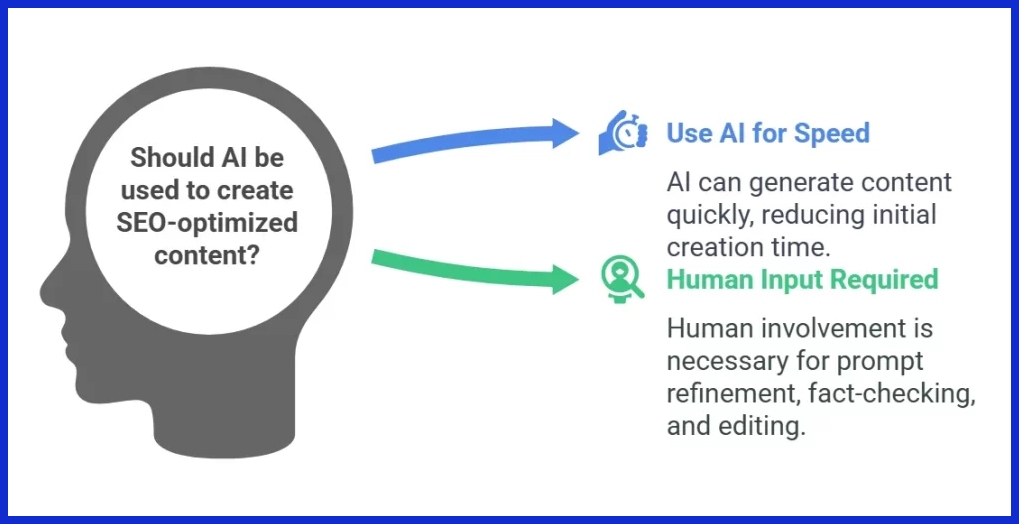
GEO is revolutionizing health marketing. With strategic, AI-optimized content that makes your expertise and insight accessible via trusted AI interfaces and professional healthcare UI/UX by reloadux, you will boost traffic and engagement.
As patients increasingly seek AI for health advice, precise, current content builds credibility and trust. For healthcare organizations, that translates to a more powerful digital presence, expanded reach, and enhanced patient experience, driving growth and reputation in an AI-first world.
Why GEO Matters in Healthcare
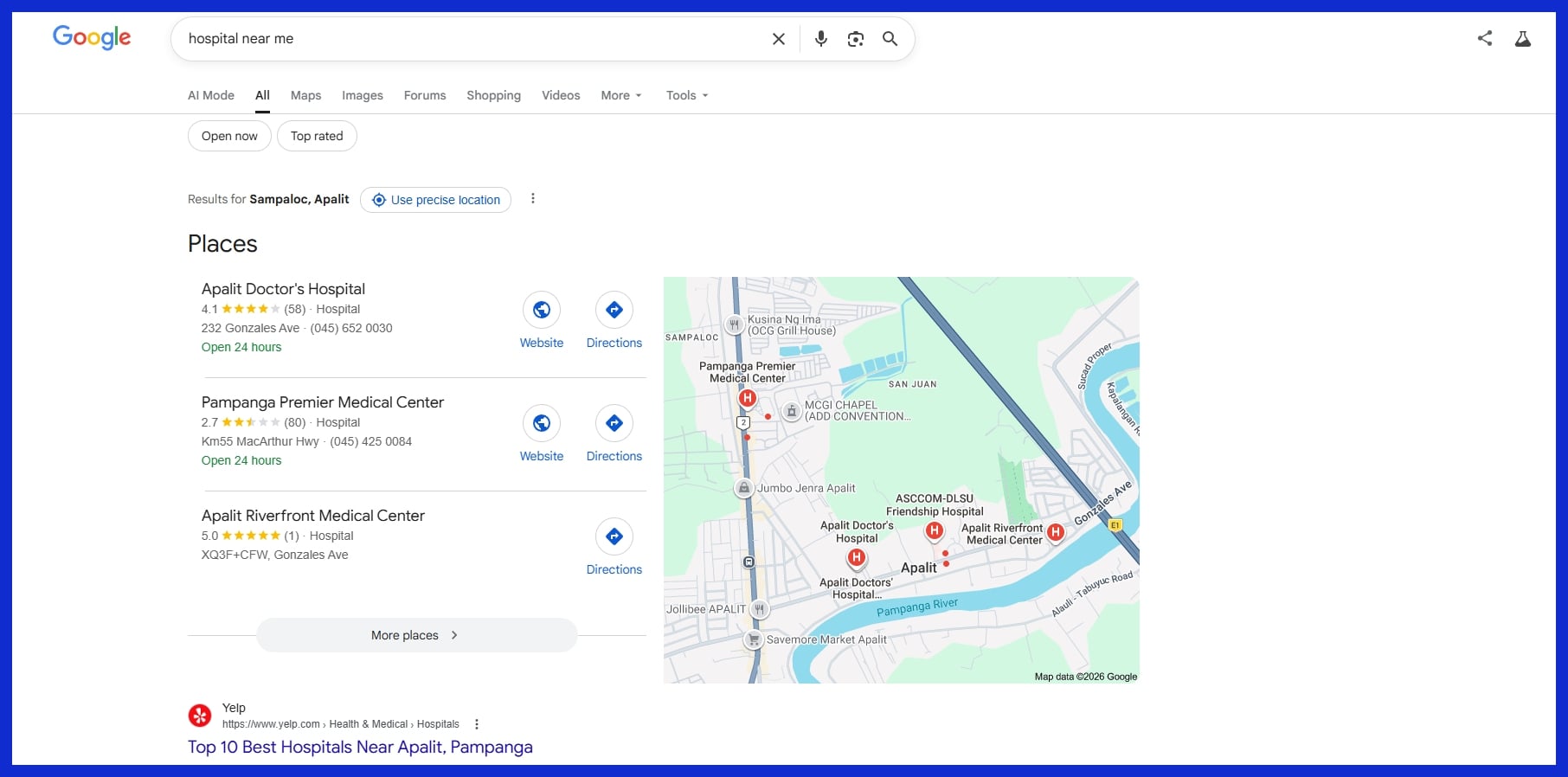
The Importance of GEO in Healthcare Patients don’t just want to search when they need to know—they want to ask AI assistants, voice queries, and get local, trusted results immediately. GEO strategies make sure healthcare organizations show up where it counts, aligning patient needs with pertinent, local care resources.
For providers, it’s not just about visibility—it’s about trust, community connection, and serving changing patient expectations in a digital-first world.
Patient Trust
Local search visibility is the bedrock of patient trust. When someone searches “urgent care near me” or asks Google Assistant for a “family doctor in Paris,” they’re signaling local relevance and credibility. If a provider’s details are correct, current, and match the AI-generated summaries, patients will engage and trust that provider more readily.
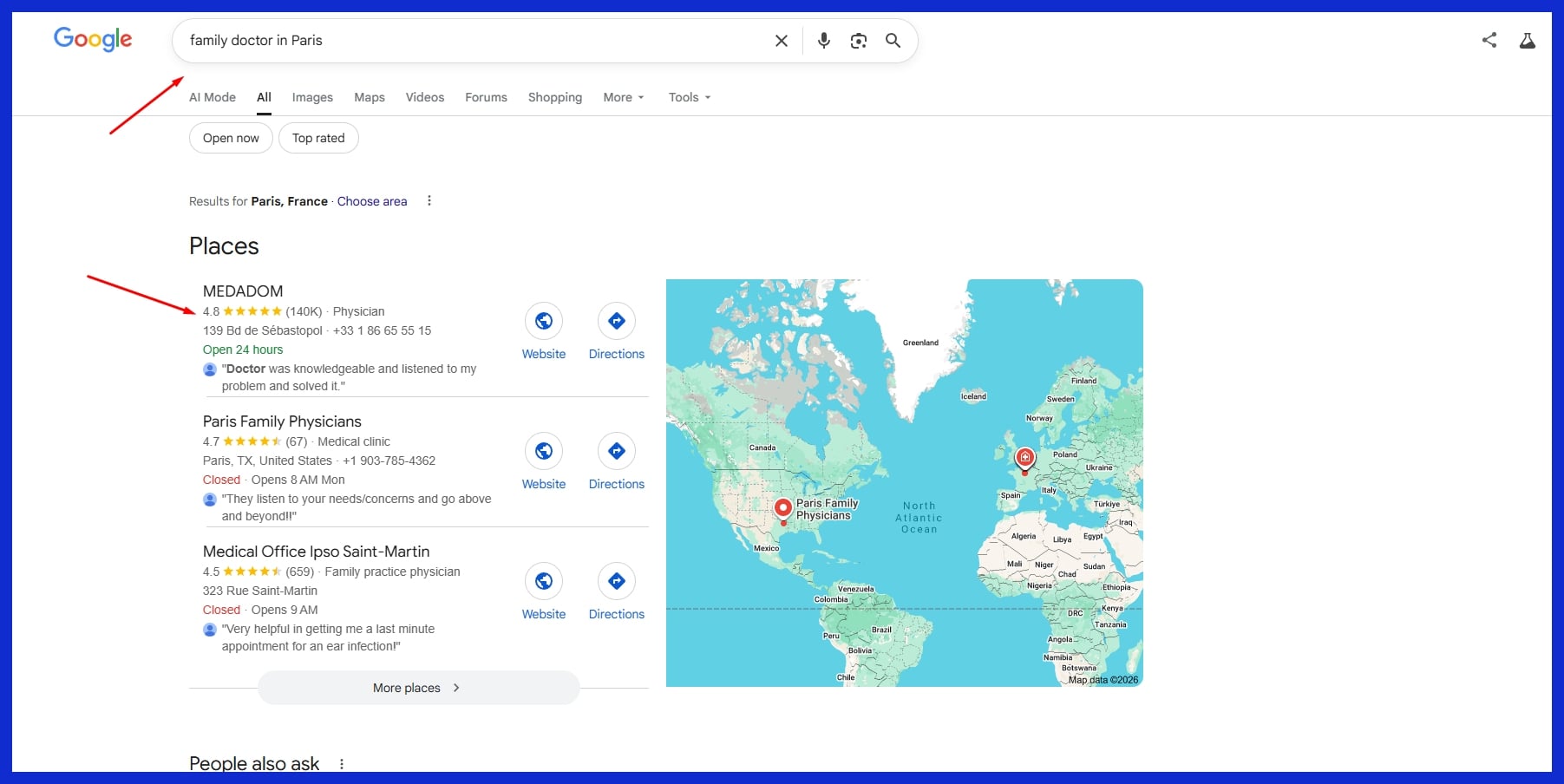
Consumers trust transparency, so having clear, comprehensive information like service hours, accepted insurance, and practitioner bios builds credibility. Patients need to trust that the clinic is real, that their staff are competent, and that others have had a great experience.
Reviews are a big deal here. A constant flow of good local reviews and engagement, such as answering questions and handling concerns, can convert patient doubt to real trust. Transparency in communication, particularly around pricing, services provided, and appointment availability, further fortifies the connection.
Local Relevance
Healthcare is not cookie-cutter. By personalizing content to address the concerns of local communities, such as vaccination drives in one city or allergy tips for a particular climate, providers engage. On the matter of why GEO is important in healthcare, localized keywords like “pediatrician in downtown Madrid” and separate service pages for each location help with discovery in both AI-driven and traditional search.

Google Business Profile is a powerhouse in this regard. By adding photos, updating location information and verifying services offered, profiles become more trustworthy and easier for patients to discover providers.
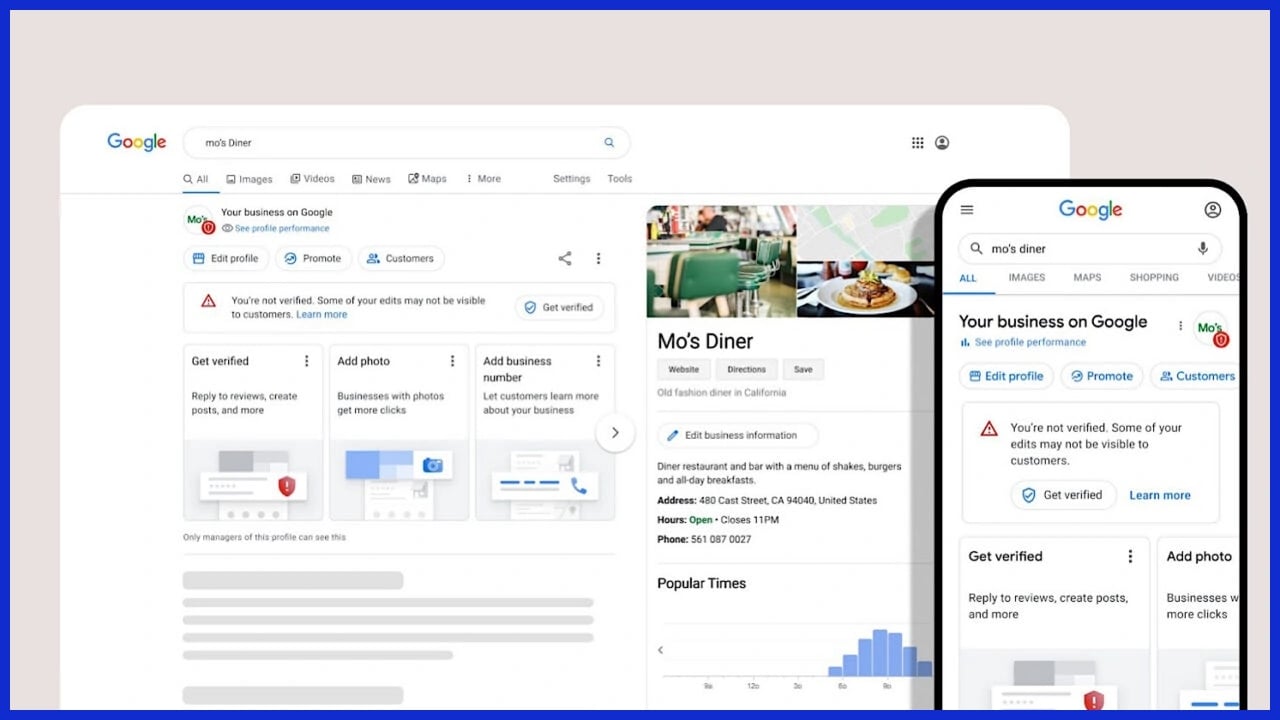
It increases the chance of showing up in Google’s much-desired Local Pack, where so many high-intent searches begin and end.
Ethical Duty
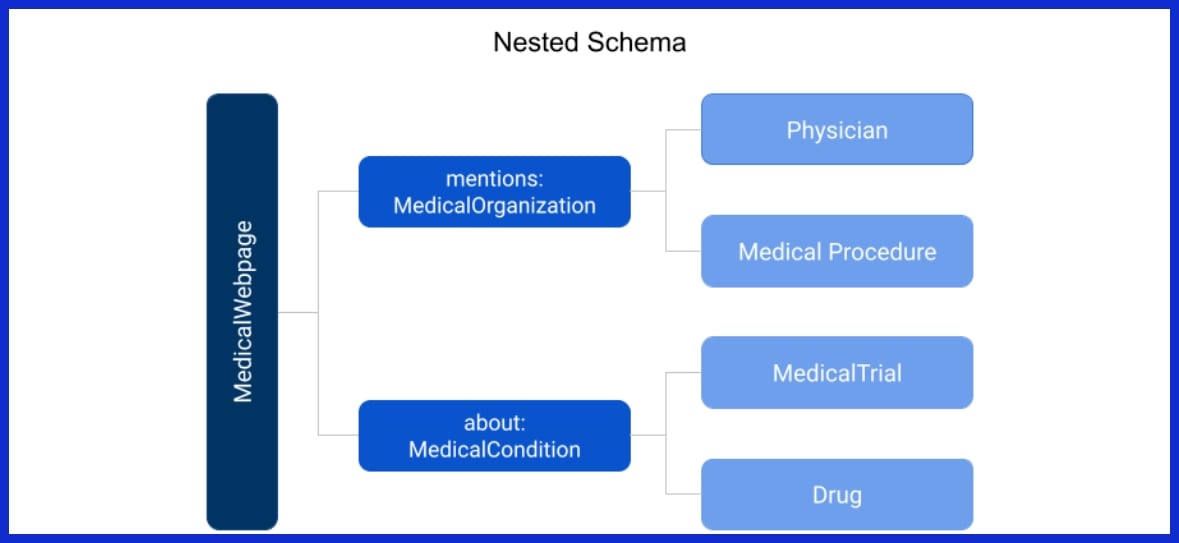
Healthcare providers have a duty to treat with care and honesty. As misinformation spreads at light speed, GEO must be coupled with high quality standards. Schema markup with entities like ‘Hospital’ or ‘MedicalCondition’ provides AI engines a more specific understanding of what a provider offers, which minimizes the potential for hallucinations in synthesized content.
Ethical marketing means being truthful in ads, disclosing disclaimers, and never overselling. Regulators are circling with stricter AI communication rules in healthcare.
Providers must navigate compliance and value integrity in every patient contact.
Implementing a GEO Healthcare Strategy

A GEO healthcare strategy brings together content, technical structure, and data insights to help healthcare resources become more discoverable and useful, particularly in an era of generative search engines and AI-powered answers. For healthcare, this means their expert is available for patients, communities, and AI models such as ChatGPT that prioritize transparent, factual, and authoritative content.
Developing a robust GEO strategy for healthcare requires a multi-step approach:
-
Collect foundational data such as patient demographics, regional health trends, and local service demand.
-
Develop a patient-centric content ecosystem that provides educational resources and service details optimized for AI-powered search and multilingual audiences.
-
Reinforce technical SEO, including site architecture, structured data, security, and mobile experience.
-
Implement feedback loops. Gather and process performance metrics, patient input, and real-time data to constantly optimize strategy.
Foundational Data
Effective GEO optimization begins with data. Healthcare organizations have to draw from EHRs, population statistics, and public health sources to know what’s happening with local patients. Age group, disease, and service penetration all map out content and outreach.
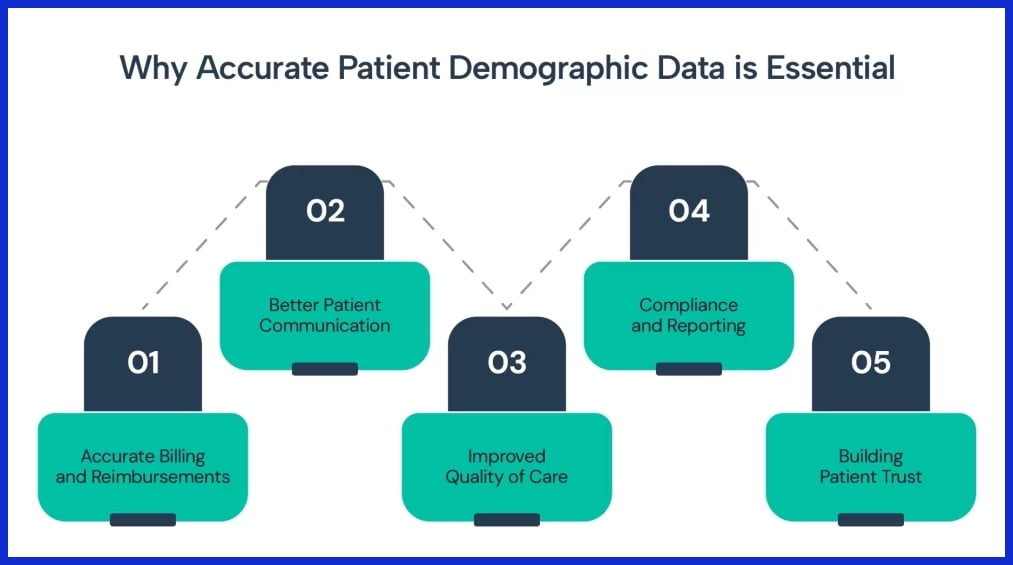
Collecting and studying patient demographics and health patterns help drive everything from language usage to topic selection. Knowing a region has high diabetes rates, for example, justifies solid resources for a “Diabetes Center” on the site, complete with treatment protocols and support materials.
Analytics, such as Google Analytics, Search Console and heatmaps, show how people engage with content, pointing out any gaps or strengths. Having this ongoing tracking ensures that your content stays relevant as trends change.
Technical Signals
Tech SEO drives GEO strategies under the hood, allowing AI search engines to easily navigate and provide relevant responses. Mobile optimization is mandatory as prospective patients increasingly seek healthcare information on their phones. Implementing an effective digital marketing strategy is crucial for healthcare organizations to enhance their online presence.
Schema markup is essential for improving AI search results. Structured data, such as ‘MedicalCondition’ or ‘Physician’ schema, enables AI tools to accurately interpret medical content and reference reputable sources. A well-optimized ‘Diabetes Center’ page with clear schema has a much higher chance of being featured in an AI discovery.
Feedback Loops
Constant feedback is the motor for perpetual learning. Mechanisms for gathering patient feedback and auditing performance include:
-
Patient satisfaction surveys after appointments or content interactions
-
On-site error or topic request forms
-
Social media monitoring for community sentiment and trending questions
-
Routine review of analytics dashboards to identify shifts in user behavior.
Ongoing SEO audits catch what’s working and what needs a touch-up. Strategies need to be fluid, changing as AI models and user expectations do. Real-time data is the north star—evolve or be left behind.
Conclusion
Generative Engine Optimization is revolutionizing online healthcare organizations and connections with individuals. Embrace GEO for enhanced search presence, increased patient confidence, and precise health data delivery. It boils down to combining intelligent automation with authentic, human material without ever forgetting privacy regulations and compliance rules. Healthcare is a fast-moving space, and your digital strategies need to keep up. As fresh tech and rules forge the future, an agile GEO strategy enables organizations to evolve and succeed. Getting it right isn’t just about rankings; it’s about building relationships and delivering trustworthy care in every online encounter. The labor is continuous, but the benefits are tangible. If you’re looking to navigate these shifts without the headache, check out SERPninja. We can help you dial in your strategy and stay ahead of the curve.
Frequently Asked Questions
What is Generative Engine Optimization (GEO) in healthcare?
Generative Engine Optimization Healthcare ensures that reliable, quality healthcare information appears in ai search results, enhancing patient access to dependable resources.
Why is GEO important for healthcare providers?
GEO for healthcare tech companies helps providers enhance their digital marketing strategy to get discovered by more patients, ensuring the information shared is accurate and compliant.
How can healthcare organizations implement a GEO strategy?
Enterprises can begin with AI-assisted helpful content generation, keyword optimization, and frequent information refresh. They should be truthful and healthcare compliant.
How does GEO balance automation with authenticity?
GEO utilizes AI for efficiency in healthcare tech and always incorporates human review. This equilibrium keeps precise, useful, and truthful information that fosters patient confidence and satisfies regulators.
What are the compliance risks in GEO for healthcare?
GEO must ensure compliance with strict healthcare regulations, safeguarding patient information and ensuring accurate claims, as non-compliance can lead to fines and damage to its reputation in the healthcare tech sector.
How does GEO impact the future of health information?
GEO enhances global access to dependable health information. As AI changes, more individuals will receive the right information swiftly, guiding them to smarter health choices.
What metrics should be tracked to measure GEO success in healthcare?
Important metrics include site traffic, search rankings, engagement rates, and patient feedback. By tracking these, you can evaluate how effectively the AI search results strategy is meeting patient needs and business objectives.


