


Key Takeaways
- Generative Engine Optimization (GEO) is the new frontier of search, focusing on getting your content cited by AI models like ChatGPT, Gemini, and Perplexity.
- Wix is highly equipped for the AI search era, offering native structured data tools that act as a direct translation guide for large language models (LLMs).
- Clean page hierarchies and clear information retrieval structures are non-negotiable if you want AI to confidently recommend your website to users.
- Wix’s recent rollout of AI visibility tracking allows site owners to actually measure how often their content is being referenced in AI-generated answers.
- Effective wix seo optimization now requires a balance of answering direct questions clearly while maintaining technical backend hygiene.
Think about the last time you looked up a complex question online. Chances are, you didn’t just scroll through pages of blue links. You probably typed your question into an AI tool like ChatGPT, Gemini, or Google’s AI Overviews, and read a neat, summarized answer. Search behavior is changing rapidly, and as website owners, our strategies have to change right alongside it.
This is a huge transformation that is referred to as Generative Engine Optimization (GEO). The new objective is to be the trusted source that AI models refer to when formulating their answers rather than the top-ranked page it could pull up on a traditional search results page. Old school developers who previously thought they were the only ones capable of using the proper tools for the job criticized platforms like Wix for its shoddy work on search engine capabilities. However, today the discussion has turned upside down.
Well, is Wix really suitable for this new age of AI search? So the short answer is yes! Indeed, Wix has been insidiously working its way into becoming one of the most powerful platforms for GEO. They have developed tools that elegantly structure data for machines, helping your content be more easily scraped, understood, and cited by AI. Let’s take a closer look at how it works and how you can use these new search tactics in your own website.
Tying Wix into the Generative Engine Optimization (GEO) trend
If you really want to know how to optimize a website for SEO in 2024, you need to know what the AI models actually want from a website. LLMs like Perplexity AI or ChatGPT won’t read web pages like you and I do. They are not fond of your colorful theme or your fancy scroll animation. Their interest is in linear information. They want to extract facts quickly and confidently.
That’s where Wix’s built-in structured data and neat, logical page structures fit in. Structured data is basically a code segment on your site that is understood by search engines. It tags your content, telling the AI, “This is a product, this is the price, and this is a customer review.” Wix enriches the site with this schema markup as part of its platform. This doesn’t require a computer science degree to set up—you can set up the dashboard.
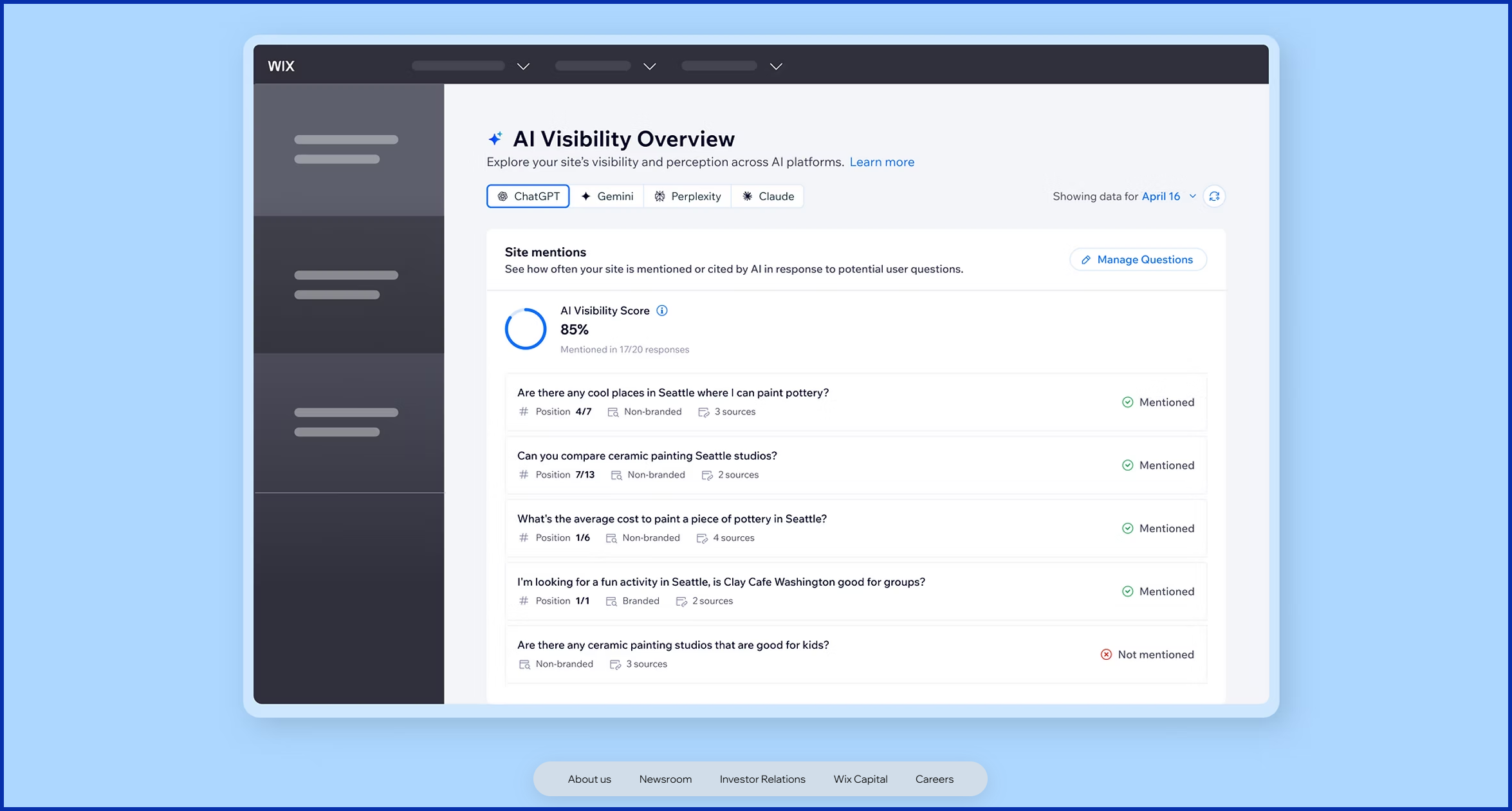
In addition, Wix recently added an AI visibility tracking tool that enables site owners to see how their sites are doing in generative search environments. This is a massive leap forward. It also lets you know if an AI engine is learning your blog posts or product pages so that it can answer user questions. With this in-depth tracking and clean, logical page structures (where your homepage links to your service pages, which link to your blog categories), your content is very easy to digest for LLMs. If an AI knows your site architecture without having to make an educated guess, it’s much more likely to mention your brand as an authoritative source in its responses.
Why LLMs Love Clean Data: The Reality of Information Retrieval
When we talk about information retrieval and search engine optimization, we are talking about how easily a system can find and pull the exact answer a user is looking for. In the past, people would try to trick search engines by stuffing a keyword onto a page a hundred times. Today, AI models are way too smart for that. They look for context, relevance, and factual accuracy.
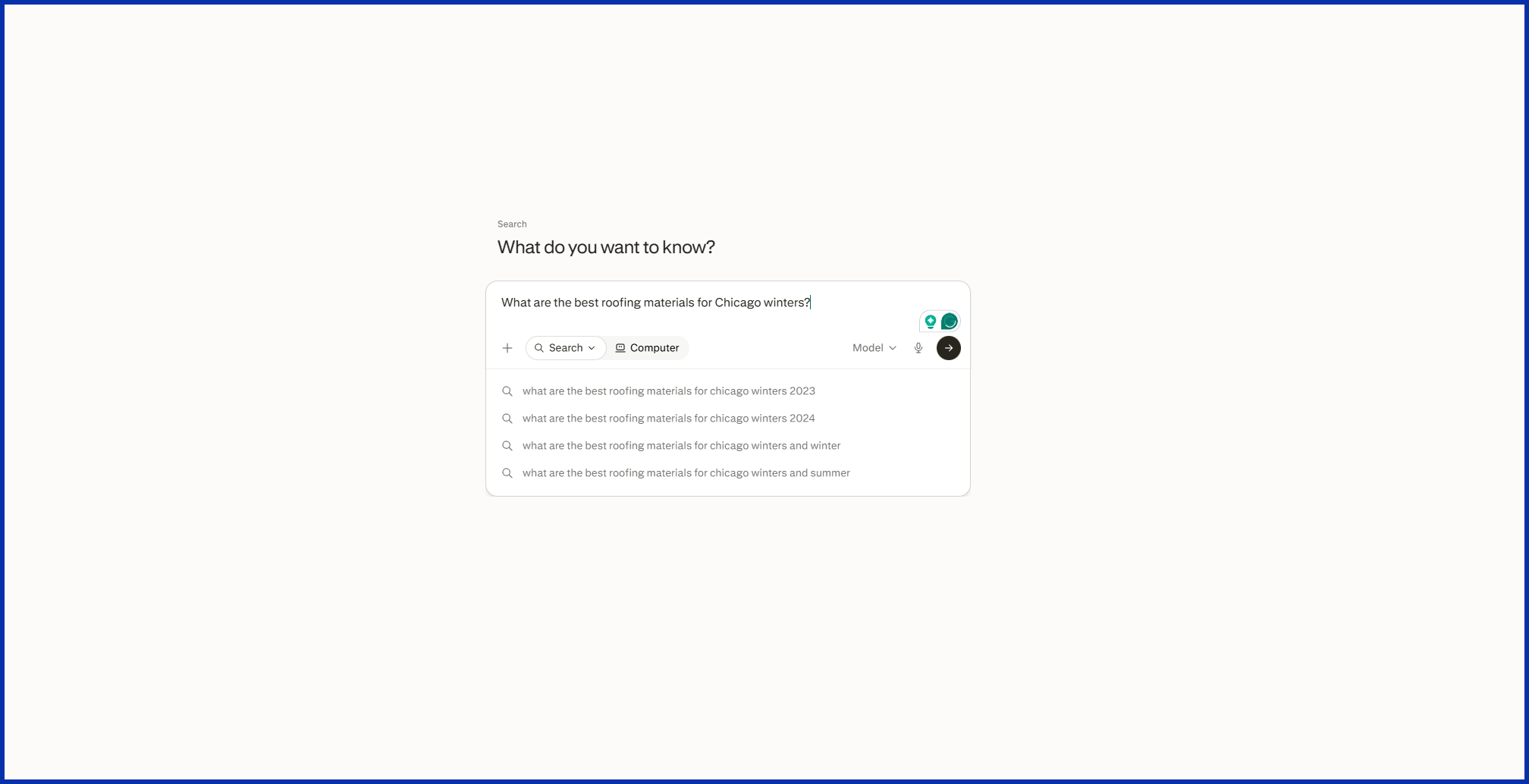
Let’s look at a real-world example. Imagine you run a local roofing company in Chicago, and your website is hosted on Wix. Someone opens Perplexity and asks, “What are the best roofing materials for Chicago winters?” If your website just has a giant, rambling paragraph about how great your company is, the AI will likely skip right over you. It takes too much effort for the machine to parse out the facts.
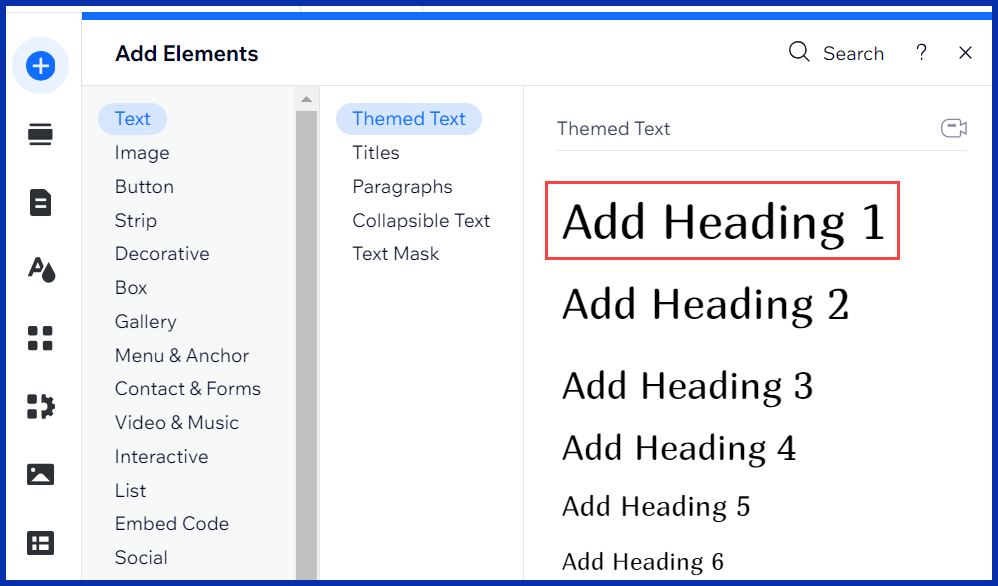
However, if your Wix site features a dedicated, cleanly formatted blog post titled “Best Roofing Materials for Chicago Winters,” the AI takes notice. Because you used Wix’s built-in header tags (H1 for the title, H2s for each material type) and added clear, factual descriptions under each section, the AI can instantly retrieve that information. The machine recognizes that your data is organized, highly relevant to the user’s prompt, and easy to extract. As a result, when Perplexity generates its answer for the user, it pulls your bullet points and links directly to your Wix site as the citation.
This is the core of modern wix seo optimization. You aren’t just writing for human eyes anymore; you are structuring your knowledge so that a highly advanced machine can effortlessly scan it, understand the relationship between your pages, and confidently present your expertise to the world.
Top Tips for Wix SEO Optimization in the AI Era
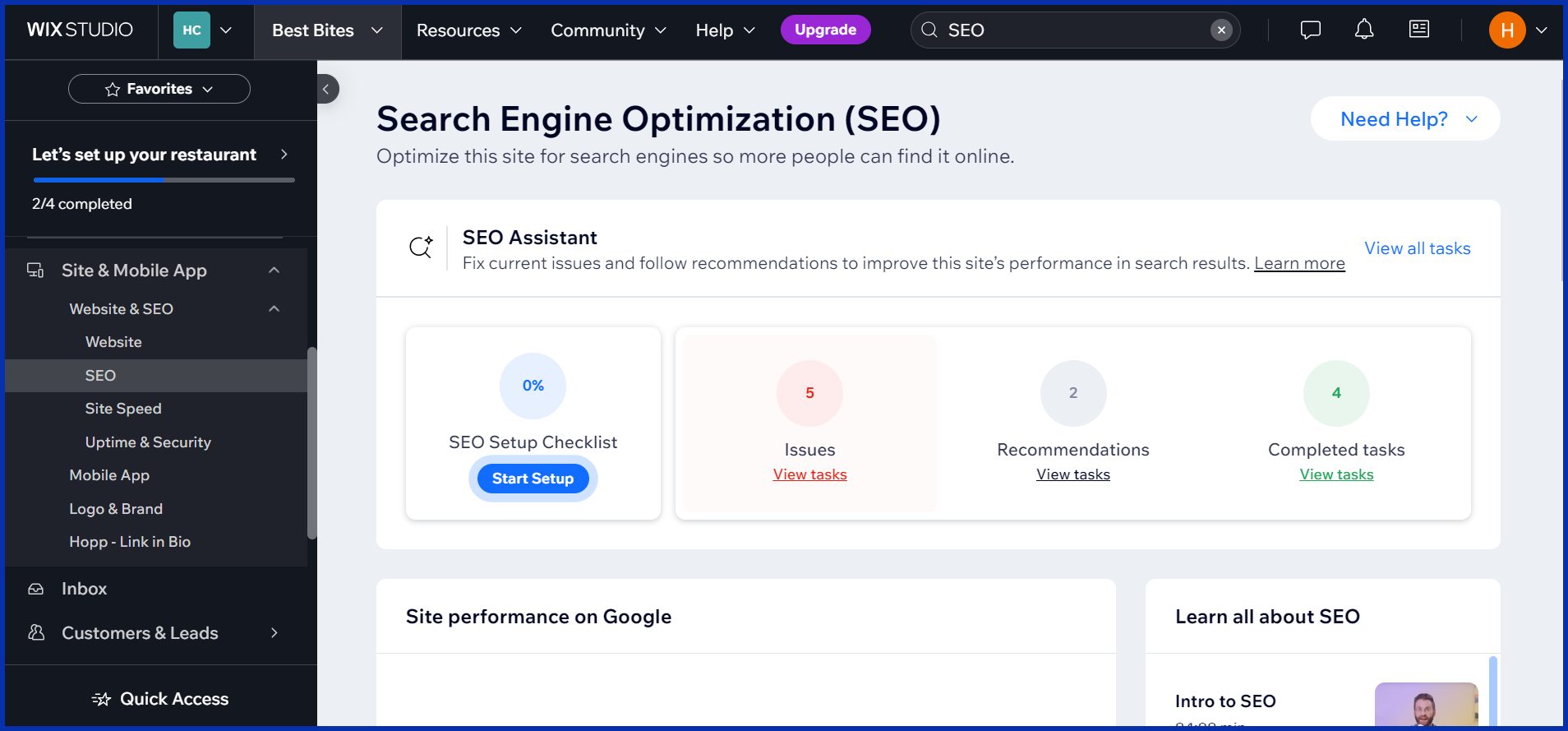
Now that we know what AI models are looking for, how do we actually execute this on a Wix website? The good news is that you don’t need a bunch of complicated third-party plugins. The tools you need are already sitting in your Wix dashboard; you just need to know how to use them effectively for generative search.
Here are a few practical strategies to optimize your Wix site for AI citations:
- Maximize Native Schema Markup: Don’t skip the advanced SEO tab on your Wix pages. If you are writing a recipe, use the recipe schema. If you have an upcoming event, use the event schema. This feeds the LLMs the exact categorized data they crave, allowing them to feature your site in rich snippets and direct AI answers.
- Write for Direct Answers: AI models are designed to answer questions. Look at your content and ask yourself if you are answering the “who, what, where, when, and why” clearly. Try opening your blog posts with a direct, bolded summary of the answer before expanding on the details below. This makes it incredibly easy for an AI to scrape the exact answer it needs.
- Keep Your URL Structure Flat and Logical: Your page hierarchy matters. If an AI spider has to click through five different confusing menus to find a service page, it will likely give up or misunderstand the page’s importance. Use Wix’s navigation tools to keep your site architecture simple. A clean path like Home > Services > Commercial Roofing is perfect for both humans and machines.
- Optimize Your Images with Descriptive Alt Text: AI models process text, but they use alt text to understand images. When uploading featured images to Wix, write natural, descriptive sentences about what the image shows. This helps the AI understand the complete context of your page, boosting your overall relevance for the topic.
By consistently applying these techniques, you are essentially rolling out the red carpet for AI search engines. You are making their job easier, which makes them much more likely to reward you with valuable citations.
Tracking Your AI Visibility and Adapting Your Strategy
You can do all the optimization in the world, but it doesn’t mean much if you can’t see the results. Traditionally, SEO benchmarking involved checking out where you showed up on the typical search page. How to gauge success if a user finds the answer straight out of the AI chat interface?
This is where the AI-powered visibility tracking feature of Wix can be a game-changer for any digital marketer or business owner. It lets you view impressions and clicks that your site is getting from AI search features, such as Google’s AI Overviews. You can see the raw data to determine whether your new generative search strategy is working, rather than guessing. You may have found that your long-form educational-like articles are constantly cited by AI, but your shorter product pages are not getting cited. If Wix ain’t working for you, you can check out SirTracksAlot; it monitors how LLMs like Google AI Overview and ChatGPT talk about your brand, products, and competitors.
The information helps you to pivot and adjust. When you see that a particular blog post is consistently being referenced in other blog posts by an AI model, you realize that you are doing a good job at formulating this page. You can then use that same page structure: the same H2s, the bulleted lists, the structured data—and do the same for all other tutorials. Being ahead of the curve in the AI world isn’t simply about making just one or two changes to your website; it’s about observing what happens when your site is fed to the machines, and adjusting your strategy accordingly based on real performance data.
Conclusion
Search is evolving at a breakneck pace, and the days of simply throwing a few keywords onto a page are long gone. The rise of Generative Engine Optimization means that website owners have to think about how artificial intelligence models read, retrieve, and cite information. Thankfully, Wix has stepped up to the plate, providing a robust suite of tools—from clean page hierarchies and native structured data to cutting-edge AI visibility tracking—that make it an excellent platform for this new era.
By organizing your data clearly, answering user questions directly, and keeping your site structure logical, you can turn your Wix website into a trusted resource that AI models love to quote. Of course, keeping up with these constant changes in the search landscape can be overwhelming. If you want to ensure your brand stays visible in both traditional and AI-driven search environments, partnering with the experts at SERPninja can help you build a modern, high-performing content strategy that gets real results.
FAQs
Does Wix really rank as well as WordPress for SEO?
Yes, it absolutely does. While WordPress was historically favored for its technical flexibility, Wix has completely overhauled its SEO infrastructure in recent years. With native structured data, customizable meta tags, and fast server response times, a well-optimized Wix site can compete with any other platform in both traditional and AI search results.
How long does it take for AI to start citing my website?
There is no exact timeline, as AI models update their training data and real-time retrieval indexes at different rates. However, if your site is connected to Google Search Console and you are actively publishing clean, well-structured content, you can start appearing in AI Overviews and tools like Perplexity within a matter of weeks.
What is the most important thing to focus on for AI citations?
Factual accuracy and clear formatting are the two most critical elements. AI models want to provide correct answers. If your content is accurate, answers a specific question directly, and is formatted with clear headings and schema markup, you have a much higher chance of being selected as a primary source.
Can I do wix seo optimization myself, or do I need a developer?
One of the biggest advantages of Wix is that it is designed for regular users. You do not need a developer to implement most of these strategies. The platform’s built-in SEO setup checklist and straightforward dashboard allow anyone to add structured data, optimize tags, and organize page hierarchies without touching a single line of code.


