

Key Takeaways
- A sudden organic traffic crash is often tied to Google’s Search Essentials spam policies, not just bad luck with an algorithm update.
- The most common culprits: thin affiliate content, hidden text or links, link schemes, and scaled AI content.
- Search Console tells you the difference between a manual action (a human reviewer flagged you) and an algorithmic drop (a systemwide update reshuffled rankings).
- Fixing the root cause always comes first — there’s no shortcut that skips this step.
- Real recovery is a two-part job: clean up the violation, then rebuild the trust signals Google uses to decide you deserve to rank again.
You open Search Console expecting the usual small wobble. Instead, the line falls off a cliff and just stays there.
No warning. No obvious mistake. Just gone.
If that’s where you are right now, take a breath. This happens to careful site owners just as often as careless ones, and in almost every case, it’s diagnosable.
Google actually publishes the rulebook it uses to judge your site: the Search Essentials guidelines. Most people only glance at it when things are going well. Used the right way, though, it doubles as a diagnostic tool — a checklist you can hold up against your own site to find out exactly where things went wrong.
That’s what we’re doing here.
What Exactly Are Google Search Essentials Guidelines?
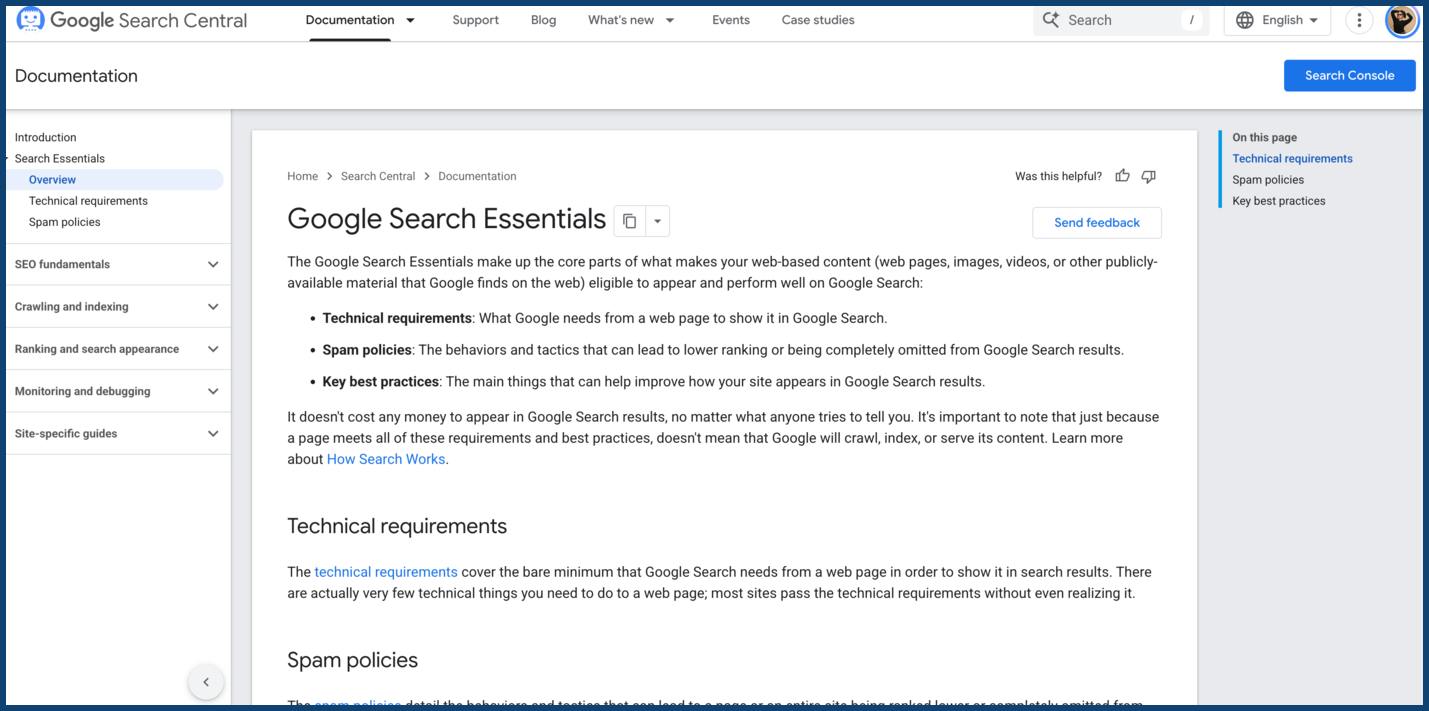
Google Search Essentials is the official name for what used to be called the “Webmaster Guidelines.” Google renamed and restructured it in 2022, and it’s still being actively revised — most recently in late August 2026.
Think of it as three checklists rolled into one:
- Technical requirements — the bare minimum Google needs to crawl, index, and show your page at all: working URLs, no accidental blocks in robots.txt, content that’s actually accessible.
- Spam policies — the specific behaviors that get pages demoted or removed, from hidden text to misleading functionality.
- Key best practices — the habits that help content perform once it’s already eligible to rank.
Here’s why this matters for diagnosis: when traffic flatlines, most site owners start guessing. Was it an update? A bad plugin? A competitor?
Instead of guessing, you can walk through the spam policies section and honestly ask, “does this describe anything on my site?” It’s the same list Google’s own reviewers use. And Google keeps adding to it — a policy against “back button hijacking” (sites that trap visitors and block normal browser navigation) was added in 2026, proof this list is very much alive and enforced.
The Spam Policy Violations Most Likely to Tank Your Traffic
Not every violation causes a dramatic crash. A handful are repeat offenders, though.
Thin affiliate content is one of the biggest: product pages that just copy the merchant’s description, with no original testing, comparison, or opinion added. Hidden text and links are another classic — white-on-white text, zero-size fonts, a link buried behind a single character. These are old tricks, but Google’s systems still catch them fast.
Link spam covers paid links, automated link-building software, and keyword-stuffed anchor text crammed into guest posts. Scaled content abuse, formally added to the policy in 2024, targets mass-produced AI or scraped pages built to farm keywords rather than help anyone. And site reputation abuse covers hosting third-party content mainly to borrow a domain’s built-up trust.
Two of these have well-documented, real-world cases worth knowing.
In 2011, the New York Times uncovered a large-scale link-buying scheme behind a major department store’s SEO results. Google’s webspam team confirmed the violation, and one of the retailer’s product pages fell from the #1 spot for “Samsonite carry-on luggage” to position 71 within about two hours.
Site reputation abuse became a formal policy partly because of what happened to sites like HouseFresh, an independent air-purifier review site. Its daily Google visitors fell from around 4,000 to roughly 200 as large media brands “rented out” their own domain authority to commercial content that outranked HouseFresh’s original testing.
Here’s what catches most webmasters off guard: fixing the violation stops the bleeding, but it doesn’t automatically restore your rankings. Google needs fresh, credible signals that your site deserves trust again — which is exactly where a partner like SERPninja comes in, focused on earning placements on real, relevant, editorially run sites instead of the kind of shortcuts that caused the drop in the first place.
Manual Action or Algorithm Update? Here’s How to Tell
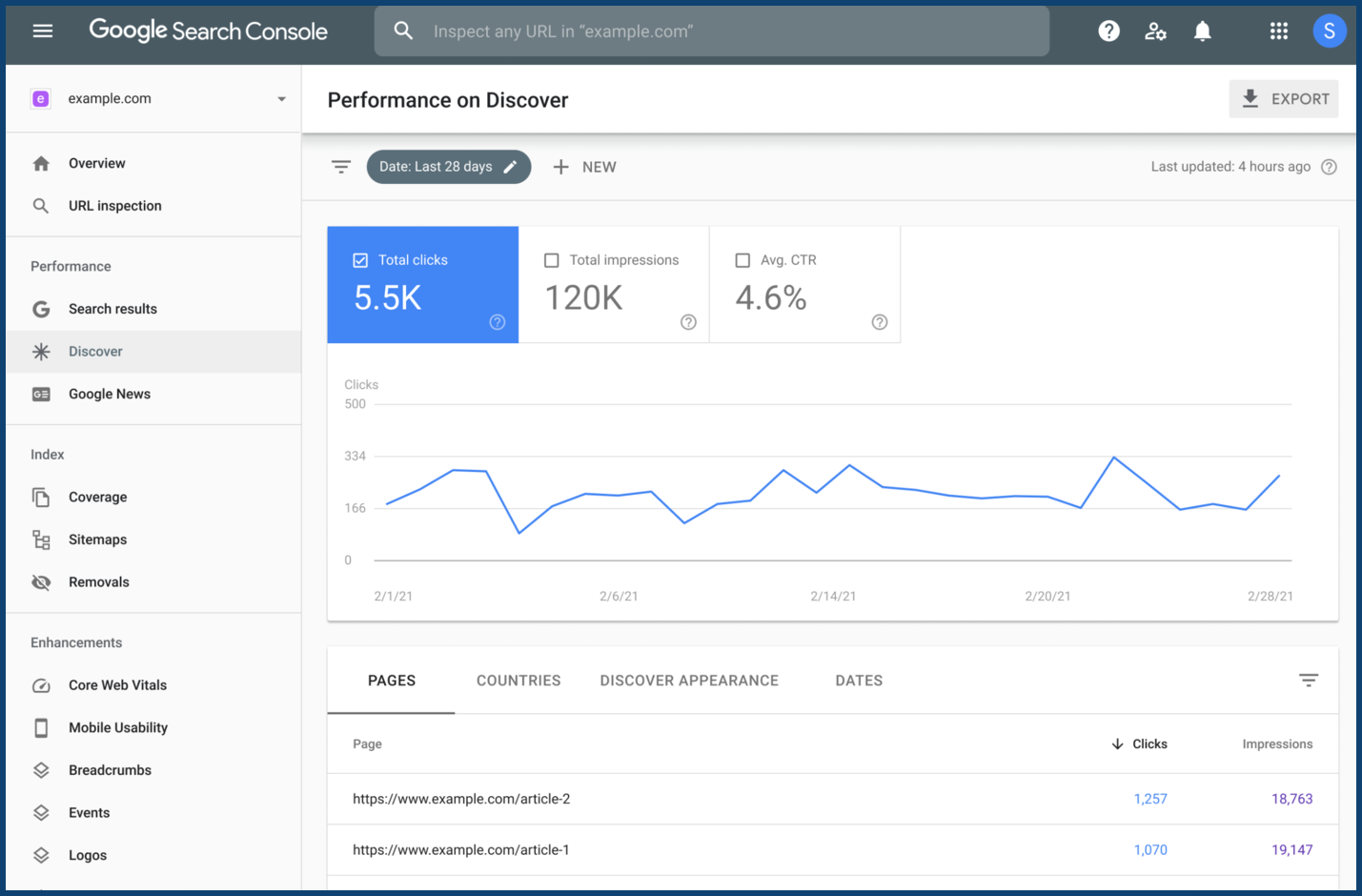
Before you fix anything, figure out what you’re actually fixing. These two situations look similar but need completely different responses.
- Check the Manual Actions report in Search Console (Security & Manual Actions → Manual actions). If a human reviewer flagged you, it’ll say exactly which policy you violated.
- Check the Security Issues report, too. Hacked content and malware get handled separately, but they crash traffic just as fast.
- Nothing listed? You’re likely looking at an algorithmic shift. Compare your drop date against Google’s public list of ranking updates.
- Look at position, not just clicks. A small slide (position 2 to 4) is normal fluctuation. A steep one (position 4 to 29) suggests a broader reassessment.
- Widen your date range to 16 months in the Performance report, to rule out a seasonal pattern repeating from last year.
A manual action comes with a fix-and-request-review path. An algorithmic drop doesn’t — there’s no button to press. You improve the site and wait for Google’s systems to take notice, which can take weeks or months.
Your Cleanup Checklist Before You Ask Google for a Second Chance
Once you know what you’re dealing with, match the fix to the problem:
- Thin affiliate pages — rewrite with original testing, comparisons, or first-hand insight, or remove the page and redirect it.
- Hidden text or links — strip out the CSS or HTML tricks completely. Every element should be visible to a human, not just a crawler.
- Paid or spammy links — ask sites to remove them where you can, and use Google’s disavow tool for the ones you can’t.
- Mass-produced or scraped content — rewrite it with genuine value, or noindex and prune it.
- Borrowed-authority content — bring it fully under your own editorial control, with clear authorship, or take it down.
Found a manual action? Fix everything tied to that specific policy, document what changed, and submit a reconsideration request through Search Console. Be specific — vague requests get rejected.
Algorithmic drop? There’s no request to file. Make the fix, then focus on rebuilding, because Google rewards sites that keep demonstrating quality over time, not sites that make one quick edit and stop.
Conclusion
A traffic flatline feels personal, especially when your income depends on it. But it’s rarely a mystery once you stop guessing and start checking it against Google’s actual rulebook.
Fixing the violation is step one. Step two — proving to Google your site deserves trust again — is where most recovery attempts stall, because a cleaned-up site with no new positive signals can just sit quietly in the middle of the pack.
This is where SERPninja fits in. Rather than chasing shortcuts, SERPninja focuses on earning backlinks the way Google actually rewards them: guest posts and niche edits on real, relevant, editorially-run sites, placed by people who understand exactly which policies got you into trouble in the first place. It’s the difference between hoping Google notices your cleanup and actively giving its systems new reasons to trust you again.
If your traffic has flatlined, don’t just wait it out. Diagnose it, fix it, then go rebuild the authority that got you ranking in the first place.
FAQs
How long does it take to recover from a Google penalty?
Manual actions can lift within days to a few weeks of a successful reconsideration request — JCPenney’s link-scheme penalty, for example, was lifted after about 90 days. Algorithmic drops take longer and less predictably, often weeks to months.
What’s the real difference between a manual action and an algorithmic drop?
A manual action means a human reviewer flagged a specific policy violation on your site; you’ll see it in Search Console. An algorithmic drop is your site being reassessed by automated ranking systems, usually alongside thousands of other sites, with no direct notification.
Can other people’s bad backlinks hurt my site?
Rarely, but it happens, especially with a coordinated negative SEO attack. Google says it typically ignores spammy links pointed at you without your involvement; the disavow tool exists for the cases where you want to be extra safe.
Will link building alone fix a spam penalty?
No. Link building rebuilds trust after the underlying issue is fixed — it can’t substitute for removing thin content, deleting hidden text, or resolving a manual action still sitting on your account.
How do I know if my affiliate content counts as “thin”?
Ask whether a reader gets anything they couldn’t get straight from the merchant’s own page. If your content just reorganizes product descriptions with no original testing, comparison, or opinion, it’s a strong candidate.


