

Key Takeaways
-
IR is the foundation: Effective information retrieval (IR) is the backbone of search engine optimization (SEO), dictating how engines find, organize, and serve results.
-
Intent is everything: Understanding user intent and optimizing content structure with clear keywords and metadata greatly enhances search visibility.
-
Complex mechanics: Search engines rely on advanced algorithms, crawlers, and meticulously organized indices to connect queries with the best content.
-
Modern challenges: SEOs must constantly adapt to AI-generated content, shifting user behaviors, and demanding technical performance standards.
-
UX is an ranking factor: Prioritizing user experience through intuitive design, fast load times, and mobile responsiveness leads to better search performance.
-
The human element: Combining expert curation, real storytelling, and community feedback builds the trust and relevance needed for long-term SEO success.
Information retrieval (IR) and search engine optimization (SEO) are two sides of the same coin. IR is the science of helping search engines discover, interpret, and present pertinent content from massive databases. SEO is the practice of aligning a website’s content and technical signals with those IR systems.
Today’s digital ecosystem requires an approach that marries user intent, site architecture, and trust signals. By understanding the core theories of information retrieval, SEO experts can stop chasing algorithms and start building content that naturally satisfies search engine criteria.
What is Information Retrieval?
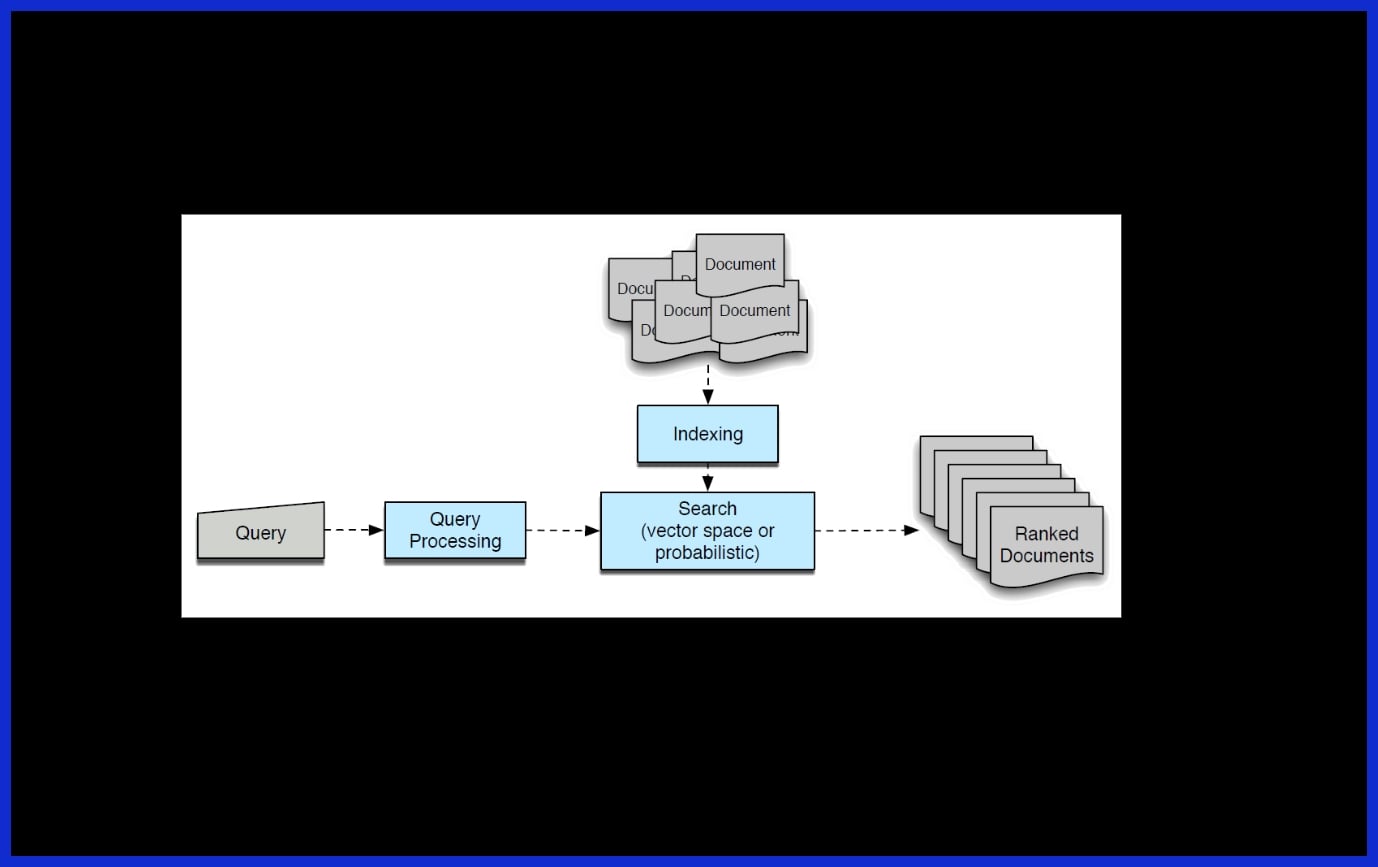
Information retrieval, in essence, is the art of finding just the right bits of information from huge collections, be they documents, images, or videos, that match a user’s particular query or need. Modern information retrieval arose with computers in the mid-20th century and rapidly became a scientific field, with milestone events such as the 1980 ACM SIGIR conference confirming its stature.
Today, web search engines are the most recognizable instance, but these same concepts drive platforms for enterprise document search, multimedia libraries, and even voice recognition.
The Core Problem
Matching a user’s query to relevant documents within massive, complex databases is no easy task. It’s not just about keywords; it’s about inferring what the user really wants. Intent is key.

For example, a search for ‘bank’ might refer to a financial institution or a riverbank. Ambiguous terms can cause irrelevant results, annoying users and eroding confidence in the system. As difficult as that is, retrieval systems have to contend with the variety of data types, from PDFs and spreadsheets to audio, all of which must be treated and indexed differently.
The System Components
-
Document database
-
Search algorithms
-
Ranking modules
-
User interface
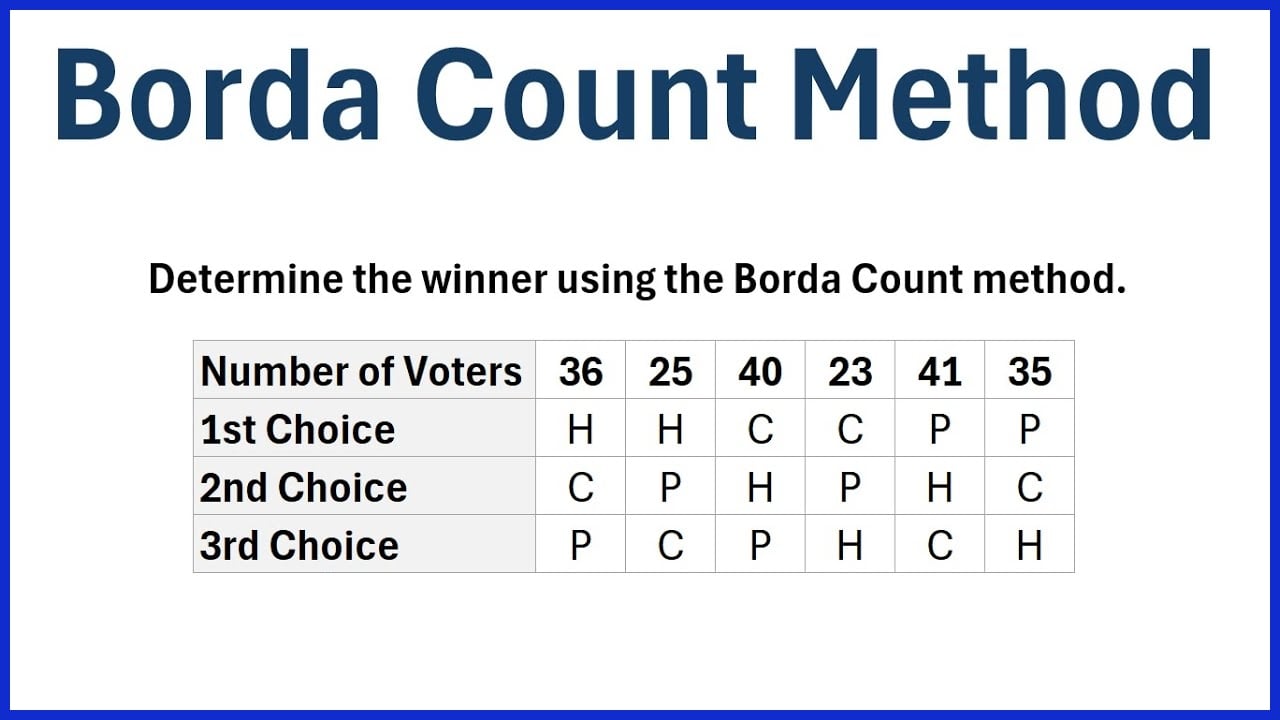
Search algorithms are the backbone, scoring and ranking results using techniques like score normalization and voting, such as CombSUM and Borda count. Web crawlers collect information from all over the web, inputting it into the system’s index.
A strong, carefully engineered index is essential for quick, precise retrieval, particularly when data continues to multiply in volume and diversity.
The Relevance Goal
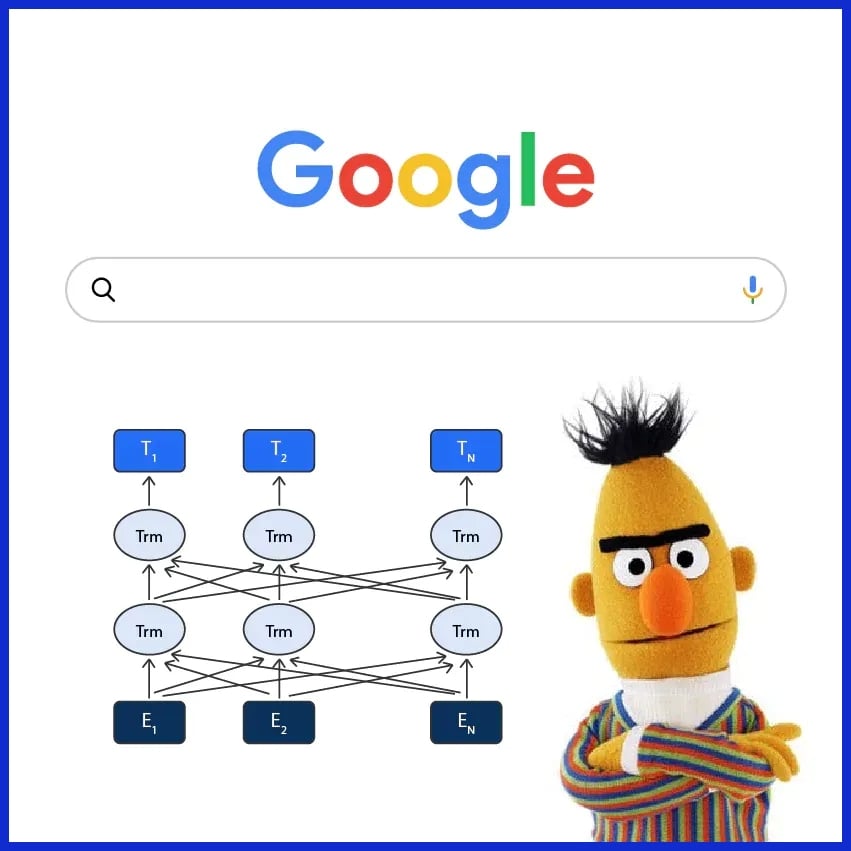
The ultimate metric of an IR system is relevance: how effectively it balances precision (accuracy of results) with recall (comprehensiveness of results). Breakthroughs in deep learning and Natural Language Processing (NLP), like Google’s BERT, allow modern IR systems to predict relevance and grasp genuine user intent better than ever before.
How Information Retrieval Powers SEO
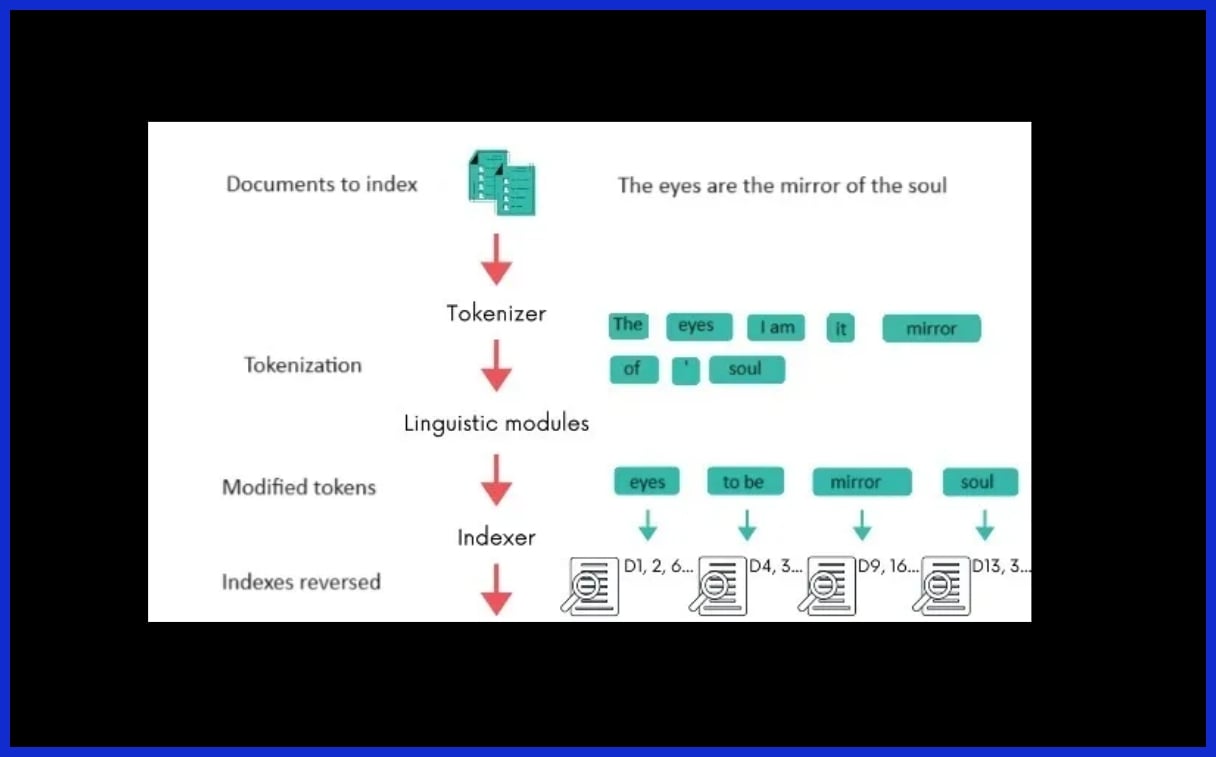
IR is the blueprint for how search engines index, understand, and serve the 3.5 billion searches processed daily. By understanding IR models—from basic Boolean logic (AND, OR, NOT) to complex vector space modeling—SEOs can anticipate algorithm updates and build better content.
1. Content Representation
Content representation means optimizing not just the right keywords but metadata — titles, descriptions, alt text — which search engines use for indexing. Multimedia such as images, videos, or infographics provide context, making your content more compelling and easier to read for algorithms.
Markup, like schema, highlights key relevance and context, enhancing visibility in search results and allowing rich snippets.
2. Query Understanding
Understanding what users are searching for is key to SEO. Search engines utilize NLP to understand search intent, deconstruct complex queries, and identify synonyms or related terms.

For instance, if you search “best electric cars,” the engine finds more than just those words. It finds similar phrases like “top EVs” or “affordable electric vehicles.” Refining queries through NLP ensures users obtain results that align with their needs, not just their literal search terms.
3. Ranking Signals
Ranking signals—like backlinks, domain authority, and user engagement metrics—then place results. CTR, dwell time, and bounce rates all tell search engines about relevance and satisfaction.
Content freshness and continuing relevance are important as well. Search engines favor recently updated, authoritative pages. Calculating relevance tends to be math-based, such as measuring the cosine similarity between content and query vectors.
4. Result Evaluation
Evaluating search results means checking if users’ needs are actually met. User satisfaction metrics, such as return visits or low bounce rates, offer direct feedback.
A/B testing compares different result sets to see which performs better. Machine learning refines this process and continuously learns from new data to improve accuracy and relevance.
Modern Search Optimization Challenges
If you’re optimizing for modern search engines, you’re playing a new game. Information retrieval has gotten trickier with AI, evolving user behavior, and stringent technical demands. Even information retrieval systems are evaluated by how relevant and comprehensive their result sets are.
Below are the key challenges that define the landscape:
AI-Generated Content
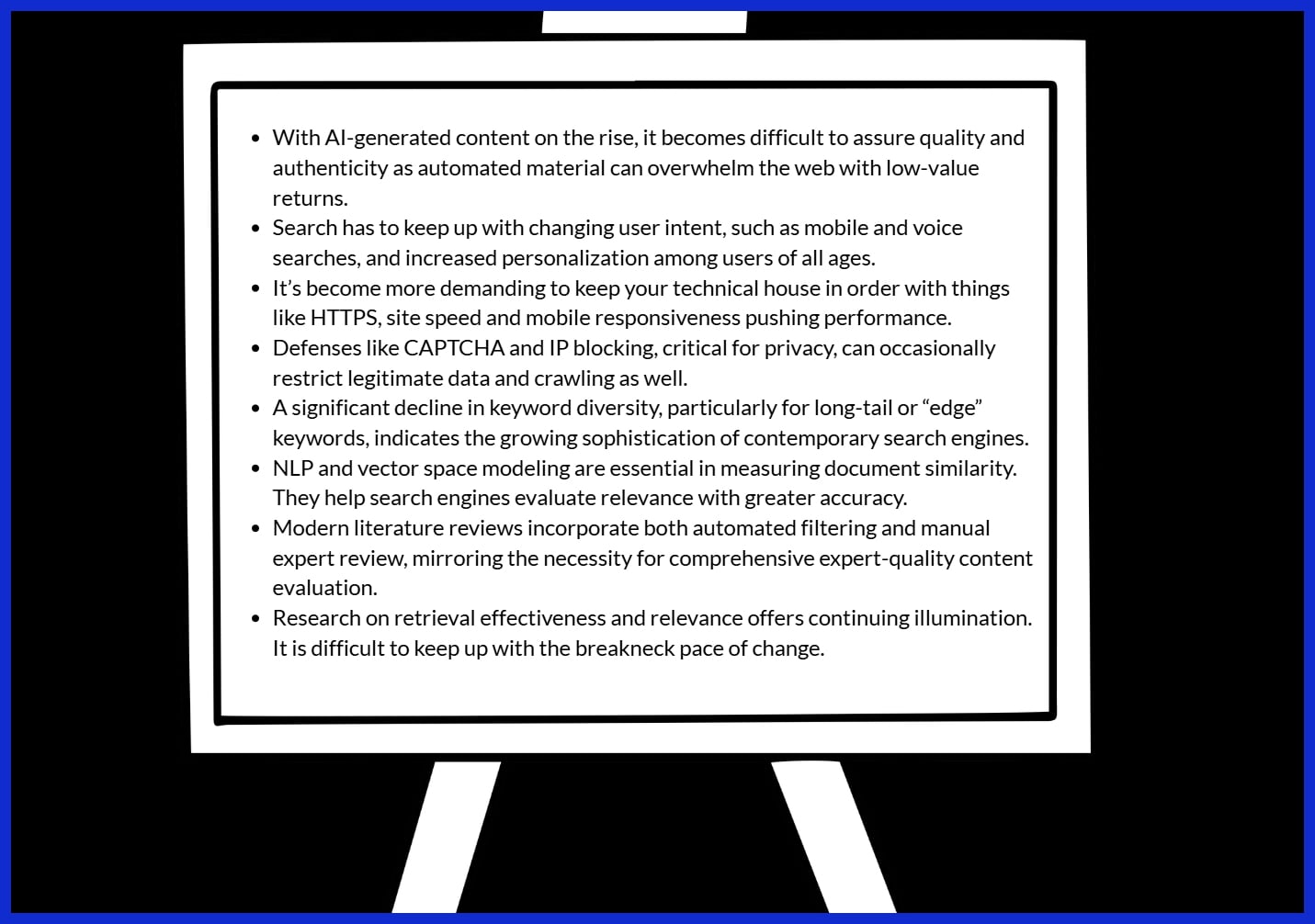
AI-generated content is ubiquitous. It accelerates output, but it frequently misses the subtlety, context, and authenticity that human scribes provide. This turns relevance into a moving target.

Search engines have to evolve, leveraging technologies like NLP to separate boilerplate AI content from deep, user-intent-driven content. Others, however, are now mixing machine-based content with manual review to increase quality. Many content teams also use Humanize AI tool to improve readability and make AI generated content sound more natural before publication. The equilibrium is precarious.
In the end, AI can assist content teams, but it’s not a flawless replacement.
Evolving User Intent
User intent is always changing, particularly with mobile and voice searches on the increase. Search engines look at user histories and context to predict what people really want, whether it’s a brief response or deep research.
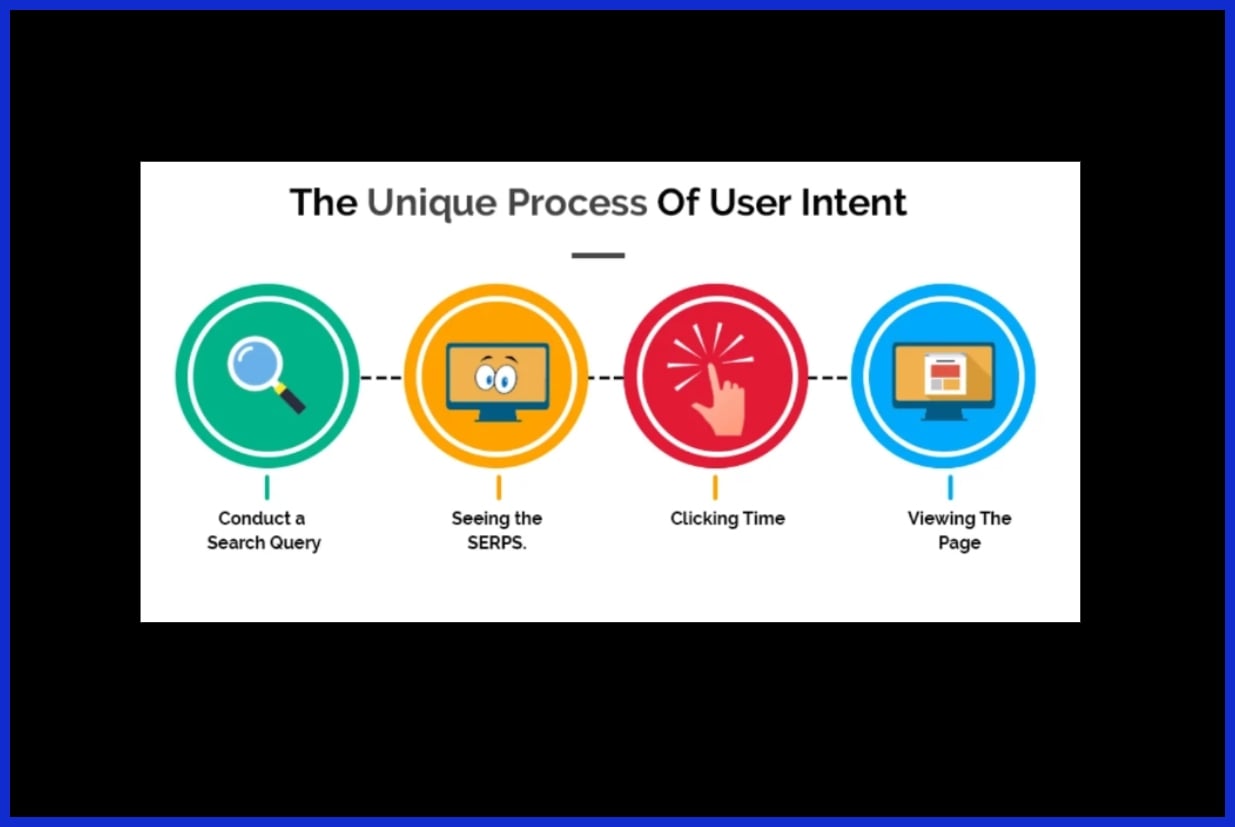
Personalization is key, with algorithms learning for each age group, region, and behavior. Context is everything now, which is forcing SEOs to think past keywords and emphasize the broader perspective.
Technical Integrity
Keeping your technical foundations rock solid is a must for search success. Common pitfalls include:
-
Slow-loading pages
-
Poor mobile usability
-
Lack of secure HTTPS connections
-
Broken links or crawl errors
Site speed and mobile-friendliness impact user experience and rankings. HTTPS connections increase confidence and search presence. Technical gaps can lead to ranking losses and crawl inefficiencies, making regular audits and updates essential. Professional technical SEO services help identify and resolve these issues to maintain strong search performance.
Why User Experience Matters

User experience (UX) is at the heart of modern SEO. Search algorithms reward sites that provide easy navigation, fast speeds, and high mobile responsiveness.
Designing for Humans
Design should remove friction. Visual cues (contrasting colors, legible fonts, minimalist layouts) help users consume information efficiently. Accessibility features like alt text and keyboard navigation ensure content is available to everyone, boosting engagement metrics across the board.
Analyzing Interactions
Heatmaps, click tracking, and web analytics show where users spend time and where they drop off. By gathering this data, teams can make targeted adjustments to both content and format, lowering bounce rates and signaling to search engines that the page is valuable.
The Human Layer in a Machine World

AI has made search engines infinitely faster and smarter, but humans still define what counts as “quality.”
-
Expert Curation: Professional curation cuts through the fluff. Users and search engines alike trust content reviewed by industry experts because it ensures nuances are caught and factual integrity is maintained.
-
Authentic Storytelling: Real stories engage users on a level that AI-generated boilerplate cannot. Authentic brand voices build trust, increase dwell time, and convert casual visitors into loyal supporters.
-
Community Feedback: User reviews, ratings, and social media signals act as a reality check for search engines, influencing what is deemed trustworthy.
Practical Application Strategies
Using information retrieval for SEO isn’t conceptual. It’s dependable, repeatable strategies that work for any serious digital brand. The goal is to build content and site structure that search engines can understand, trust, and reward.
-
Create comprehensive, original resources that answer core user needs.
-
Structure your content with semantic HTML and well-designed headers to make it easier to scan.
-
Incorporate schema markup to assist search engines in indexing your content correctly.
-
Monitor performance metrics regularly to guide optimization.
-
Content audit every quarter to keep it fresh and high performing.
-
Make it accessible and readable.
-
Use visual media to boost engagement and comprehension.
-
Postpone search result evaluation a few weeks after changes.
Foundational Content
Cornerstone content is at the heart of every successful SEO plan. Practical Application Strategies include deep, strategic guides, step-by-step how-tos, and evergreen pages covering foundational topics your audience cares about.
These assets not only capture clicks, they increase dwell time, decrease bounce, and generate trust over time. Consider evergreen assets such as ultimate guides or FAQs. These continue to attract organic traffic long after publication and help position your site as an authority in a niche.
Addressing fundamental questions, offering real-world application strategies, and citing authoritative sources build the network of relevance search engines value. Visuals, whether infographics, explainer videos, or annotated screenshots, boost engagement and accelerate comprehension of complicated ideas.
Periodically refreshing or auditing this material keeps it up-to-date and relevant. There is no stagnation or drop in ranks.
Semantic Structure
Your well-structured semantic layout makes it easier for users and search engines to understand your site. Thoughtful headings (H1 for titles, H2/H3 for sections and subtopics) indicate the structure of thought, helping pages be more scannable and accessible to everyone.
Schema markup, like FAQ, HowTo, or Article, gives more context and allows search engines to show rich results, increasing click-throughs. Semantic structure isn’t markup and headings only. It’s about creating thematically cohesive, readable content – usually at a 7th to 9th grade reading level.
User-friendly navigation and relevant internal linking keep visitors engaged and help flow authority around the site. Optimizing for humans first, not just algorithms, is in line with what today’s search engines prize.
Performance Metrics
|
Metric |
What It Measures |
Why It Matters |
|---|---|---|
|
Organic Traffic |
Visits from search engines |
Gauges reach & growth |
|
Bounce Rate |
Single-page visits |
Indicates relevance |
|
Conversion Rate |
Actions/completions |
Ties SEO to ROI |
Organic traffic displays who’s discovering you. Bounce rate exposes whether or not content satisfies user intent. Conversion rate is the nirvana, showing your work works.
View Practical Application Strategies. A/B testing different content layouts or call-to-action placements can expose what resonates best. Regular tracking, weekly and quarterly, advantageously catches dips early, so you can adjust before issues snowball.
Keep in mind, real SEO effect takes a couple of weeks to appear, so don’t hurry your analysis.
Conclusion
Stepping back, it’s obvious that information retrieval underlies modern search engine optimization. From decoding search intent to optimizing UX, every facet of SEO comes down to how closely content aligns with what people really want. Today’s search engines mix algorithms and human signals, so ranking well requires playing smart on both fronts. Pragmatic tips, like mining user questions, writing for clarity, and engineering your site, establish genuine authority and trust.
Leveraging specialized services like SERPninja.io can further strengthen this foundation by building the high-quality backlink signals that search engines value. The landscape keeps shifting, but the fundamentals stay steady: focus on relevance, make it easy for users, and respect how search engines process information. That’s how SEO generates long-term impact, regardless of algorithmic changes.
Frequently Asked Questions
What is information retrieval in the context of SEO?
Information retrieval is the job search engines do to retrieve, rank, and present relevant content in response to a query. It is at the center of how search engines match users with the information they want.
How does information retrieval improve search engine optimization?
Information retrieval aids SEO by making sure search engines are able to interpret, catalog, and rank your material correctly. This enhances the likelihood that your site shows up in pertinent search results, drawing more organic visitors.
Why is user experience important for SEO?
User experience influences how users engage with your website. Search engines give sites a bonus that are easy to use, load quickly, and provide valuable information. If it’s a good experience, you’ll rank and visitors will be pleased.
What are modern challenges in search optimization?
Things like shifting algorithms, shifting intent, voice, and mobile make today’s search optimization tough. Keeping up-to-date and concentrating on quality helps break these barriers.
How does the human layer influence search engines?
The human layer is the way actual users engage with results. Search engines keep tabs on clicks, time, and engagement to fine-tune rankings. Content that satisfies a human need will tend to do better.
What practical strategies can boost SEO using information retrieval principles?
Employ descriptive titles, keyword relevancy, and organized text. Design your site to be simple and fast. Routinely refresh content to remain relevant and trustworthy to users and search engines.
Can information retrieval techniques benefit all types of websites?
Sure, some IR applied makes any site more findable. Be it blogs, e-commerce, or corporate sites, these techniques enhance exposure and bring in focused traffic.


