

Key Takeaways
-
Set campaign goals such as brand awareness, engagement, and conversions to focus your Twitter ad strategy for sharper impact.
-
Fast-track your Twitter ad journey with different types of Twitter ads such as promoted, video, and collection ads.
-
Segment your audience by demographics, interests, keywords, and custom audiences for increased targeting accuracy and engagement.
-
Budget your ad spend, track expenses, and optimize bidding strategies to run your campaign cost-effectively.
-
Develop powerful ad creatives with striking imagery, convincing text, and explicit CTAs to encourage user action.
-
Consistency in monitoring your metrics and staying informed on platform updates will help you iterate on your Twitter ad strategies and sidestep errors.
Types of Twitter ads refer to the variety of advertising formats available for businesses and marketers on the Twitter platform.
These are promoted tweets, promoted accounts, and promoted trends which are geared towards different marketing purposes.
There are several different kinds of Twitter advertisements that you can use. Knowing what these options are enables brands to develop focused campaigns that connect with the appropriate audience effectively.
Understand Campaign Objectives

Campaign objectives are not a checklist-type thing. It’s the ground that informs every Twitter ad choice, from ad format to creative message. Twitter Ads offer flexibility for every stage of the conversion funnel, grouped into three main objectives: awareness, consideration, and conversion. Each requires a different strategy, so aligning your objective with your plan is where the magic occurs.
Below are the core objectives marketing professionals should align with their broader digital strategy:
-
Brand Awareness: Focus on getting your brand or message in front of as many relevant users as possible. The objective is to have maximum reach and recognition to make your brand a regular feature in your target audience’s feed.
-
Audience Engagement: Drive interactions such as likes, retweets, replies, or video views. This objective is focused on generating buzz, driving user interaction with your brand, and building engagement over time.
-
Driving Conversions: Move prospects down the funnel toward a specific action, whether it’s a sign-up, download, or purchase. This demands precision in your call to action and consistency with landing page experiences.
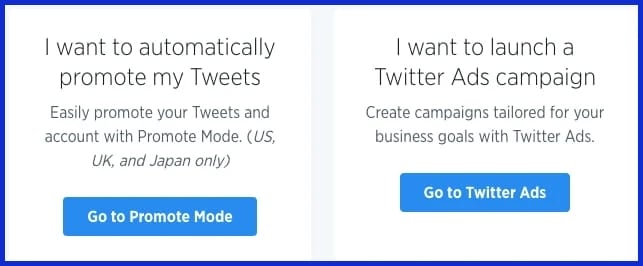
Your campaign objectives will help you select the appropriate ad format and bidding strategy. As a general rule, for awareness, you want to use formats like promoted trends or image ads, while you can use video ads or carousels for consideration and conversion.
Data reveals that employing three or more ad formats increases campaign awareness by 20% and purchase intent by 7%. Uniform branding across your creatives increases brand recall by 30%. Always measure what matters for your goal: impressions for awareness, engagement rates for consideration, and conversion data for performance campaigns.
Awareness
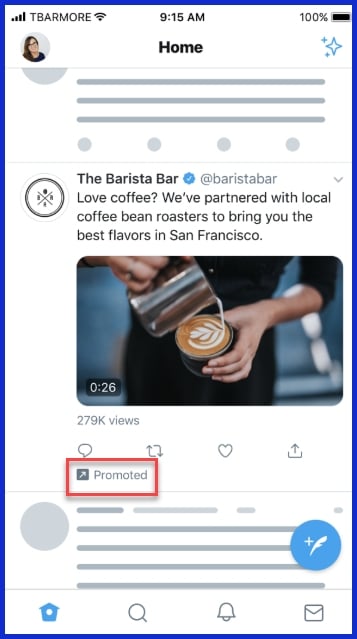
Smart awareness campaigns on Twitter get your brand seen by the right people. Promoted trends are a great lever, perfect for creating buzz or launching something new. Nothing bores like a boring message, and nothing sells like a message that talks to your audience’s passions. Powerful, consistent branding in each ad boosts memorability and makes your company linger with users.
If you’re tracking awareness, that means watching reach and impressions. These stats report to you the volume of users who viewed your content and your brand’s frequency in feeds. Remember, maximizing presence is as much about quality as it is about quantity. Show up a lot, but show up good.
Consideration
Consideration objective ads motivate people to scratch beneath the surface of what you provide, via education or narrative in most cases. Video ads shine here. They demonstrate features, share testimonials, or simplify complex products in seconds. If they have already engaged your brand in some way, retargeting them with new messages keeps you on their radar and top-of-mind.
Engagement rates (clicks, video views, replies) are the lifeblood of consideration campaigns. High engagement means it resonated. Low engagement.
Sometimes, all you need is one captivating video. Other times, a carousel or thread is best. You have to test, measure, and refine always.
Conversion
|
Action |
Format |
Conversion Goal |
|---|---|---|
|
Purchase |
Dynamic Product Ads |
Completed Transaction |
|
Sign-up |
Website Card |
Account Creation |
|
App Install |
App Install Card |
App Download |
Dynamic product ads show users customized offers based on their website browsing or previous interaction. It should be straightforward. This isn’t the space for weasel words. Establish explicit conversion objectives such as purchasing an item or subscribing to a newsletter.
To really power conversions, landing pages need to fulfill the ad’s promise. Quick load, content, and easy form all increase the likelihood that a click will become a customer.
Explore Types of Twitter Ads
Twitter’s ad ecosystem is rich with format diversity designed to meet varying campaign objectives. The different ad types enable brands to reach audiences in unique ways and let advertisers experiment and inform their creative and data-driven strategies. Knowing the main types of Twitter ads and what goals they fit best will be key to slashing through the clutter and achieving genuine, quantifiable impact.
Through Twitter’s ad manager, you can monitor and refine your campaigns of any format, adapting your approach as you discover what connects.
1. Promoted Ads
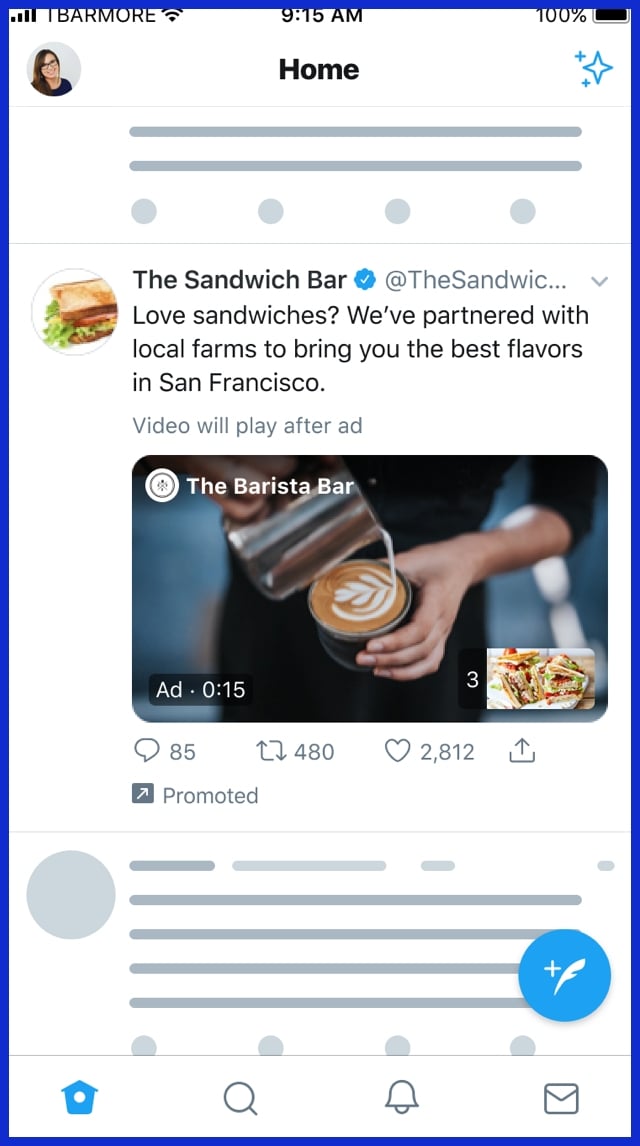
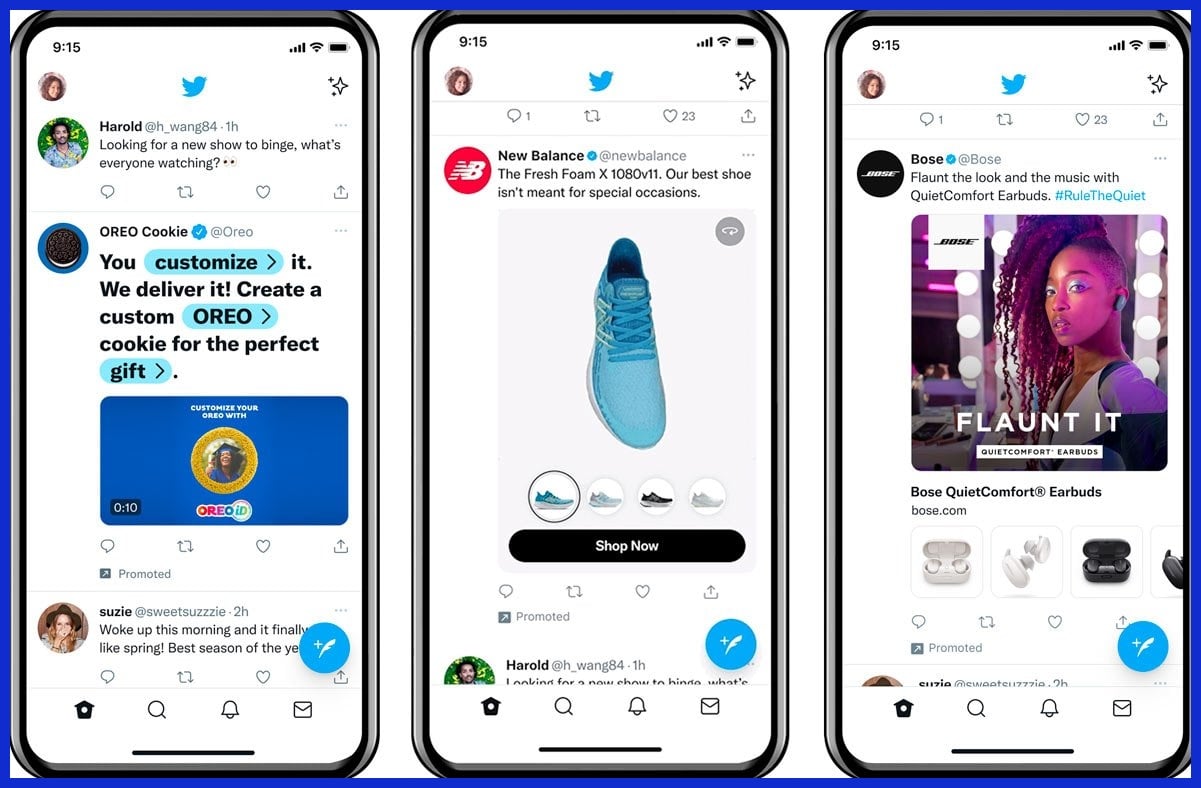
Promoted Ads are the essence of Twitter advertising. These are Promoted Tweets, Promoted Accounts, and Promoted Trends. Promoted Tweets show up right in user timelines, mixing with organic content and reaching more people.
These can be images, videos, or carousels, which are great for sending people to websites or for engagement. Promoted Accounts grow your followers by recommending your profile to users who may be interested in your industry. To inspire action, write ad copy that encourages engagement, such as a question or a valuable benefit.
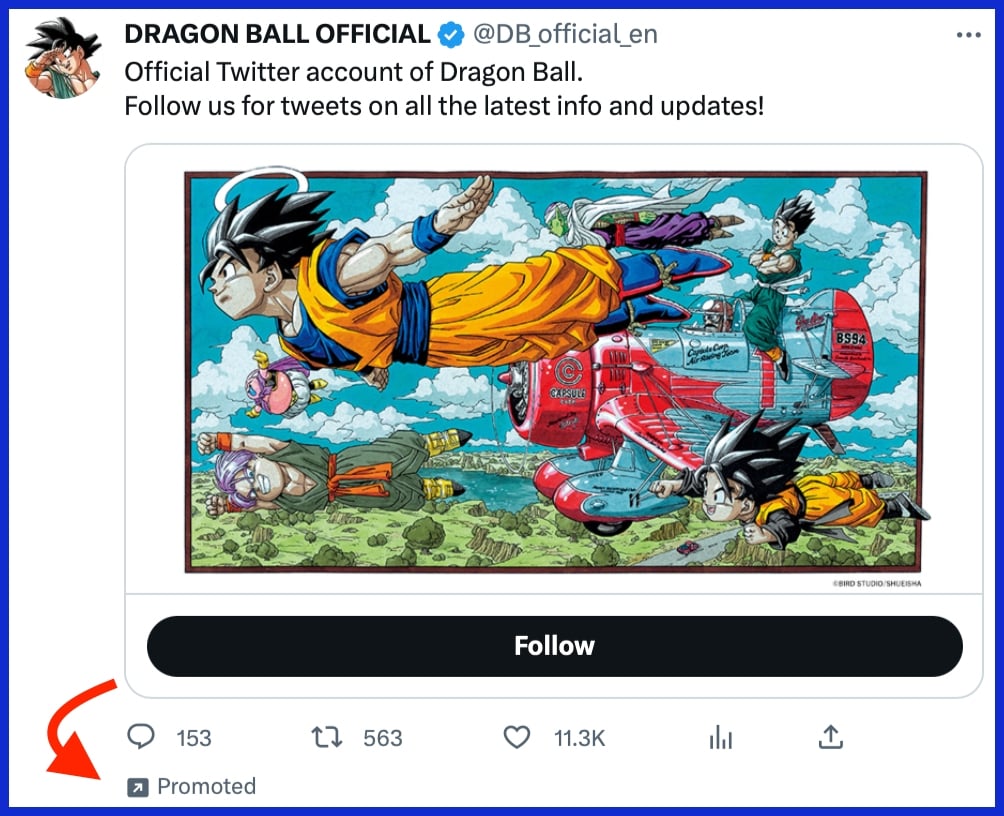
Engagement, including retweets, likes, and link clicks, is simple to measure, so you get direct, immediate feedback on what resonates with your audience.
2. Follower Ad
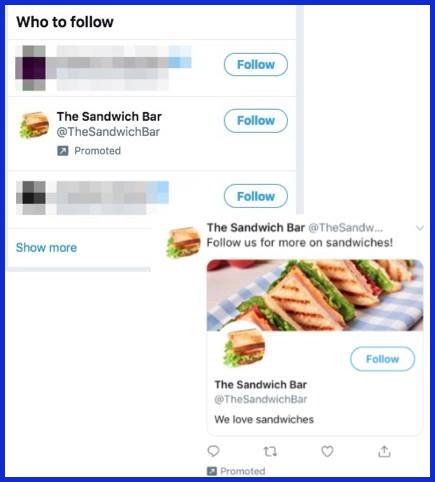
Follower Ads are targeted at users predisposed to follow brands in your niche. They are displayed as suggested accounts and typically emphasize what makes your brand stand out.
One long, well-written paragraph can do the trick here: Follower Ads work best when you spotlight your brand’s value proposition, making clear why someone should join your community. Leverage Twitter’s targeting to get in front of the right people by location, interest or industry.
Monitor follower growth and engagement rates in Twitter’s ad manager to measure campaign success and optimize your messaging.
3. Video Ads
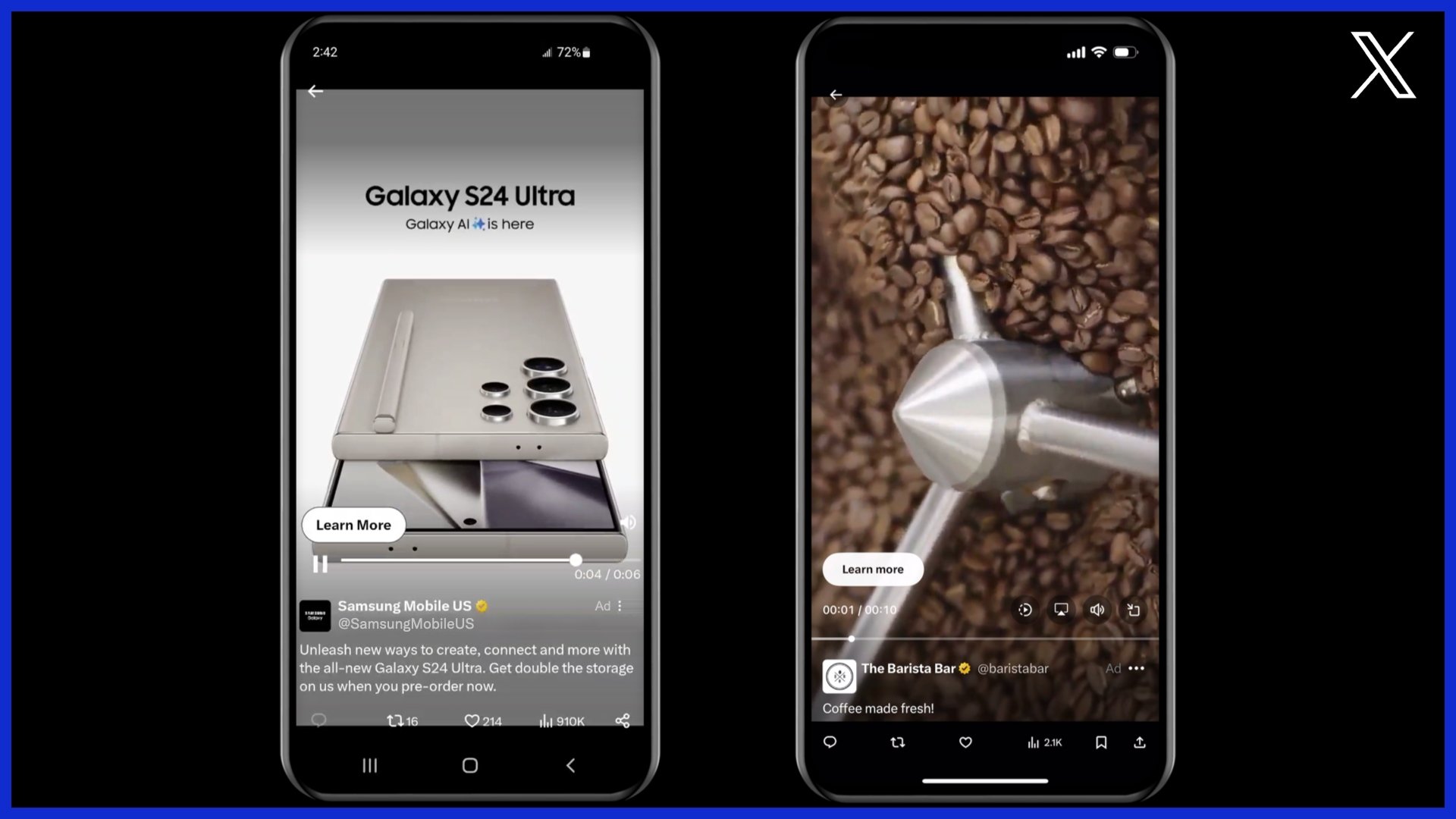
Video Ads are powerhouse storytellers and drive more engagement. Twitter has vertical video that looks amazing on mobile. Videos assist you in capturing attention quickly and conveying messages that static copy or images cannot.
You can run quick-hitting clips or extended story-driven pieces. Pricing options are flexible, too. Cost per view, cost per engagement, and cost per thousand impressions are all available. Amplify Pre-roll allows you to serve video ads before premium video content across 15+ content categories.
Tracking video views and completion rates is the key to figuring out what engages your followers.
4. Takeover Ads
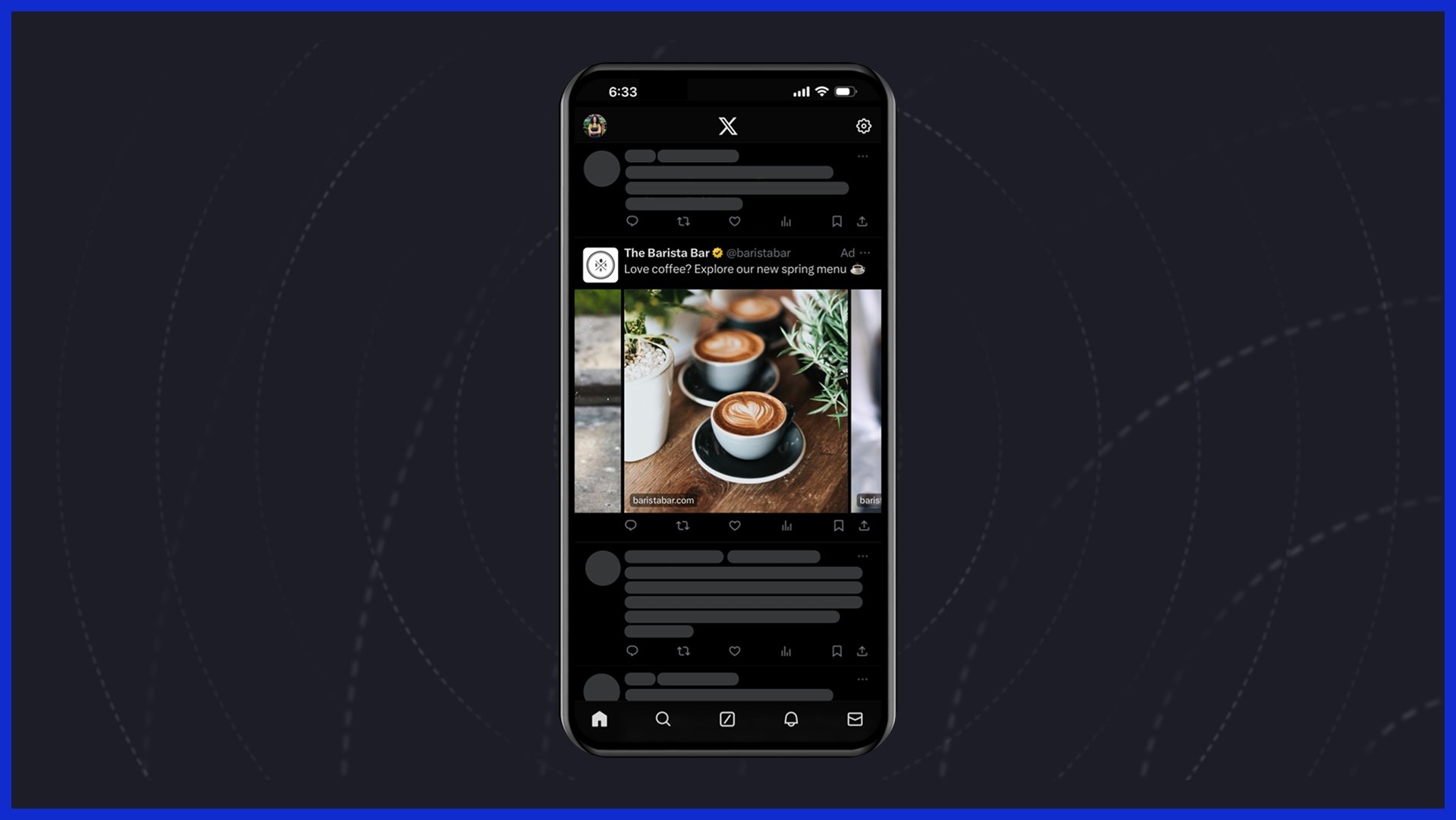
Takeover Ads are visibility incarnate. Timeline Takeover means your ad is the first they see. Trend Takeover involves the trending stuff.
This format is perfect for big launches or campaigns related to events, holidays, or moments. You can sync your ads with cultural touchstones or industry moments, maximizing effect. Engagement and impression data from these campaigns show how your message resonates with the broader Twitter community.
5. Collection Ads
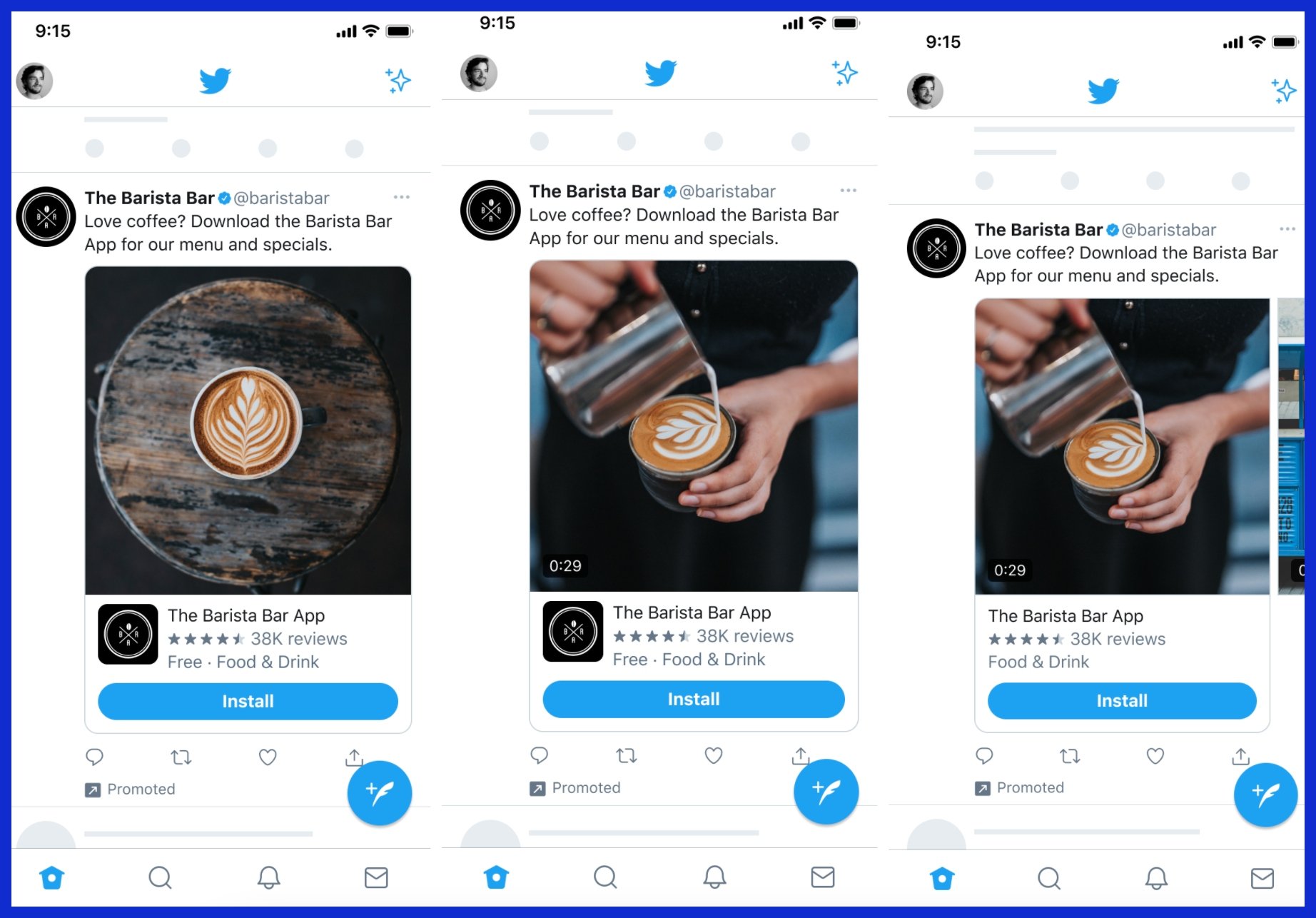
Collection Ads allow you to display multiple products in one view. These ads merge compelling visuals with interactive browsing, allowing people to discover your products without ever leaving Twitter.
It can have a headline and up to four product images or videos, making it easy to stand out and get clicks. Website Cards can be leveraged to send users to a landing page or specific product, taking advantage of up to 280 characters of copy for context.
Define Your Audience
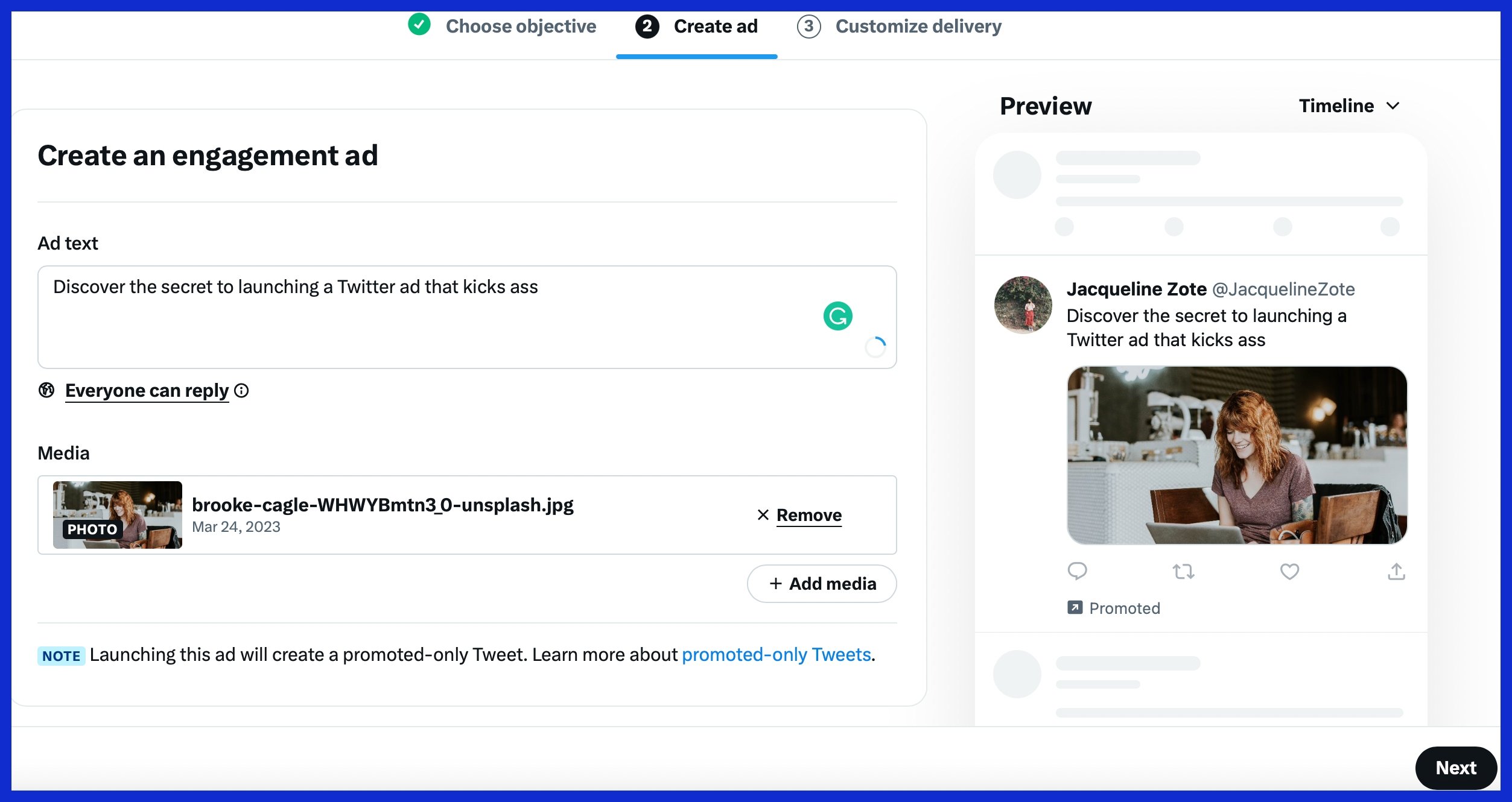
Successful Twitter ad campaigns begin with a keen understanding of the audience. Defining your target audience isn’t just about selecting general groups—it’s about knowing who you wish to address and for what purpose. Whether it is brand awareness, lead generation, or conversions, understanding your audience is crucial for effective ad campaigns like vertical video ads.
Twitter has a big toolbox for audience targeting, including demographics, interests, keywords, device models, and more. You can segment your audience by utilizing various ad formats, which allows for a more tailored approach to your campaigns.
-
Age brackets (e.g., 25-34, 35-44)
-
Gender identity
-
Geographic location (city, country, region)
-
Language preferences
-
Interests and hobbies
-
Behavioral patterns (engagement, purchase history)
-
Device type (mobile, desktop)
-
Custom audience lists (website visitors, previous customers)
With audience insights, advertisers can optimize targeting effectively and prevent splintering the same sets of audiences unless conducting creative testing. This segmentation makes each dollar stretch further and enhances the overall performance of your ad campaigns.
Demographics
Demographics are where the precision targeting begins. Twitter’s ad platform allows you to choose age, gender, and location as initial filters. Advertisers tend to begin with geography. This is the initial choice in ads manager, and with good cause. Targeting users by country, region, or city guarantees that you are relevant.
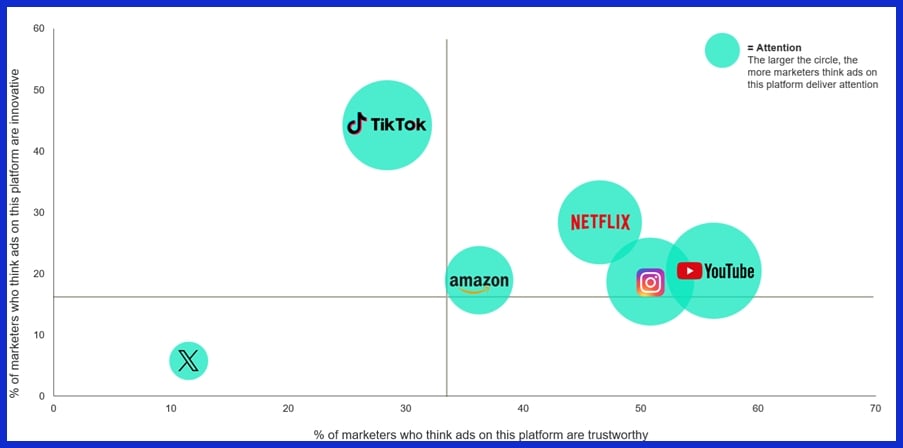
Gender and language are segmentable, aiding you in polishing campaigns for different audiences. Tweak messaging for each segment since what works with one age and gender group might bomb with another. Tracking how different demographics perform, such as clicks, conversions, and engagement, allows you to tweak and move budget toward segments producing the strongest outcomes.
|
Segment |
Age Range |
Gender |
Location |
Targeting Insight |
|---|---|---|---|---|
|
Segment A |
25-34 |
Male |
US, Canada |
High engagement, urban professionals |
|
Segment B |
35-44 |
Female |
UK, Australia |
Strong CTR, mobile-first audience |
|
Segment C |
18-24 |
All |
Global |
Trend-driven, higher video views |
Keywords
Keyword targeting enables you to reach users searching or tweeting about particular topics. By targeting keywords related to your business such as “casino bonuses,” “SEO advice,” or “online games,” you position your ads in front of already interested users.
It’s perfect for accessing real-time chats or hot topics. Figure out which keywords get the most engagement and shift lists as your audience’s interests change. A consistent performance data check guarantees you’re optimizing for the right terms and not wasting budget on keywords that pop and fizzle.
Master Your Ad Spend
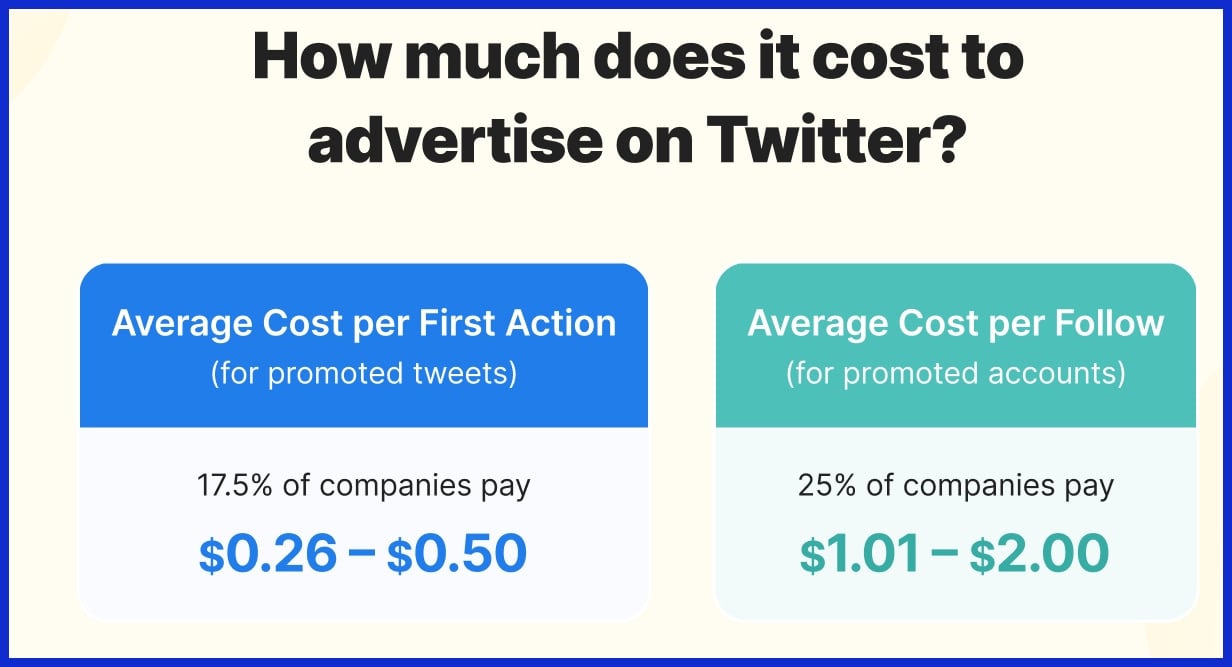
Maximizing your Twitter ad budget is not a matter of chance; it’s about balance, vigilance, and a solid marketing strategy, especially when ad rates fluctuate based on audience size and competition. To ensure your budget for effective ad campaigns works as hard as you do, break down your spend across various ad formats and bidding styles.
-
Distribute campaign budget shares according to objectives and historical return on investment.
-
Use daily and total budget caps to avoid surprise overspend.
-
Mix in at least three ad formats for greater awareness and intent.
-
Monitor spend patterns weekly, shifting funds to high performers.
-
Choose bid types per objective: automatic for ease and manual for control.
-
Track billable actions closely—clicks, impressions, engagement—then recalibrate.
Budgeting
Each campaign begins with an advertising budget. Defining specific daily or total budgets for every campaign is essential, especially when considering various ad formats like vertical video ads. Tight control here stops those “how did we spend that much?” moments. Set daily limits to space out spend, ensuring that your Twitter ads campaign won’t exceed your cap.
Think of goals that drive distribution. While branding campaigns might require greater reach, conversion ads warrant a larger piece of the pie if historical data indicates a high return. Let’s watch your cash flow daily. If a campaign does better, move budget in its direction to optimize your ad placements.
Underachievers? Scale them back or pause. Be nimble, but hold your overall ceiling in focus. Real-time performance-based tweaks keep ROI strong and waste out of the gate, ensuring effective ad campaigns deliver results.
Bidding
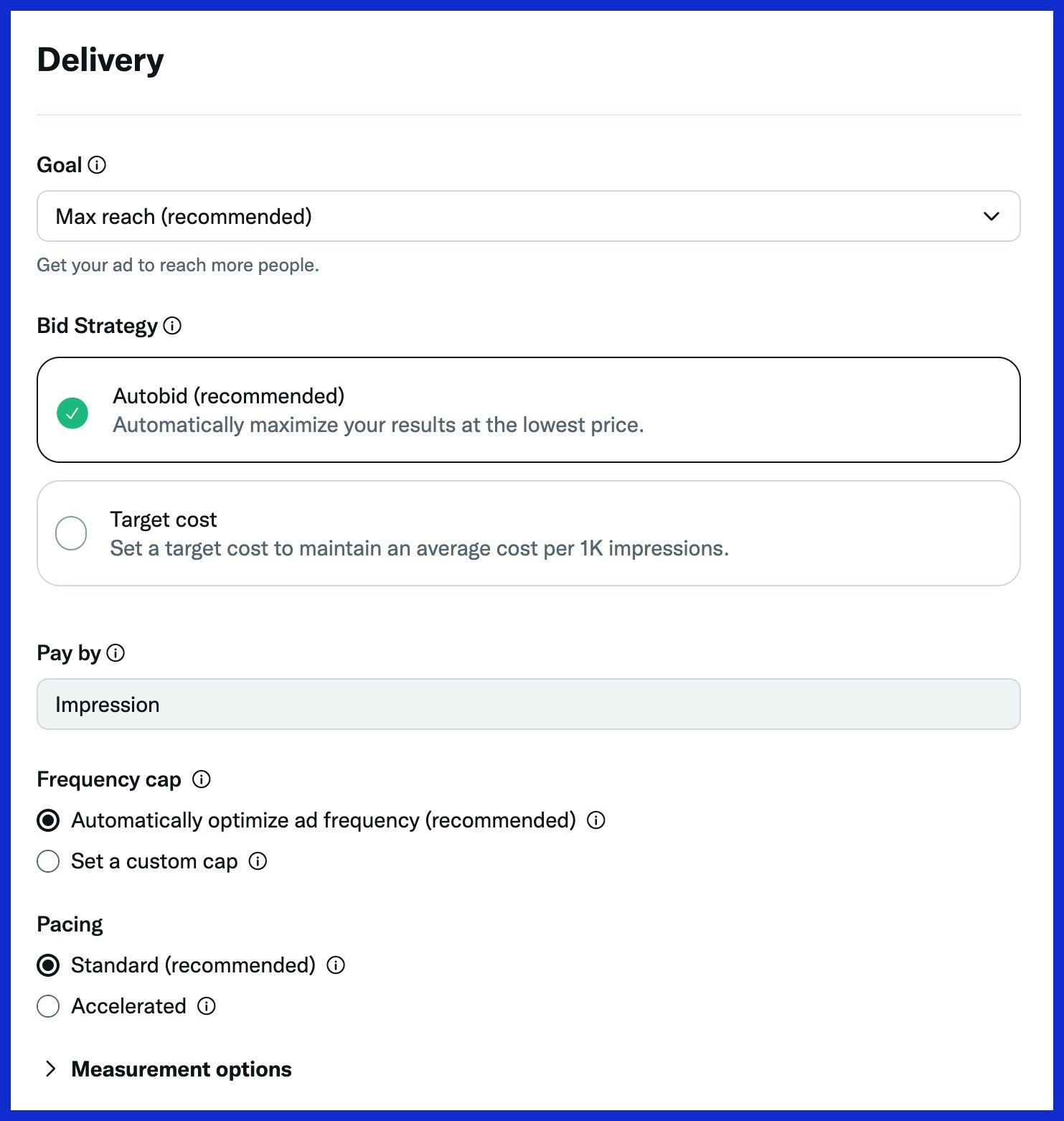
Selecting the appropriate bidding strategy is where art intersects with science. Twitter gives you the choice: automatic (autobid) or manual. Most should use autobid; it allows Twitter to optimize for the best results at the lowest price.
If you’re hands-on, manual bidding provides more control, allowing you to cap costs per billable action. For instance, specify a $2 bid and Twitter won’t charge you $2.01 or more for a placement. Be experimental.
Try both bid types and don’t get married to one strategy. See how your selected bids really do. If manual bids are not reaching enough people, try automatic or a higher cap. Let the numbers lead you.
Craft Effective Creatives
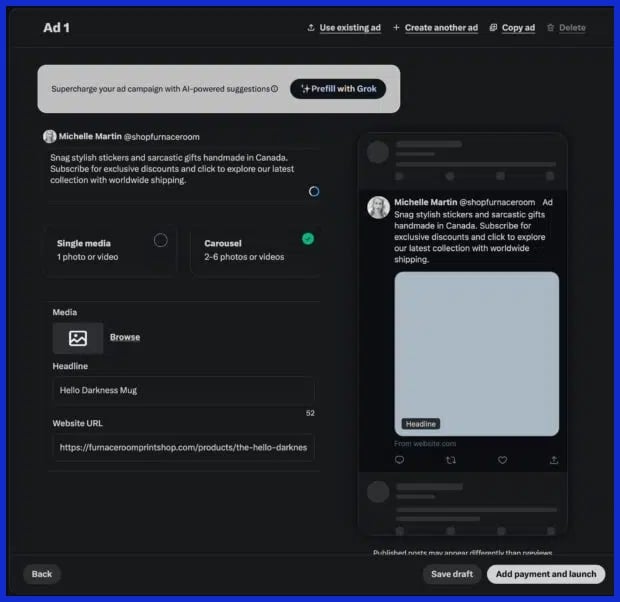
Good Twitter ads don’t just pop and fizzle — they stick. The top creatives combine eye-catching visuals, compelling copy, and a strong call-to-action. Every element should funnel users to your objective, whether that’s lead gen, download uplifts, or brand lifts.
Strong creative fundamentals look like this:
-
Use action-focused CTAs: “Sign Up Today,” “Try Free Demo,” “Download Now,” “Book a Consultation,” “Get Your Offer,” “See How It Works,” “Learn More,” or “Shop Now.”
-
Match eye-popping HD graphics with benefits-based copy.
-
Experiment with various creative formats, such as images, short videos, and GIFs, to see what resonates best with your audience.
-
Study ad performance and optimize your creatives for more clicks and ROI.
Compelling Copy
Ad copy is your handshake—it establishes the vibe in a matter of words. Talk to your potential buyer. What issues do they have? Highlight what sets your offer apart, focusing on real benefits: “Save 20% on your first order” or “Get expert insights in seconds.
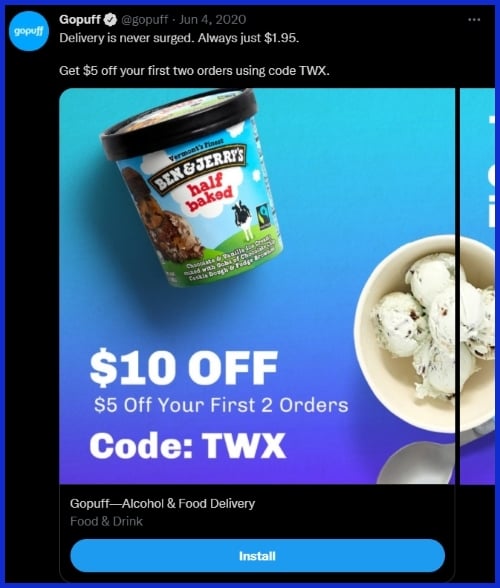
Work within Twitter’s character limits—70 for headlines, 280 for body copy—so your message hits clean. Avoid hashtags or mentions that could distract or bleed clicks away. Use tight, punchy copy.
A/B test several copy variations side by side. Small shifts in how you describe your offer can be the difference between a scroll and a click. A/B testing results tell you what messaging drives conversions, not just impressions.
Strong Visuals
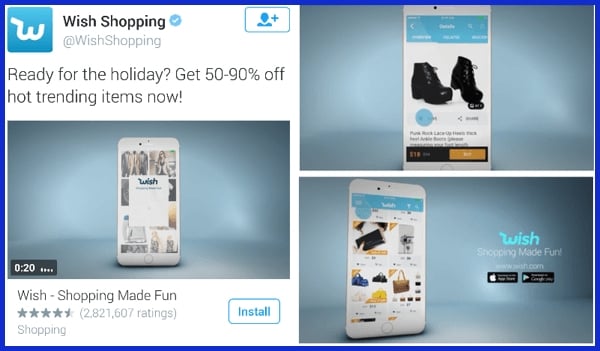
Images are the hook. Ninety-seven percent of users act because something grabbed their eye. High-quality images are recommended at 1200 by 675 pixels and a 16:9 aspect ratio to help your ads look sharp on all screens.
For video, keep it tight: 15 seconds or less, 720p or higher, under 1GB, and in MP4 or MOV format. Motion in the initial seconds halts the scroll. Be clear on branding, including logos, colors, or style, as this gives your brand a 30% lift in recall.
Design every asset for mobile and desktop. Monitor engagement rates. If a visual isn’t working, switch it out immediately.
Clear Call-to-Action
Each ad requires a clear, actionable CTA. ‘Shop Now,’ ‘Register’ or ‘Get Started’ make it obvious, so users understand precisely what you want them to do.
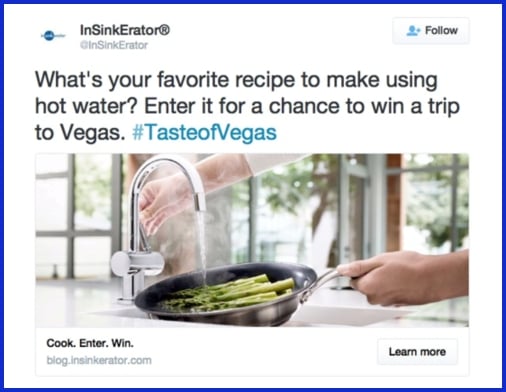
It’s not just what you say in your CTA that’s important, it’s where you place it and how visually emphasized it is. Test different copy and button styles until you find what drives the highest clicks or conversions.
CTAs are not guesswork; let the data decide. Keep clutter away from your CTA so it shines and gets noticed.
Conclusion
Success on X (formerly Twitter) isn’t about luck; it’s a calculated alignment of your brand’s objectives, audience data, and budget. From the punchy visibility of Promoted Ads to the immersive nature of Video Ads, the platform offers a diverse toolkit designed to intercept users exactly where they are most engaged.
To win in this fast-paced ecosystem, marketers must master three core pillars:
-
Strategic Targeting: Reaching the right users at the right moment.
-
Creative Resonance: Crafting content that commands attention in a relentless scrolling feed.
-
Efficiency: Navigating platform quirks and bidding strategies to protect your ROI.
Because there is no one-size-fits-all approach, the most successful brands are those that remain curious and treat every campaign as a chance to test and iterate. For those looking to elevate their digital footprint further, leveraging expert resources like SERPninja.io can provide the additional SEO and link-building synergy needed to turn social engagement into long-term domain authority.
Frequently Asked Questions
What are the main types of Twitter ads?
Twitter’s Promoted Tweets, Promoted Accounts, and Promoted Trends are various ad formats that enable advertisers to access new audiences, drive engagement, and enhance brand visibility through effective ad campaigns.
How do I choose the right campaign objective for Twitter ads?
Choose your objective according to your business goal, such as brand awareness or website traffic. Selecting the proper objective guarantees that your ad spend on effective ad campaigns yields tangible outcomes.
How can I define my target audience on Twitter?
It lets you target users by demographics, location, interests, behavior, and keywords. With Twitter’s robust ad targeting options, you can reach the most relevant audience for your video ad campaigns.
What is the minimum ad spend for Twitter ads?
Twitter has a minimum daily budget that varies by geographic location and the specific ad campaign type, ensuring that advertising costs remain manageable while maximizing the effectiveness of your vertical video ads.
Why are creative elements important in Twitter ads?
Powerful creative, such as vertical video ads and compelling calls to action, drive engagement. Nicely designed, attractive, and attention-grabbing ads achieve more clicks in effective ad campaigns.
Can I run Twitter ads globally?
Yes, Twitter ads can be targeted worldwide, allowing advertisers to tailor their audience down to country, language, or city for effective ad campaigns that reach users most relevant to their campaign.
What should I know about Twitter’s advertising policies?
Twitter protects user experience, ensuring that ads, including vertical video ads, adhere to guidelines on content, targeting, and transparency. Always check Twitter’s ad policies before initiating an ad campaign.


