

Key Takeaways
- Google Search AI Mode is now Google’s default way of answering many searches, and it passed 1 billion monthly users about a year after launch.
- Almost half of Google’s search queries now get an AI-generated answer rather than just a list of links.
- Some research has indicated that click-through rates can drop by over 50% if an AI-powered answer is displayed first instead of the standard search results.
- There is no symmetry. The “how to” material is the most strongly attacked, and local, shopping, and very original content are more likely to survive.
- Getting cited as a source inside AI Mode can actually bring you more clicks, not fewer.
- The long-term solution is to establish real authority via original content, solid backlinks, and topical trust—where SERPninja can lend a helping hand.
If you run a blog, you’ve probably felt it. The tools you go to appear as if your rankings are fine. However, the clicks aren’t happening the way they did before.
That feeling has a name: Google Search AI Mode.
Google’s latest search experience eliminates the need to click through to a list of websites by answering many questions directly on the search results page, all with the aid of AI. It’s easy and convenient for the searcher. It’s like the rug being pulled out from under bloggers.
Indeed, is Google Search AI Mode destroying blog traffic? The truth is: It depends. There’s a significant loss at some sites. Other organizations, however, are expanding. The difference comes down to strategy, not luck, and that’s exactly what this article breaks down.
Does Google Search AI Mode Really Kill Blog Traffic?
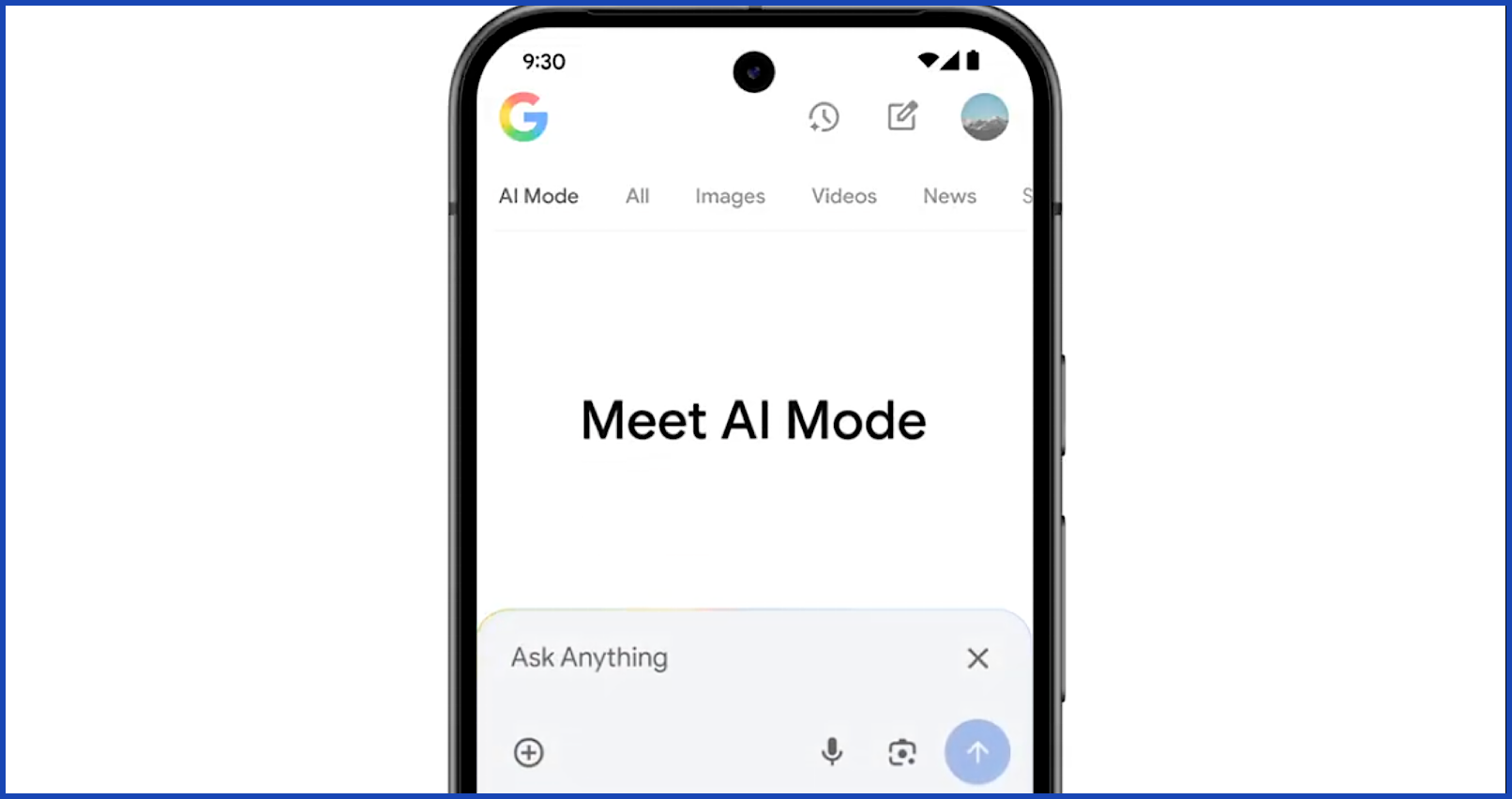
First, let’s begin by understanding what AI Mode is.
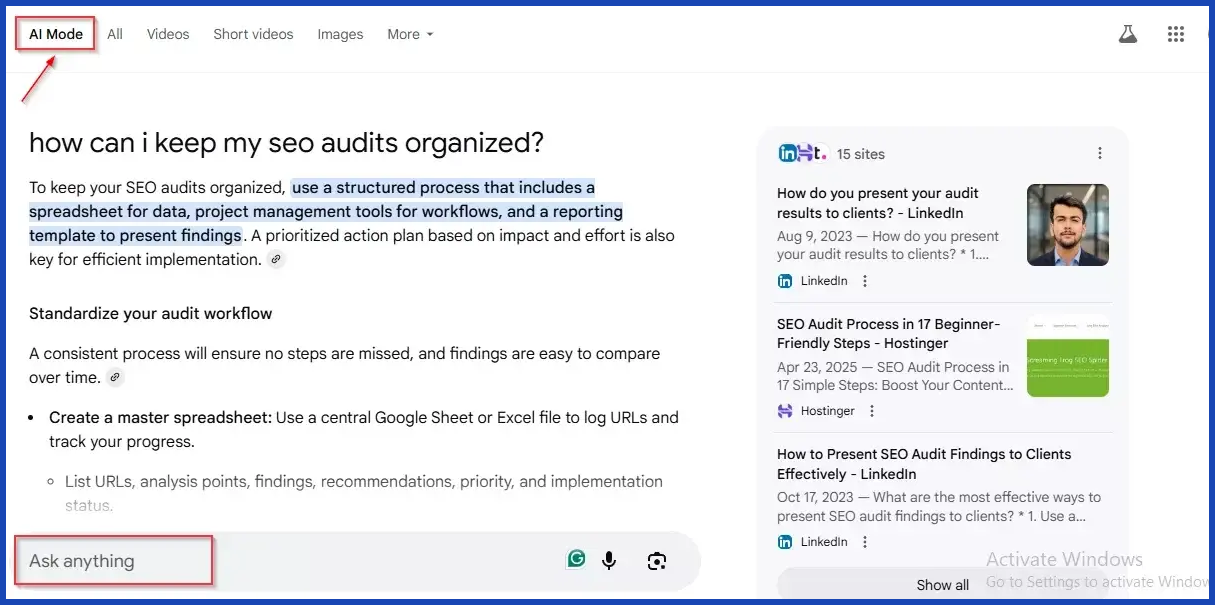
Google Search AI Mode offers a dedicated and conversational search experience. The links are replaced with a written response generated by Google’s Gemini AI, which can be followed like you would in a chatbot, and you can ask follow-up questions just as you would in a chatbot.
It’s grown fast. In just slightly over a year since it announced its release, AI Mode reached 1 billion monthly users, and in May of 2026, Google announced that it will be the default search experience for all users worldwide, with the newer Gemini 3.5 Flash version powering it. BrightEdge says that almost 50% of Google searches now result in some form of AI-generated response.
That growth has a real cost for publishers.
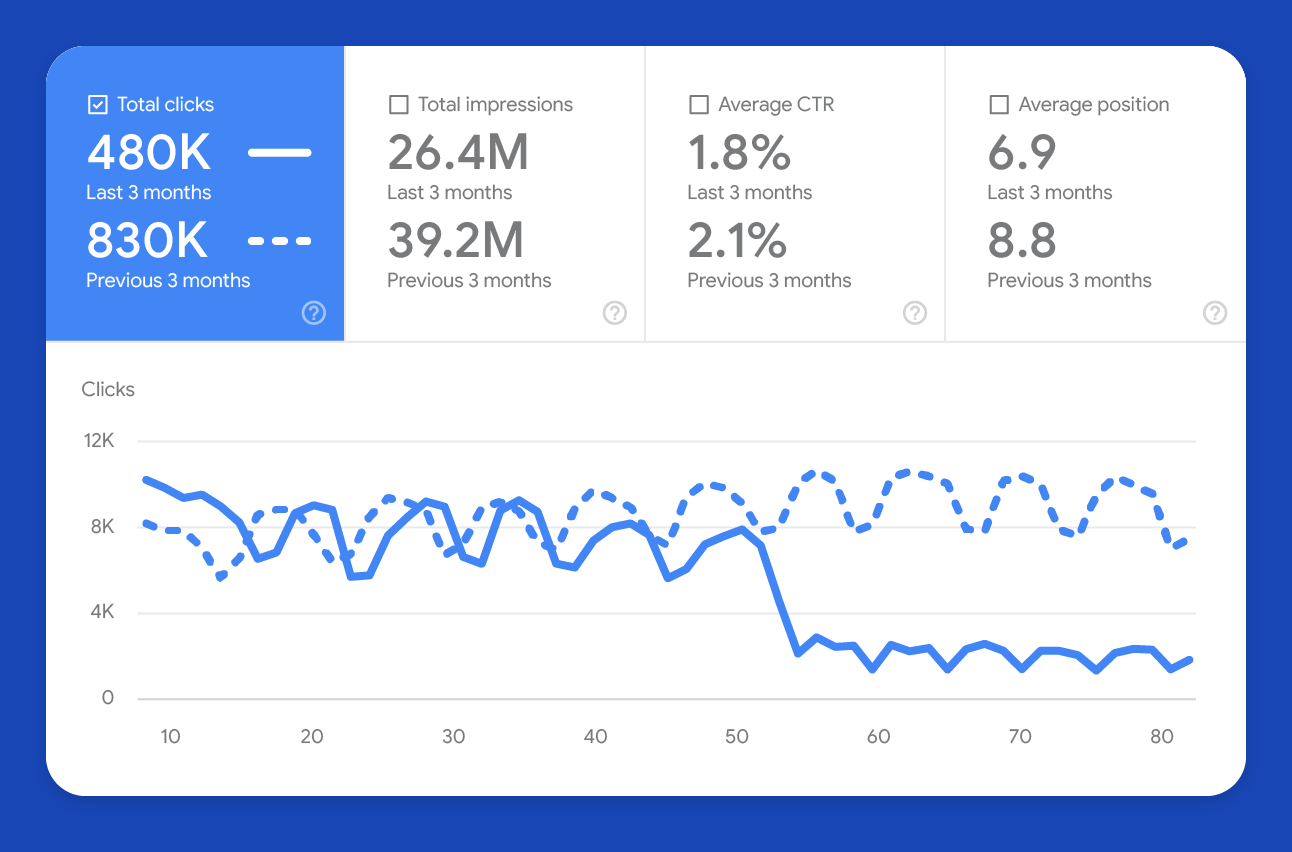
The team at Ahrefs studied 300,000 keywords and discovered that the click-through rate (CTR) of the number one organic result fell from about 7.3% to 1.6% if an AI Overview was displayed above it in February 2026. They found something similar: when they show an AI summary, only 8% click a regular search result, while when there’s no AI summary, 15% click a regular search result.
Yes, Google Search AI Mode is indeed impacting traffic to your blog. However, “changing” is not “ending. Who gets hit hardest, and who doesn’t, is the more useful question.
What’s Actually Happening to Bloggers and Publishers Right Now
The impact isn’t spread evenly. There are some sites out there that are losing lots of money. Others barely notice.
Business Insider’s organic search volume dropped 55% from 2022 to 2025, which the company attributed to the reduction of 21% in its employees. HuffPost lost roughly half its search traffic over that same stretch.
It’s not only the big names, either. Stereogum, an independent music blog, pointed to Google’s AI Overviews as the single biggest reason behind its decline, and has since leaned on reader subscriptions and an on-site tip jar just to stay running. Homework-help service Chegg saw its traffic drop by 49% and has sued Google, claiming that the search giant’s AI was fed Chegg content and is now a direct competitor.
Researchers keep finding the same pattern: some content types lose far more traffic than others.
Content that tends to lose the most:
- Generic “how-to” and definition-style posts
- Basic FAQ-style answers already repeated across the web
- Content with no unique angle, data, or experience
Content that tends to hold up better:
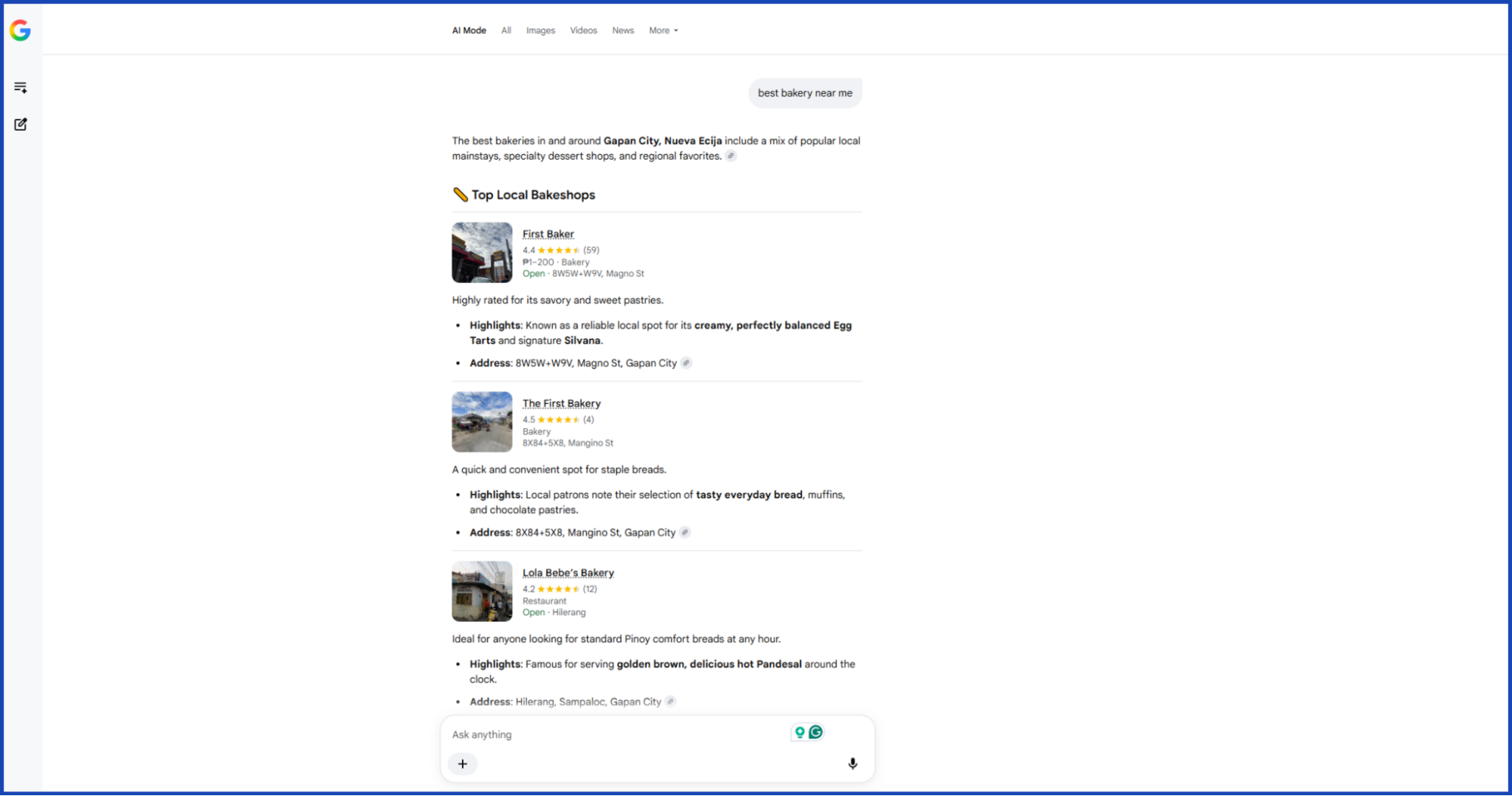
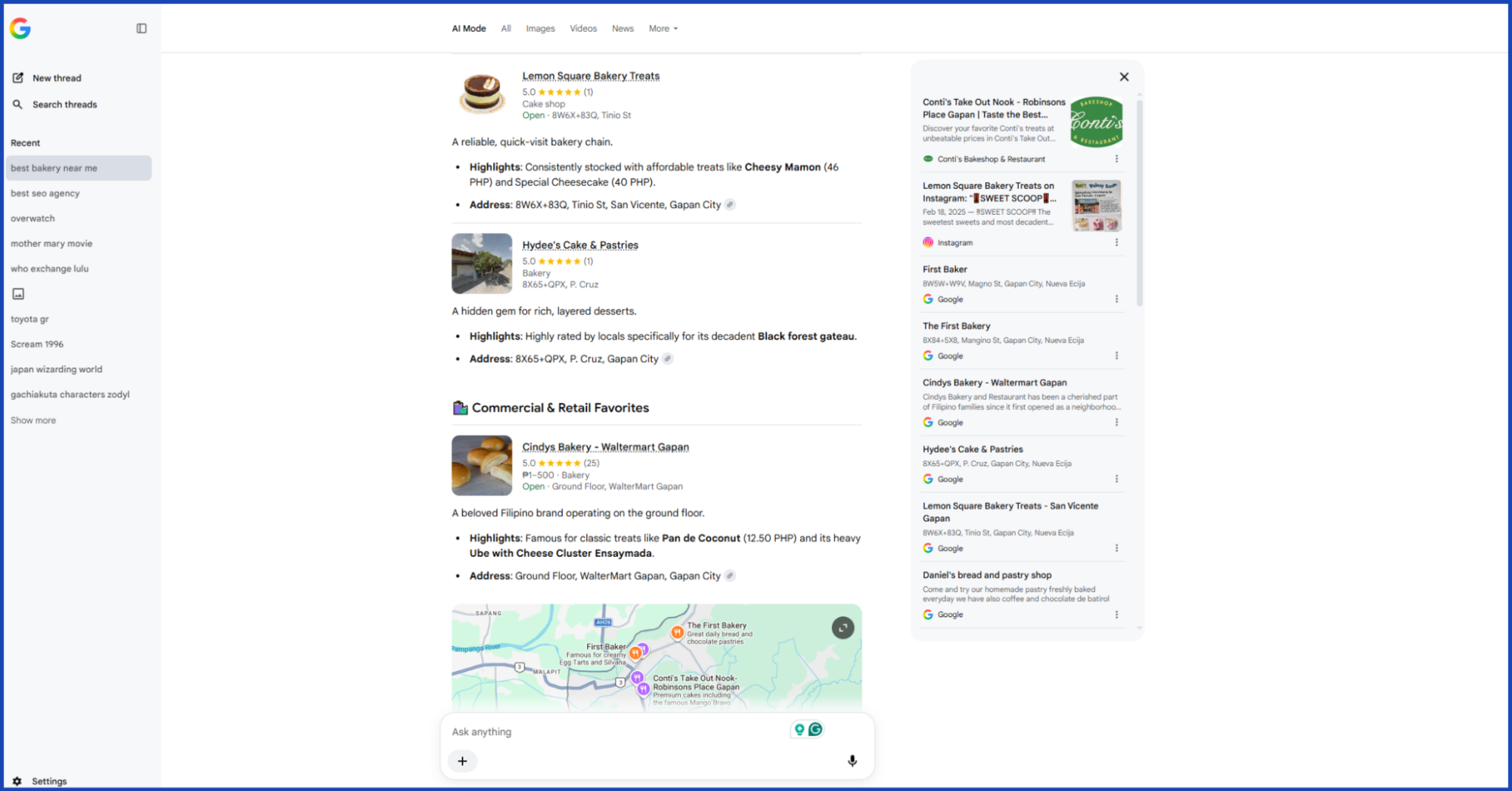
- Local searches, like “best bakery near me”
- Shopping and product comparisons
- Time-sensitive news, sports, and pricing
- Original research, data, or first-hand experience
That last point matters most. If ten other sites already say the same thing you do, Google’s AI can summarize you out of the picture. If you’re the only source with that specific data or story, you’re much harder to replace.
The Fix: How to Protect (and Grow) Your Traffic in the AI Mode Era
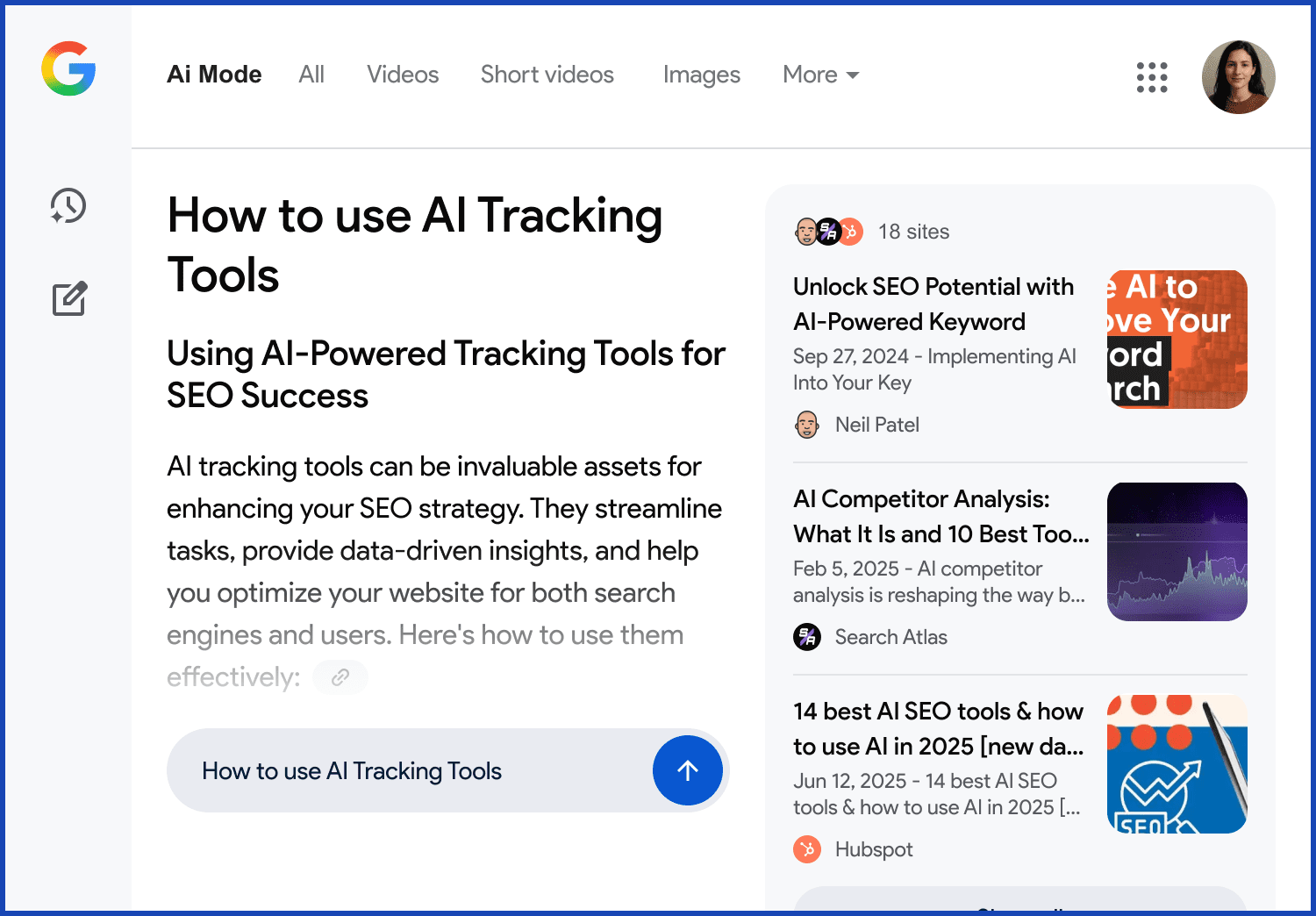
Here’s the part most articles miss: getting cited inside Google Search AI Mode can actually help you. Sites cited inside AI Overviews earn roughly 35% more organic clicks than sites that aren’t cited at all, for the same queries.
The goal isn’t to fight AI Mode. It’s to become the source it trusts enough to cite.
- Write what AI can’t copy. Original surveys, first-hand case studies, and your own data are hard for an AI summary to fully replace, and they give readers a reason to click through anyway.
- Structure content for extraction. Open each section with a direct two- or three-sentence answer, then explain further. This mirrors how AI systems pull and cite information.
- Build real topical authority. Google has publicly said that optimizing for AI search is still fundamentally SEO, not a separate game. Sites known for one subject tend to outperform sites that cover everything a little.
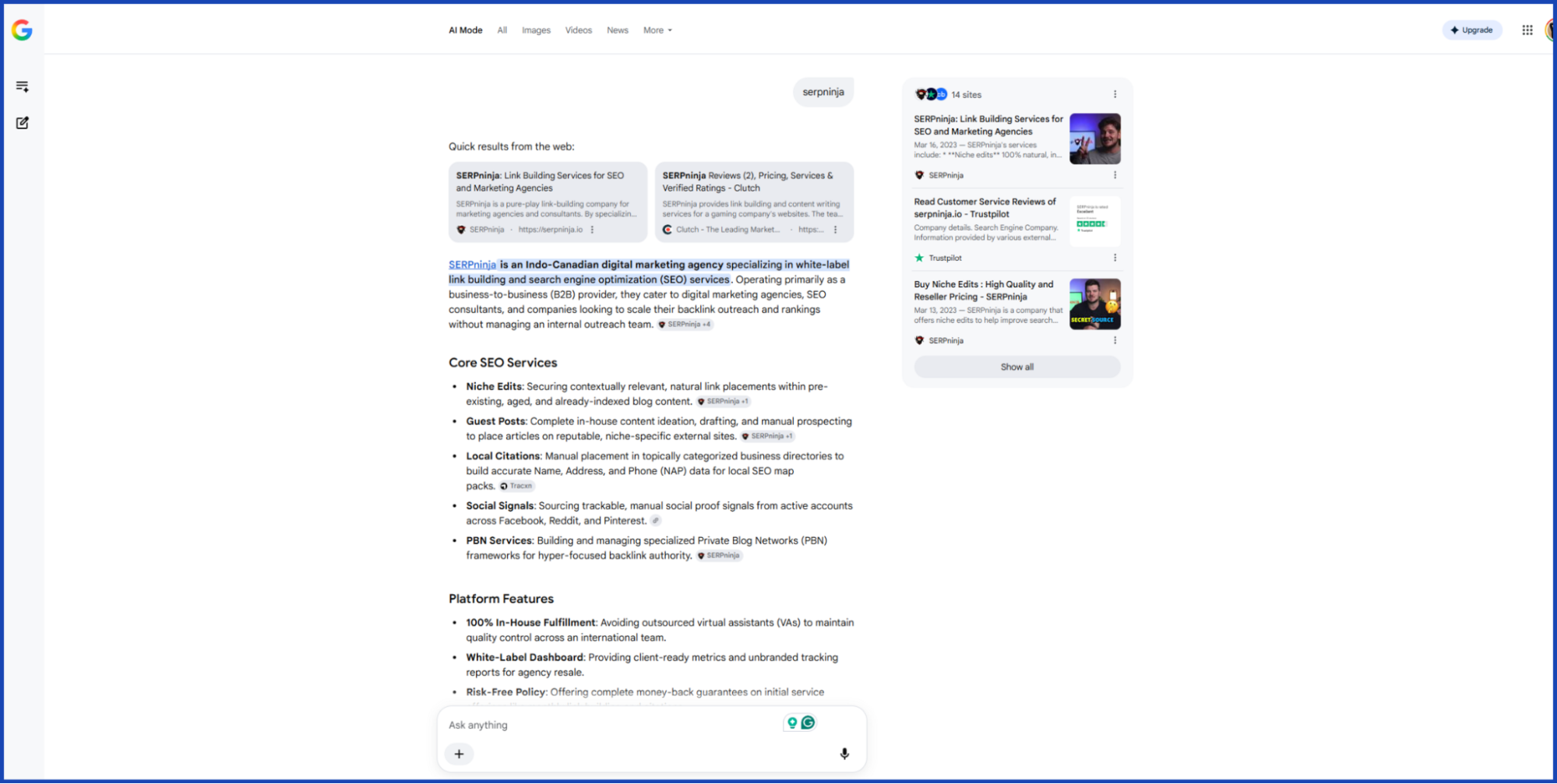
- Strengthen backlinks and brand mentions. AI systems lean on trust signals, like links and citations from other reputable sites, to decide what’s credible enough to reference. This is exactly the kind of work SERPninja specializes in: building the niche edits, guest posts, and citations that establish a site as trustworthy, for classic rankings and AI Mode alike.
- Build direct traffic you own. Email lists and Google’s newer “Preferred Sources” feature, which lets readers choose to see more of your site in results, both route around the AI Mode conversation entirely.

Conclusion
So, will Google Search AI Mode eliminate all your blog traffic? The danger is very real for blogs that just continue to produce copy/paste material. Numbers are already telling. If blogs are ready to get creative, it’s only the latest change in an ever-changing search world.
What all of those websites that are getting ahead of you have in common is that they’ve earned enough authority and original content that Google’s AI is forced to go back to them.
That’s the work SERPninja focuses on every day, helping sites earn the citations, backlinks, and topical trust that both traditional rankings and AI Mode reward. If you prefer to tune up instead of ditching traffic, SERPninja will be a good place to begin.
FAQs
Is Google Search AI Mode the same as AI Overviews?
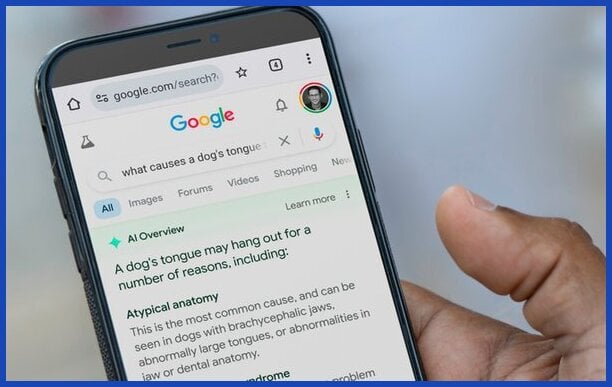
Not quite. AI Overviews are AI-generated summaries that appear in-line with regular search results. AI Mode is an independent module that represents a full page dialogue with artificial intelligence, like a chatbot.
Will AI Mode completely replace traditional search results?
Not for all searches. Traditional results are still preferred for local, shopping and time specific searches. The area of informational questions is maturing as the domain where the automatic generation of answers is becoming the norm.
How do I know if AI Mode is affecting my blog?
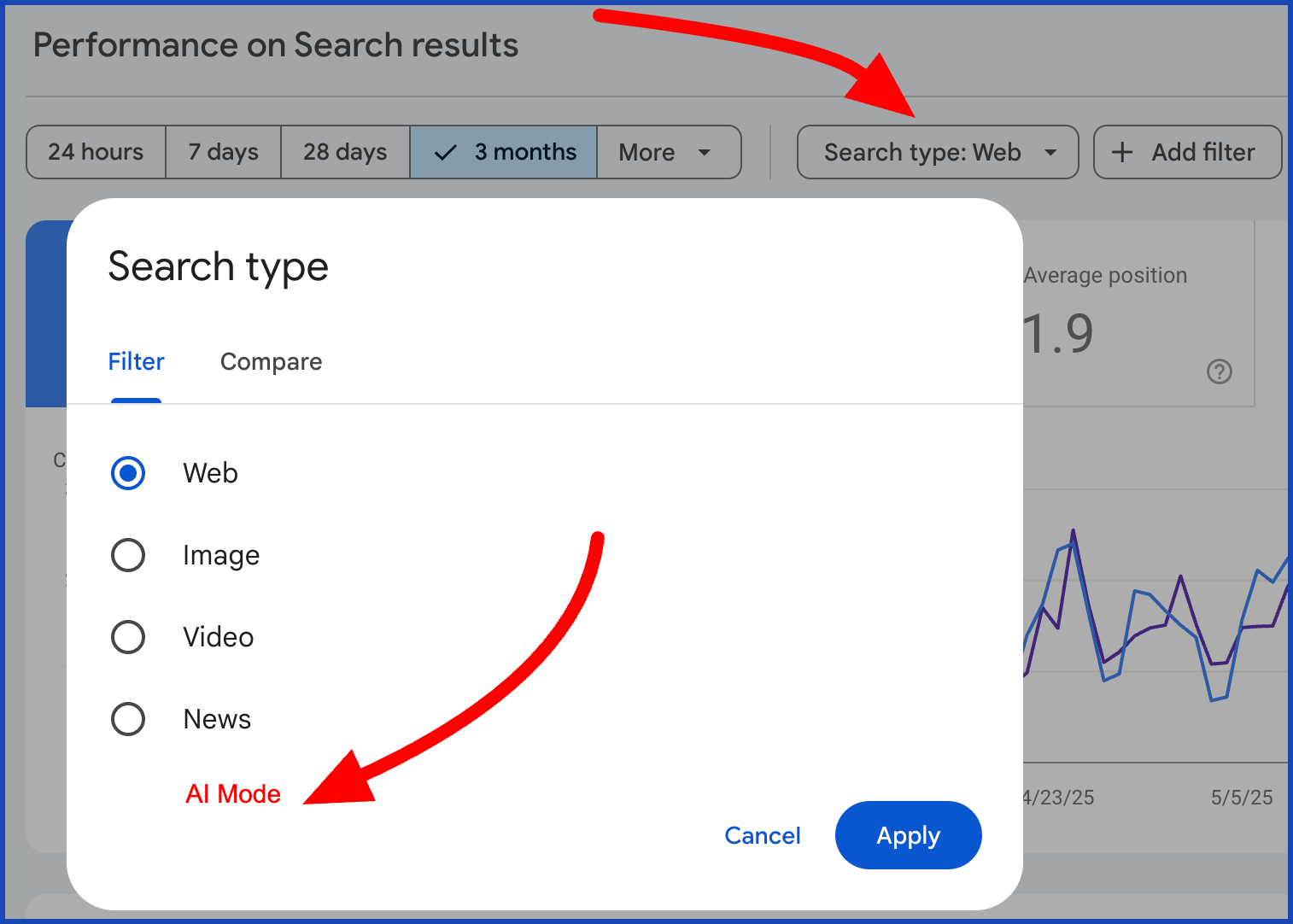
Review Google Search Console. In Performance, filter by “Search Appearance” and view the results of AI Mode and AI Overviews to track the performance of these search queries for your site.
Can I stop Google’s AI from using my content?
In theory, it is possible to block Google’s AI crawler using robots.txt, but this typically will also exclude your site from the regular search results, as there is currently a single crawler for both AI and classic search mode.
Does this mean blogging isn’t worth it anymore?
No. It translates to less risk of generic blogging, but more importance to original, well-sourced, expert content – because AI systems rely on trustworthy sources for citations.


