

Key Takeaways
- Keyword clustering groups related search terms together so one page can rank for many searches, instead of one article per keyword.
- SirWritesALot uses SERP overlap clustering, which groups keywords by what’s actually ranking on Google right now, not just by how similar the words look.
- Pricing for keyword clustering tools in 2026 ranges from free up to $200+ a month, depending on how much data and automation you need.
- Small businesses don’t need an enterprise SEO budget. Free plans and pay-as-you-go credits cover most early-stage clustering needs.
- Clustering your keywords is step one. Ranking that content long-term still depends on backlinks, which is where SERPninja comes in.
Picture this common scenario: you have just downloaded a massive list of 4,000 keywords from your favorite SEO research platform. You open up a giant spreadsheet, grab a fresh cup of coffee, and begin manually highlighting rows in green, yellow, and blue.
Two hours later, your eyes are hurting and your screen is a blur. You are still staring at cells, trying to guess whether “how to make cold brew” and “easy cold brew recipe” belong on the same blog post or need two separate pages.
If this sounds familiar, take a deep breath. You are not alone, but you are doing things the hard way!
Search engines have evolved a lot over the last few years. Today, Google’s smart algorithms do not just look at individual web pages as single-keyword targets. Instead, they look for overall authority on a topic. They want to see comprehensive articles that answer a whole family of related questions at once.
Trying to sort thousands of search queries by hand is slow, stressful, and completely unnecessary. What used to take content teams an entire weekend now takes just a few clicks. Let’s dive into the best keyword clustering tool 2026 has to offer, how these platforms work, and why you should drop the manual spreadsheet today.
Top Keyword Clustering Tools for 2026 (Features & Pricing)
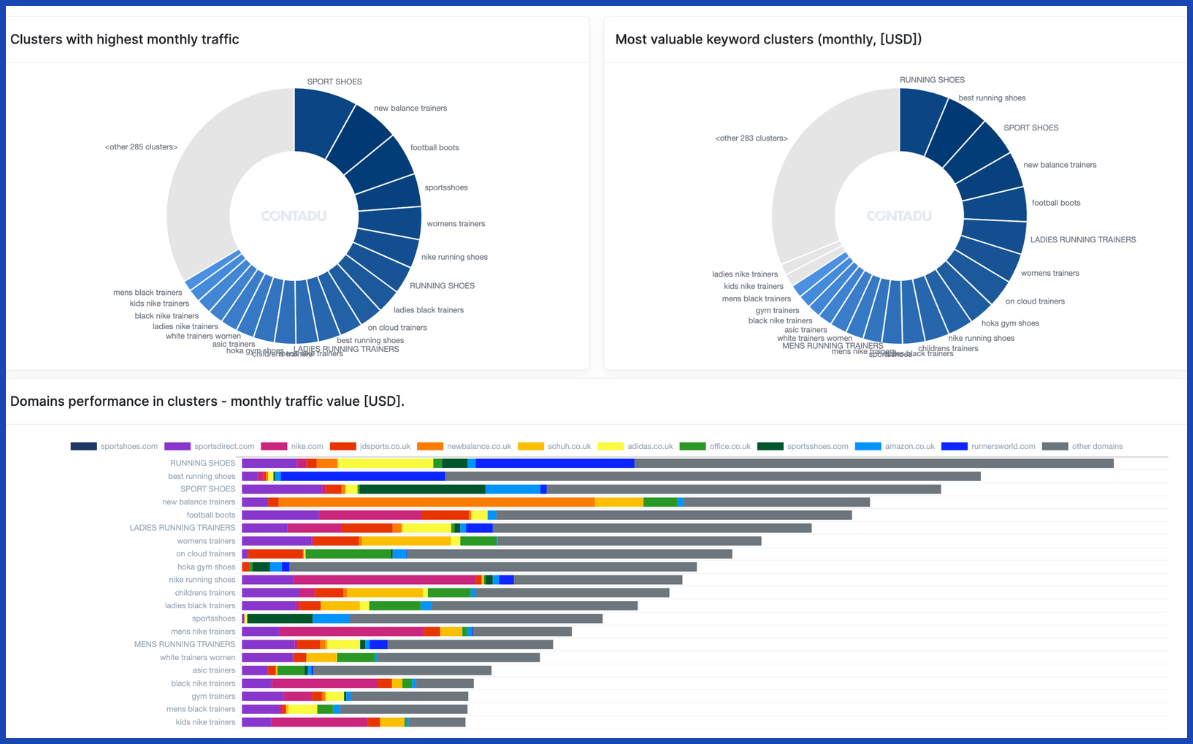
Finding the right software can feel overwhelming when every platform promises to revolutionize your business. We did the testing and rounding up and have compiled the ultimate list of tools available this year to make your life easier!
We judged them on accuracy, ease of use, speed, and the pricing models. We tested their accuracy, ease of use, speed, and whether the pricing models make sense for real content creators. Here are the top performers for 2026.
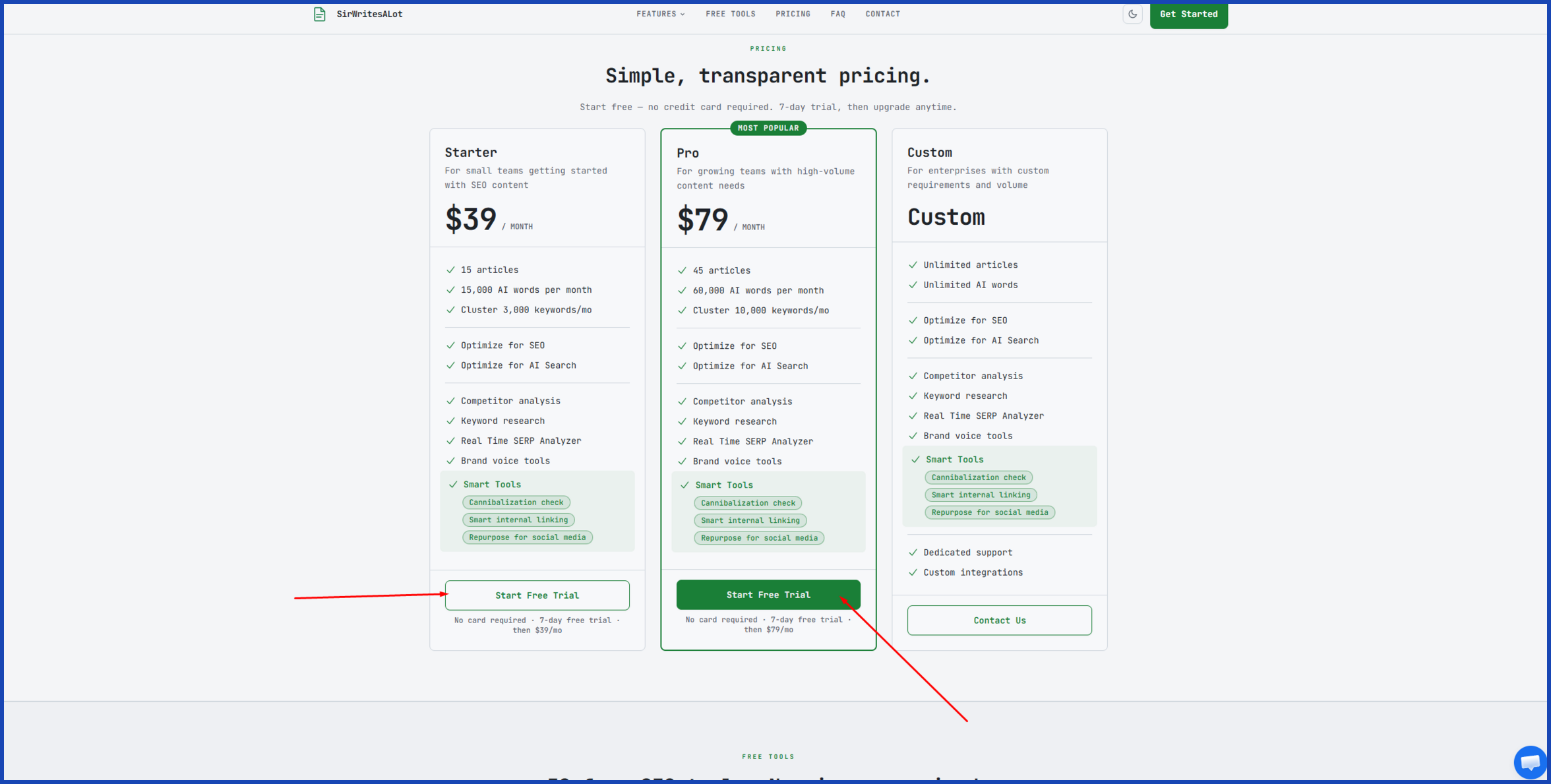
1. SirWritesALot
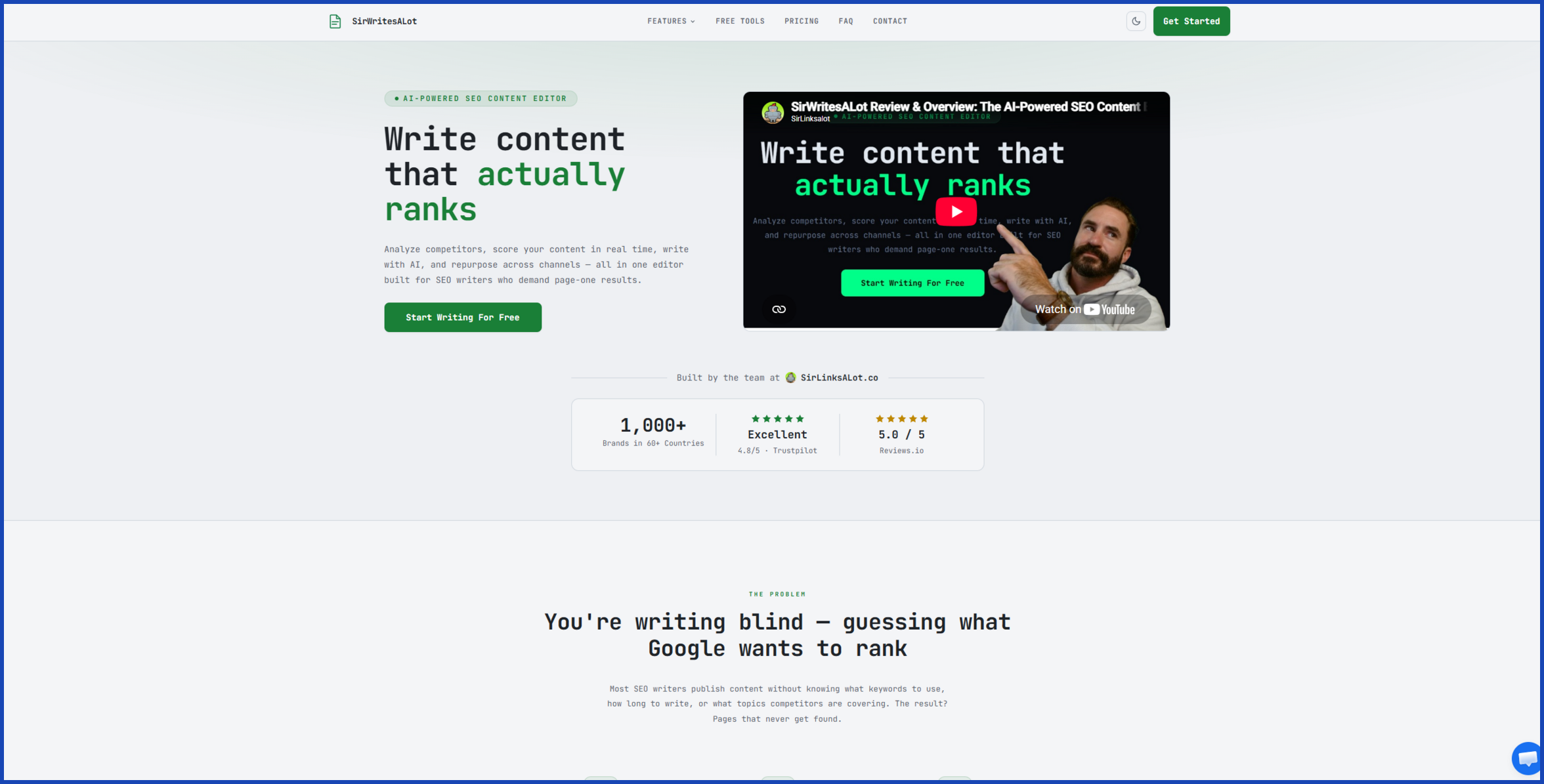
When it comes to speed, precision, and affordability, SirWritesALot easily takes our number one spot for 2026. Built by real SEO agency experts who were tired of overpriced software, this platform is designed specifically for content creators who want quick, accurate results without the headache.
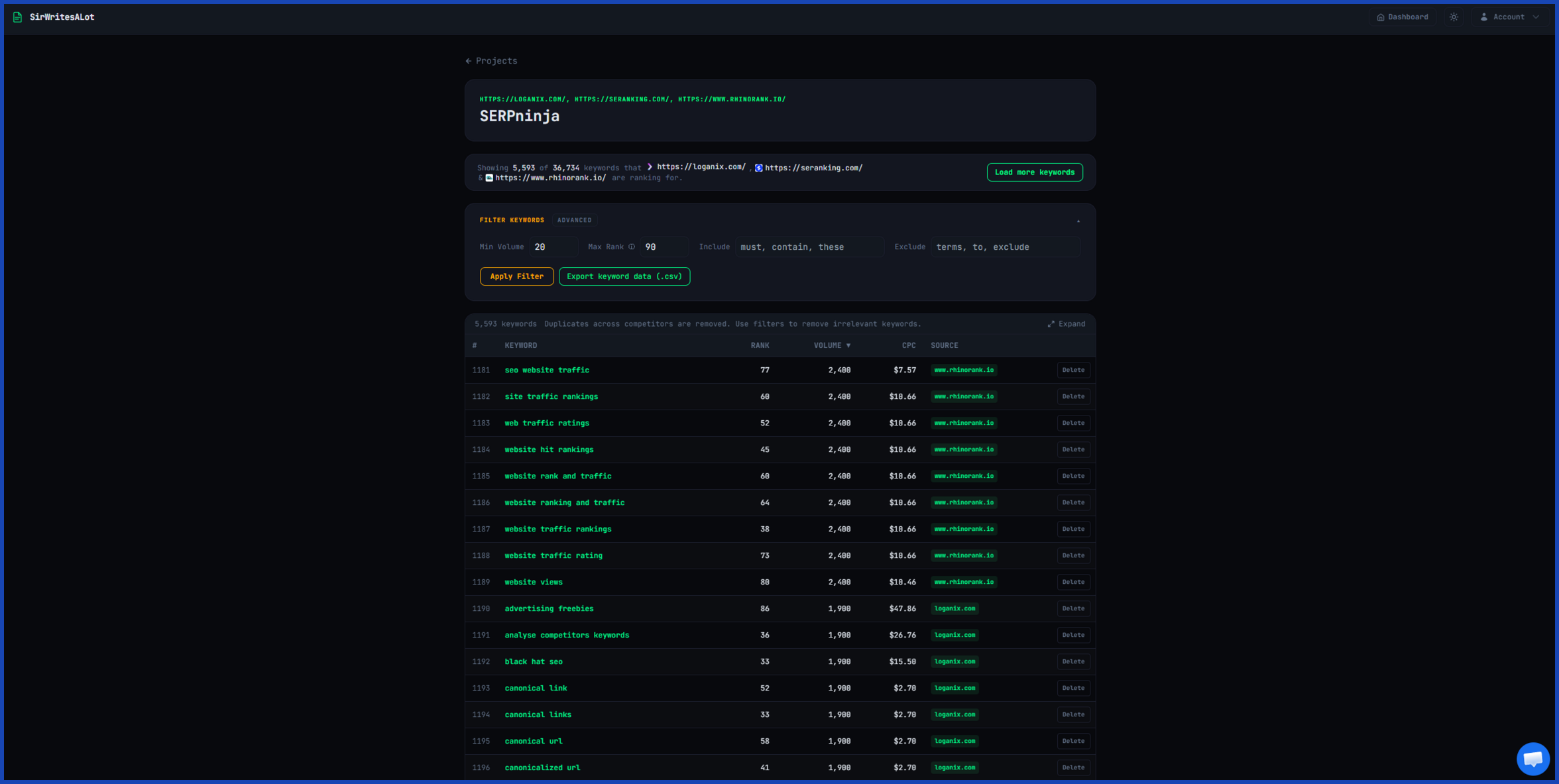
You can check out their dedicated keyword clustering feature page directly on their website to see how it organizes massive lists in seconds. Instead of relying on guesswork, it analyzes live search engine results to see exactly how Google treats different words in real time.
- Key Features: Real-time SERP (Search Engine Results Page) clustering, competitor ranking footprint mapping, automatic People Also Ask question grouping, and instant one-click editorial calendar generation.
- Free or Paid: Paid, but extremely accessible. The Starter plan is just $39 per month with no tricky credit paywalls or hidden fees. They also offer a generous 7-day free trial without requiring a credit card.
- Best For: Bloggers, small businesses, and agencies looking for an all-in-one SEO writer and keyword clusterer without paying enterprise prices.
2. Keyword Insights
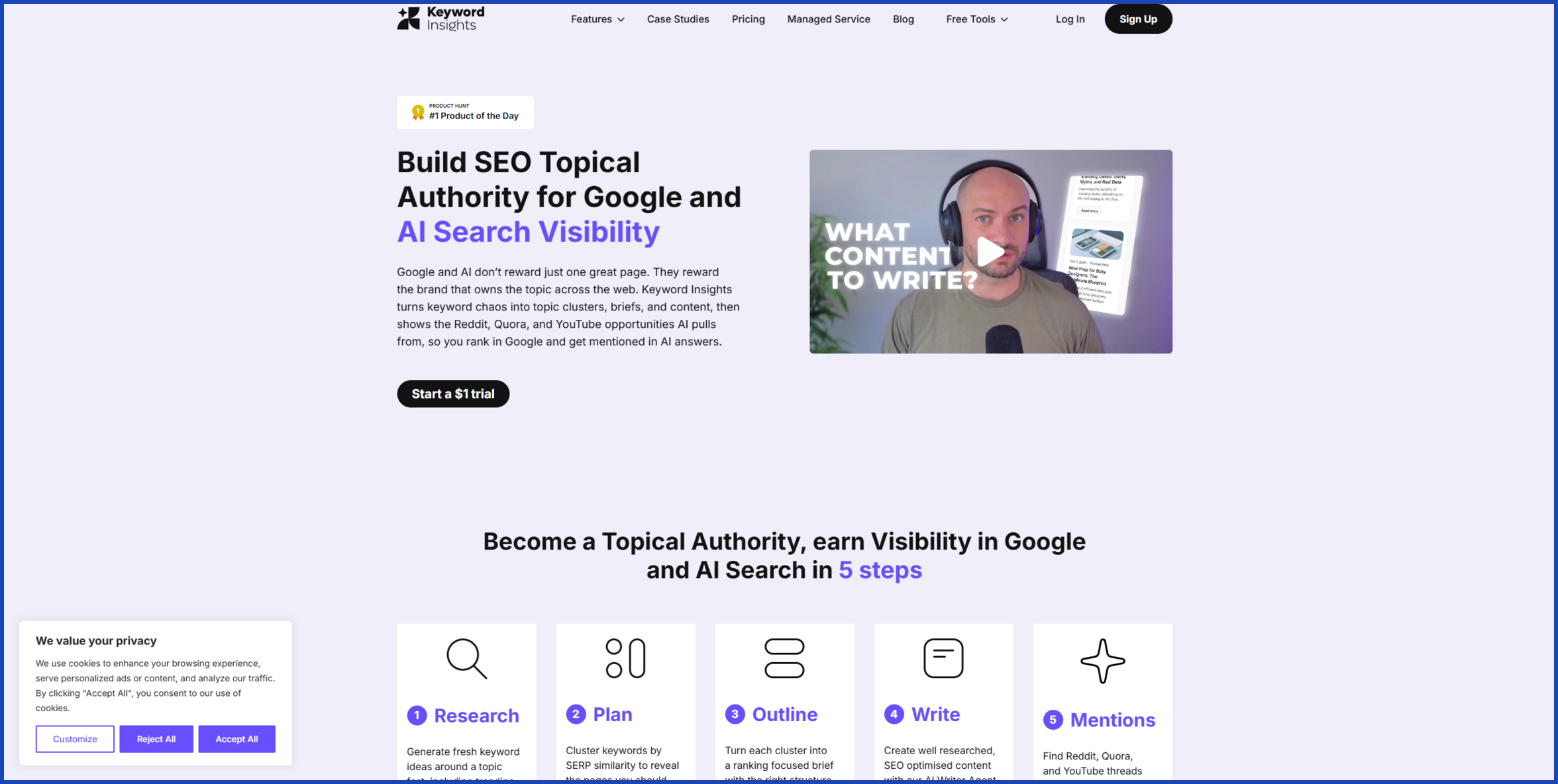
Keyword Insights has earned a reputation as one of the most analytical and data-heavy tools in the industry. It is designed for users who want to dive deep into search intent and understand the “why” behind every keyword group.
The tool does not just group words. It tells you whether a specific cluster requires an informational blog post, a product page, or a category landing page. It is a fantastic choice if you manage massive content websites.
- Key Features: Deep search intent classification, topic cluster visualizations, automated content briefs, and AI-driven keyword discovery.
- Free or Paid: Paid. Plans start around $58 per month, and they also offer a pay-as-you-go credit system for one-off projects.
- Best For: Large SEO agencies and data lovers who need detailed reporting.
3. KeyClusters
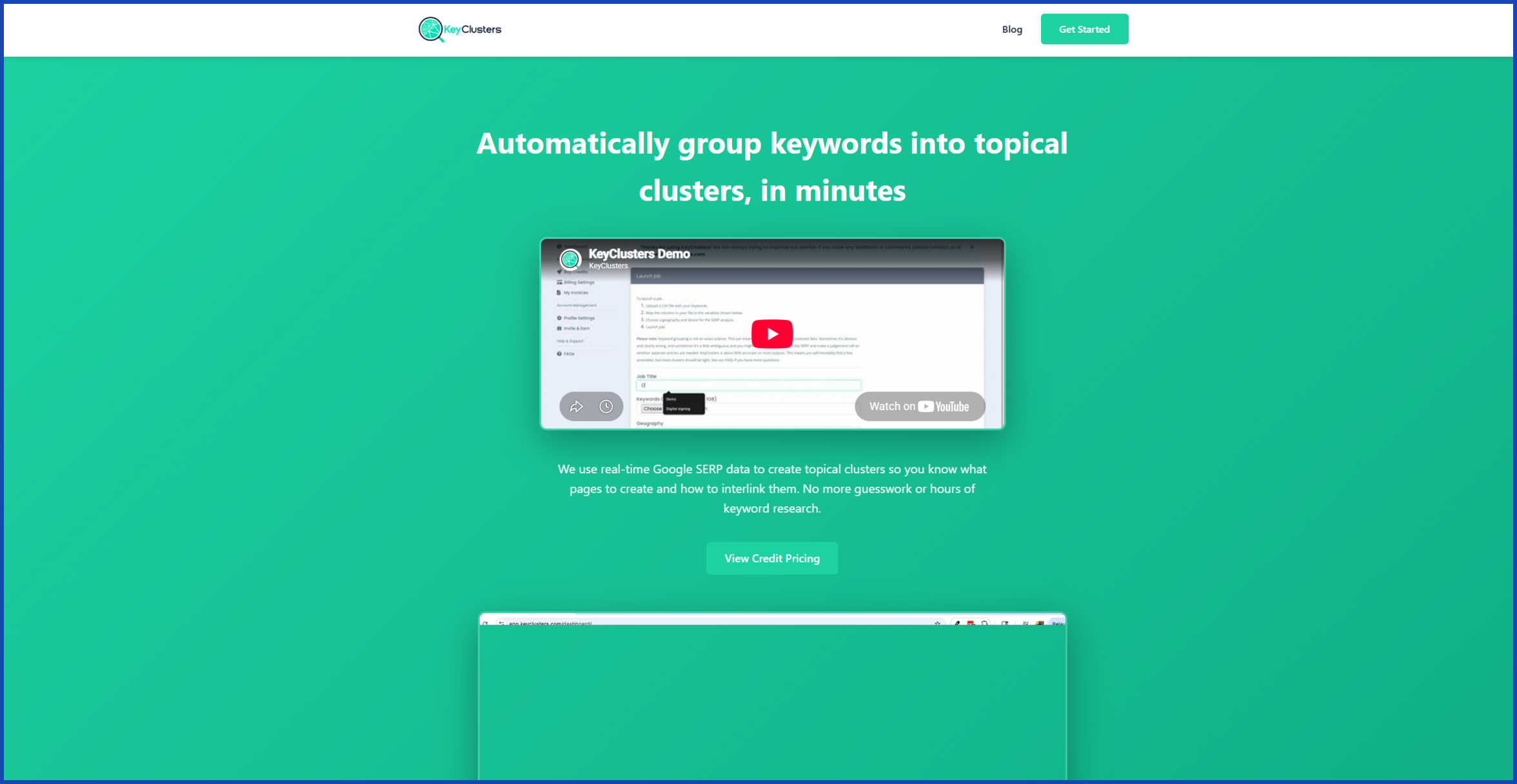
If you already use traditional SEO suites like Ahrefs or Semrush and just need a simple tool to clean up your messy data exports, KeyClusters is a reliable workhorse. It is designed to be straightforward to use.
You simply upload your raw CSV spreadsheet of keywords, set your desired accuracy threshold, and let the software do the heavy lifting. In just a few minutes, you get a clean, organized spreadsheet back.
- Key Features: Direct CSV import from major SEO tools, SERP overlap checking, clean Excel or Google Sheet exports, and customizable similarity settings.
- Free or Paid: Paid. It uses a pay-as-you-go credit model starting at around $27 for smaller keyword batches.
- Best For: Spreadsheet fans who want to automate the tedious sorting process without learning a complicated new dashboard.
4. Surfer SEO (Content Planner)
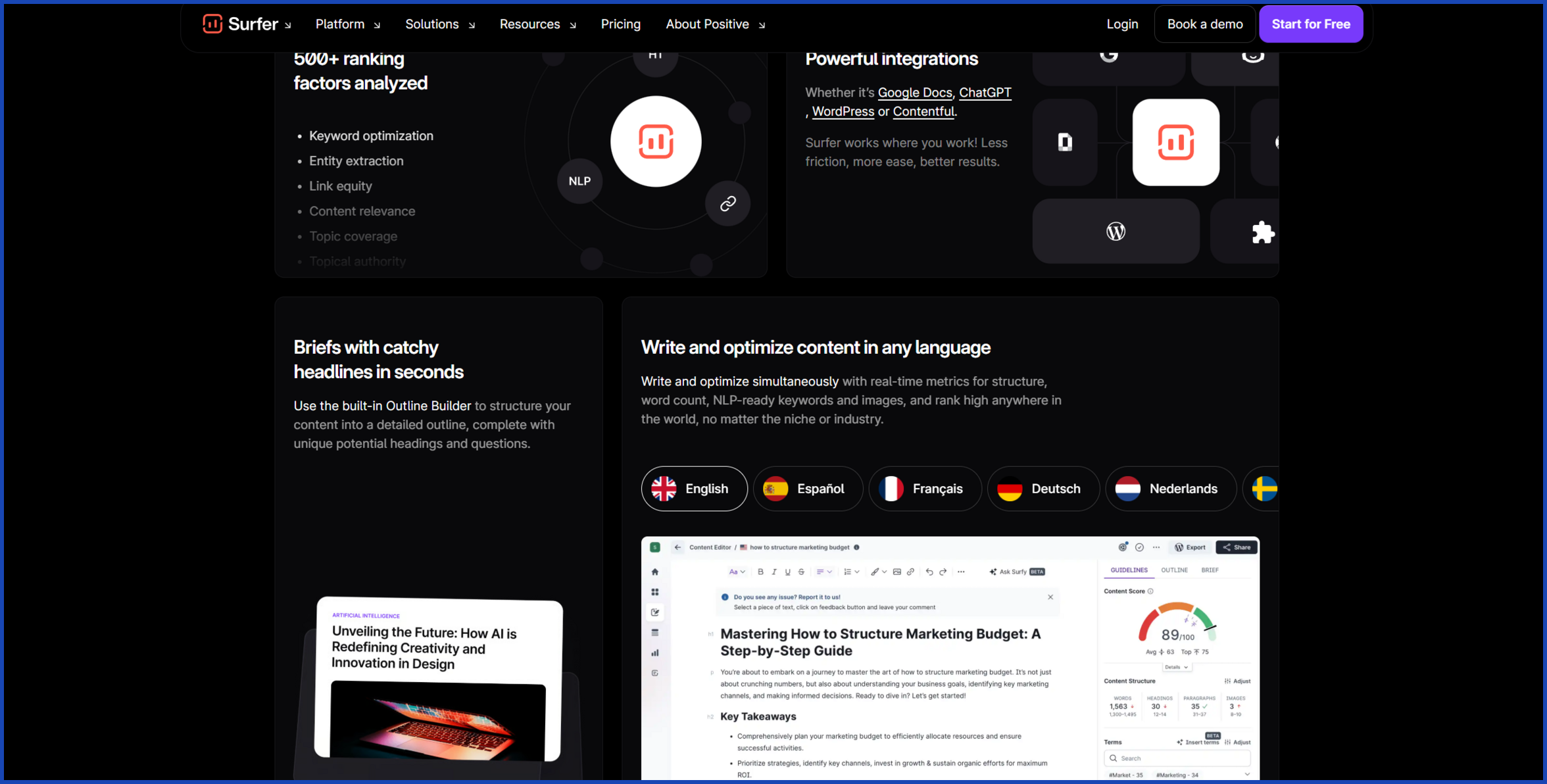
Surfer SEO is widely known for its on-page writing editor, but its built-in Content Planner is a powerhouse for keyword clustering. It takes a broad topic and maps out months of content ideas using clean visual hubs.
It helps you see the big picture of your website’s structure. Once your keywords are clustered, you can send them directly to the content editor to start writing immediately.
- Key Features: Visual topic clusters, search intent tagging, keyword difficulty scores, and seamless integration with the Surfer writing editor.
- Free or Paid: Paid. Plans start at over $100 per month, making it one of the pricier options on our list.
- Best For: Established marketing teams with bigger budgets who want an integrated research-to-writing pipeline.
5. RyRob Free Keyword Cluster Tool
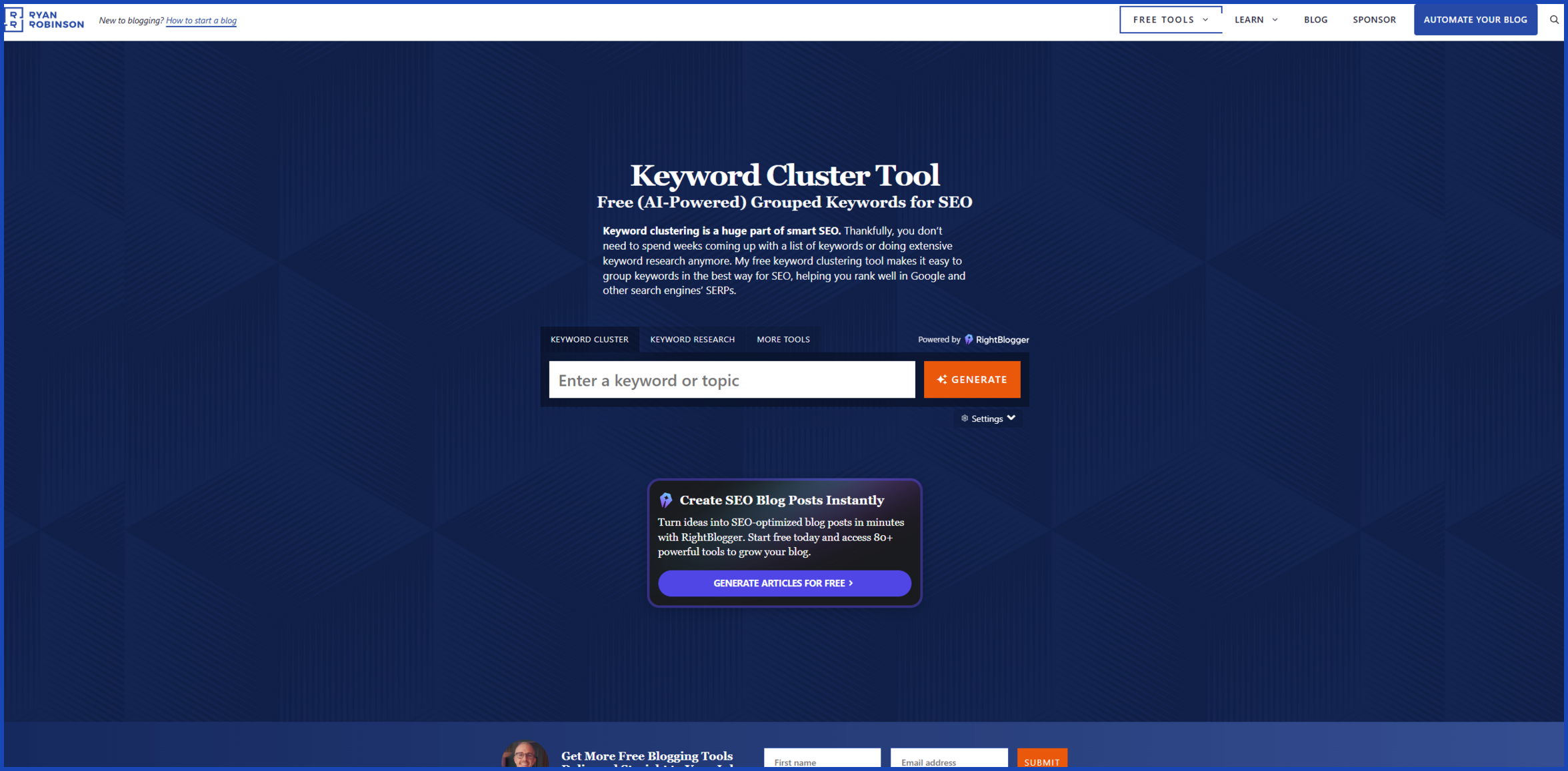
If your marketing budget is zero dollars and zero cents, you do not have to be left out in the cold! The free keyword clustering tool from Ryan Robinson uses semantic AI to group search terms by their dictionary meaning.
While it does not check live Google search results like paid tools do, it is a fantastic starting point. It can help you brainstorm blog categories and organize your basic ideas without spending a dime.
- Key Features: Semantic AI grouping, instant blog title ideas, simple copy-and-paste interface, and zero registration required.
- Free or Paid: 100% Free.
- Best For: Beginners, hobby bloggers, and anyone testing the waters of keyword grouping before investing in paid software.
How SirWritesALot Supercharges Your Workflow (And Beats Competitors)

The Real-Time Search Advantage
SirWritesALot beats older competitors by pulling live Google search data the exact second you run a search. When you input your keywords, the AI checks the current top 10 Google results for every single phrase.
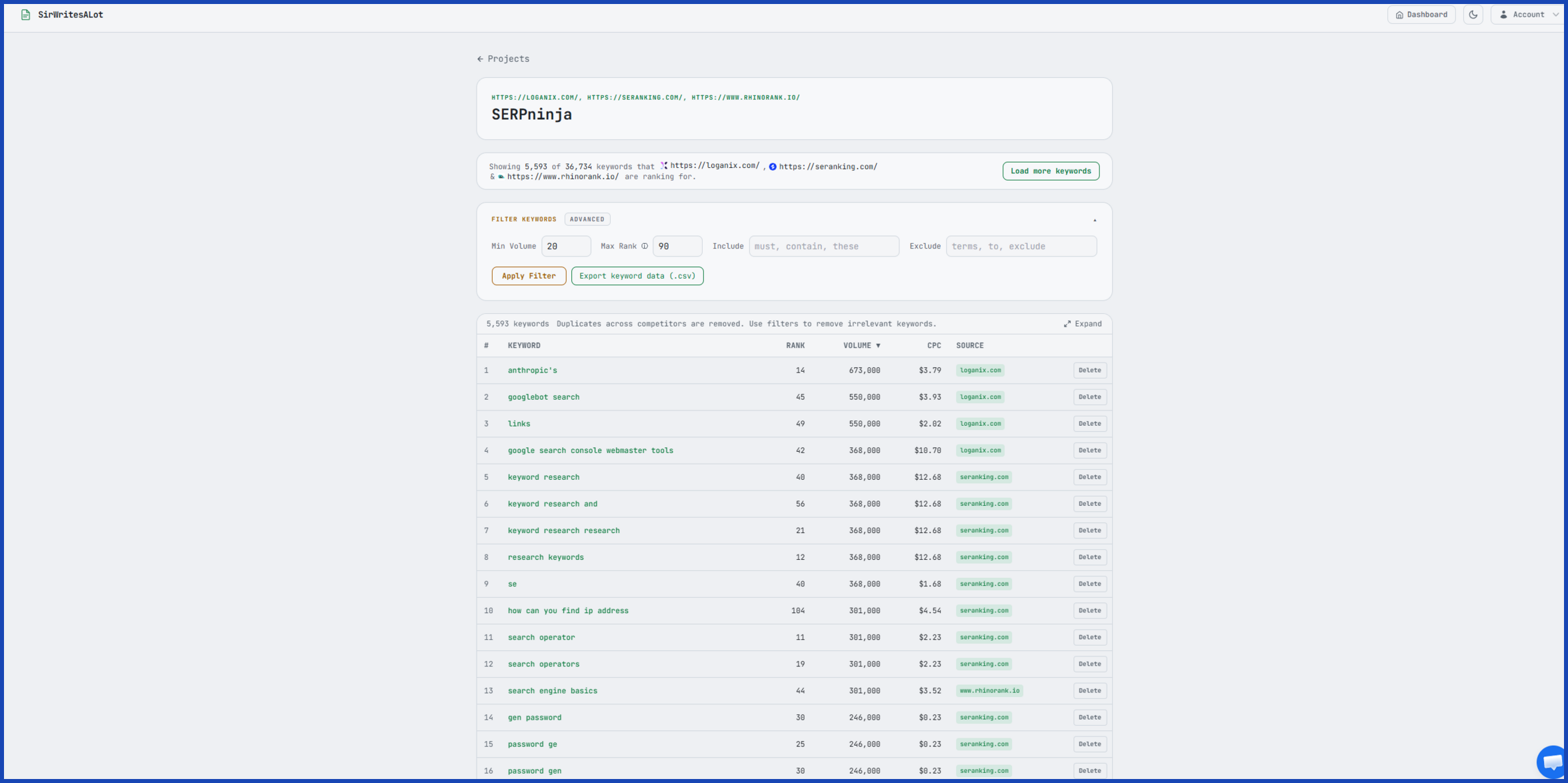
Google will rank the same sites for the search query “best running shoes for flat feet” and the search query “top arch support sneakers” because they have the same search intent. It bundles them together into one group, so you write one powerful article instead of two weak ones.
The Real-Time Search Advantage
SirWritesALot beats older competitors by pulling live Google search data the exact second you run a search. When you input your keywords, the AI checks the current top 10 Google results for every single phrase.
If Google ranks the same websites for “best running shoes for flat feet” and “top arch support sneakers,” the tool knows those phrases share the same intent. It bundles them together into one group, so you write one powerful article instead of two weak ones.
Advanced Features That Save Your Day
Beyond basic grouping, SirWritesALot includes several advanced features that make it feel like having a full-time SEO analyst on your team:
- Competitor Footprint Mapping: This lets you type in a competitor’s domain to extract all their ranking keywords and automatically group them into topic clusters for your own site.
- One-Click Editorial Calendar: This feature converts your finished clusters into a scheduled publishing plan instantly, assigning target word counts and primary terms automatically.
- Keyword Cannibalization Checker: The built-in scanner checks your website to ensure you never publish two articles that compete against each other for the same search terms.
- Smart Internal Linking Module: Once your clusters are built, the software suggests exactly which articles should link to one another to pass SEO authority across your website.
Budget-Friendly Keyword Clustering Tips for Small Businesses
If you are running a small business or a boutique agency, every dollar matters. You might look at software subscriptions and wonder if keyword clustering is a luxury you can afford.
The truth is, you cannot afford not to do it! Without clustering, you will waste money writing content that never ranks. Here is how small businesses on tight budgets can win:
1. Target High-Intent Words First
When budget is tight, do not try to cluster 10,000 random words at once. Focus on your bottom-line revenue.
Gather keywords that directly relate to your core services or products—words with buying intent like “services near me,” “pricing,” or “best provider.” Cluster these terms first so that every article you publish brings in paying customers immediately.
2. Work in Quarterly Batches
You do not need to pay for an expensive software tool every single month if you only publish four articles a month. Be strategic with your subscriptions!
Sign up for a tool, spend two days grouping keywords for the next three months, export your content calendar, and pause your subscription until next quarter. This gives you a professional content strategy for a fraction of the annual cost.
3. Avoid Credit Paywalls
Many SEO platforms charge you a credit for every single keyword you check. If you run a list of 2,000 keywords three times to test different settings, you can burn through your budget in an afternoon.
Look for tools with flat monthly rates like SirWritesALot so you can experiment and re-run your lists without watching a meter tick up.
4. Leverage Free Trials
Never buy a software subscription without taking it for a test drive first. Almost every top tool offers a free trial or a limited starter tier.
Use a 7-day free trial to run a sample list of 500 keywords for your industry. Seeing your own messy keyword lists magically transformed into clean topic clusters will show you exactly how much time you can save.
Conclusion
Spreadsheets and guesswork of keyword groups are a thing of the past! To rank in modern search engines, you must structure your content around a real user’s intent and a topic cluster. By leveraging the most effective keyword clustering tool 2026, you can save hours of effort and boost your website’s visibility for hundreds of lucrative keywords.
Whether you choose the real-time precision of SirWritesALot, the deep analytics of Keyword Insights, or a free starting tool, automating your clustering workflow is the smartest upgrade you can make for your content strategy this year.
Clustering your keywords and creating quality content is just one element in the SEO equation, of course. For these new content hubs to appear high in Google rankings, they require website authority and trusted backlinks.
Whether you’re looking to scale your organic traffic, build strong backlinks to boost your topic clusters, or are seeking niche domination experts, contact the team at SERPninja. We take the hard work of SEO so that you can concentrate on building your business!
FAQs
What is keyword clustering in simple terms?
The grouping of similar keywords into clusters depending on what the user actually looks for is called keyword clustering. Rather than developing ten different web pages that address ten slightly different searches, you cluster together ten or so similar searches and write one amazing, comprehensive article that covers all of them.
Why is manual keyword grouping in Excel no longer recommended?
Manual grouping will require a lot of tedious time and a lot of human guesswork. More important, humans will categorize words by their sound rather than how Google categorizes them. When making groups, automated tools analyze live Google search results in just a few seconds, so your groups will be in line with the search engine algorithms.
What is the difference between semantic clustering and SERP-based clustering?
Semantic clustering is an artificial intelligence technique that clusters words with similar dictionary meanings. The actual SERP-based clustering (Search Engine Results Page clustering) searches the current Google search results to determine if any identical websites are ranking for that word. For SEO, SERP clustering is far more precise, as it brings you the true result of Google’s desire.
Can keyword clustering really fix keyword cannibalization?
Yes! When you have multiple pages targeting the same keyword, Google gets confused, and it’s called keyword cannibalization. Using keywords grouped in advance is a method to assign a certain set of keywords to a single particular page. This ensures that your pages do not step on each others’ toes.
How often should I run a keyword clustering tool for my website?
A quarterly (three-monthly) run of a keyword clustering tool is the optimal amount for most small businesses and blogs. That provides you with sufficient topics to make a solid 90-day content publishing schedule without overwhelming your crew or using software budgets.


