

Key Takeaways
- AI Overviews cut clicks to top search results by roughly 58%. Thin, generic posts are the easiest content for AI to summarize and replace.
- Cornerstone content, deep pages built around your most important topics, is what survives when AI can already answer the easy questions.
- Word count doesn’t win rankings or clicks. Original data, real expertise, and useful tools do.
- Most successful sites run on just 5 to 10 cornerstone pages, not hundreds of thin blog posts.
- Build cornerstone pages efficiently with a tool like SirWritesALot.co, then spend what you saved on link building so those pages can’t be outranked.
Here’s an uncomfortable truth: if you’re still paying a freelancer forty dollars for a 500-word post titled “5 Benefits of X,” you’re not really doing SEO anymore. You’re doing free research for Google’s AI.
That kind of post answers one simple question. Google’s AI Overview reads it, summarizes it in two sentences, and the reader never clicks through. Your “content marketing” just became training data.
This isn’t a scare tactic. It’s already happening, and the numbers back it up. The fix isn’t “write more.” It’s cornerstone content: fewer pages, built far deeper, made to survive an AI that already handles the easy stuff.
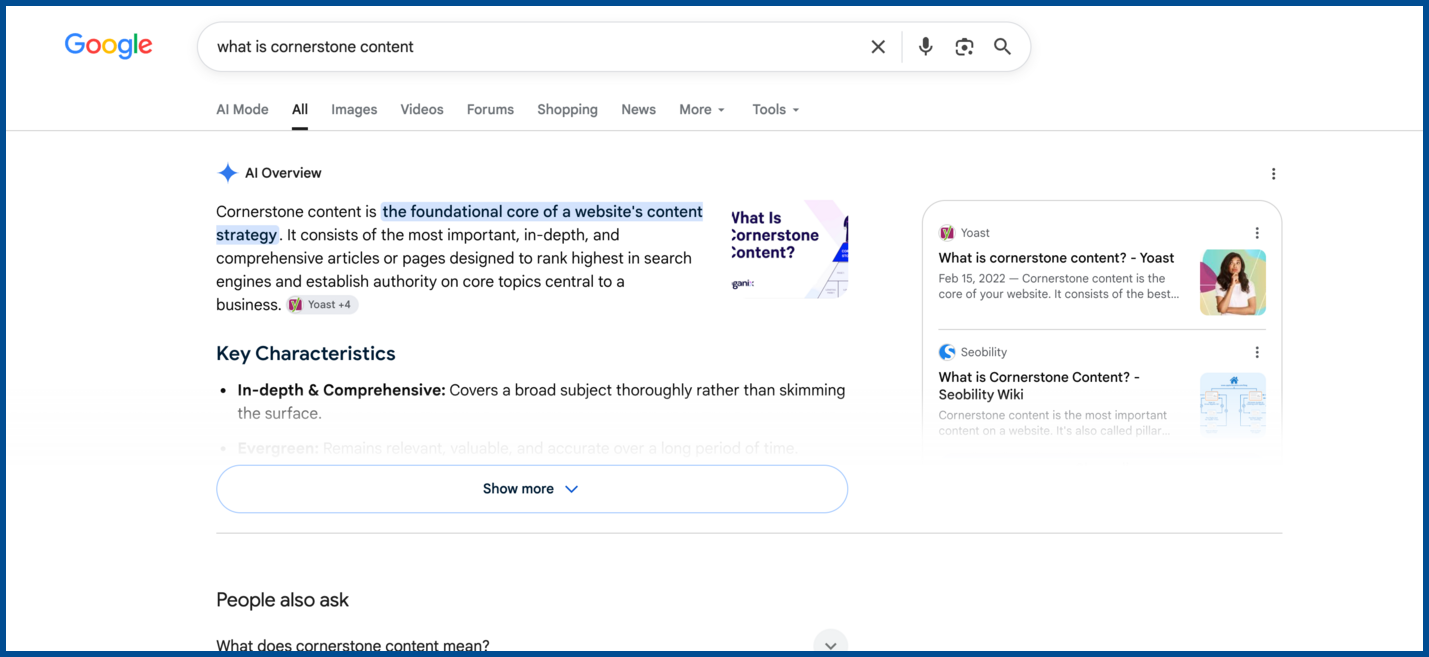
What Is Cornerstone Content, and Why Is It the Last Strategy Standing?
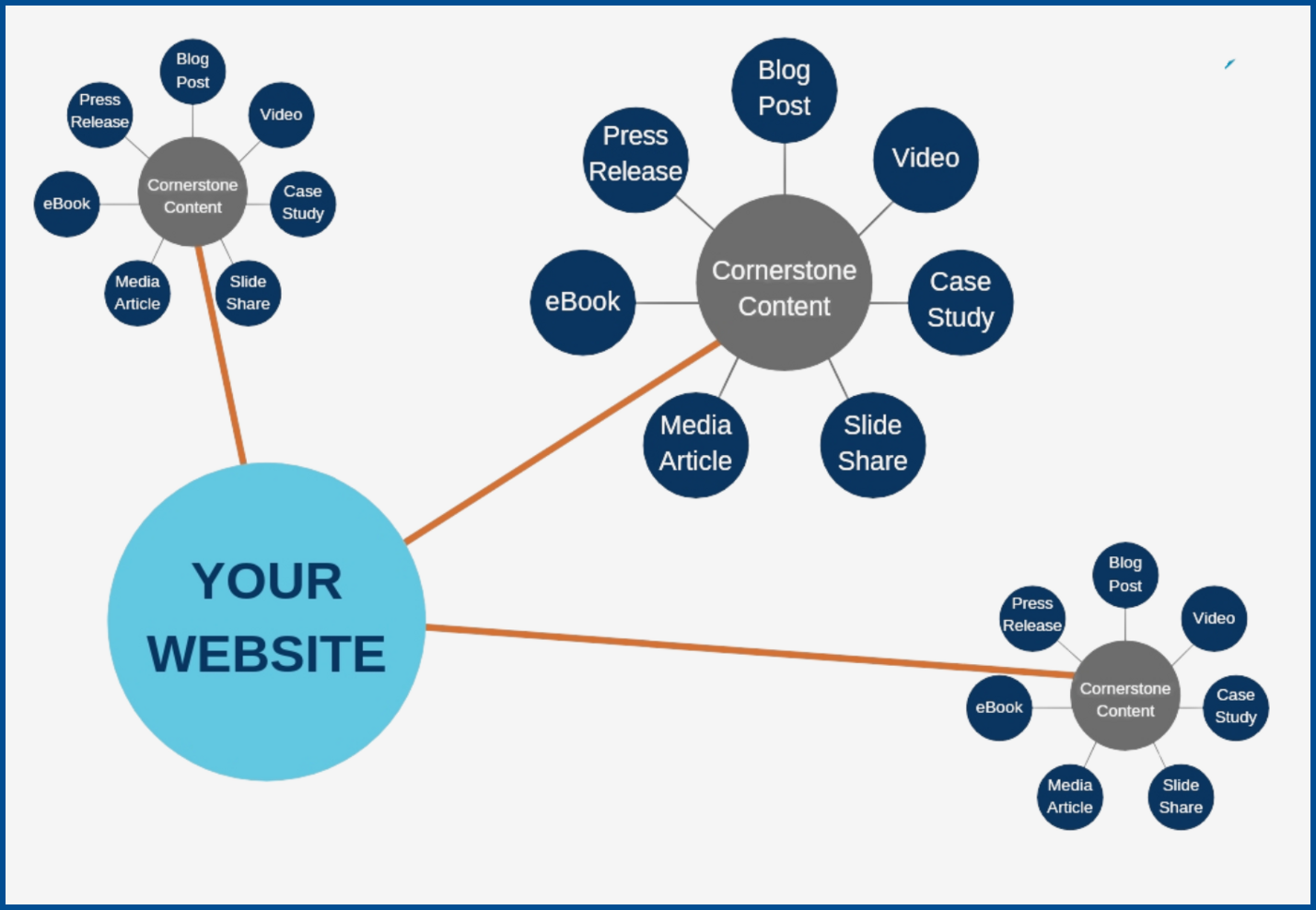
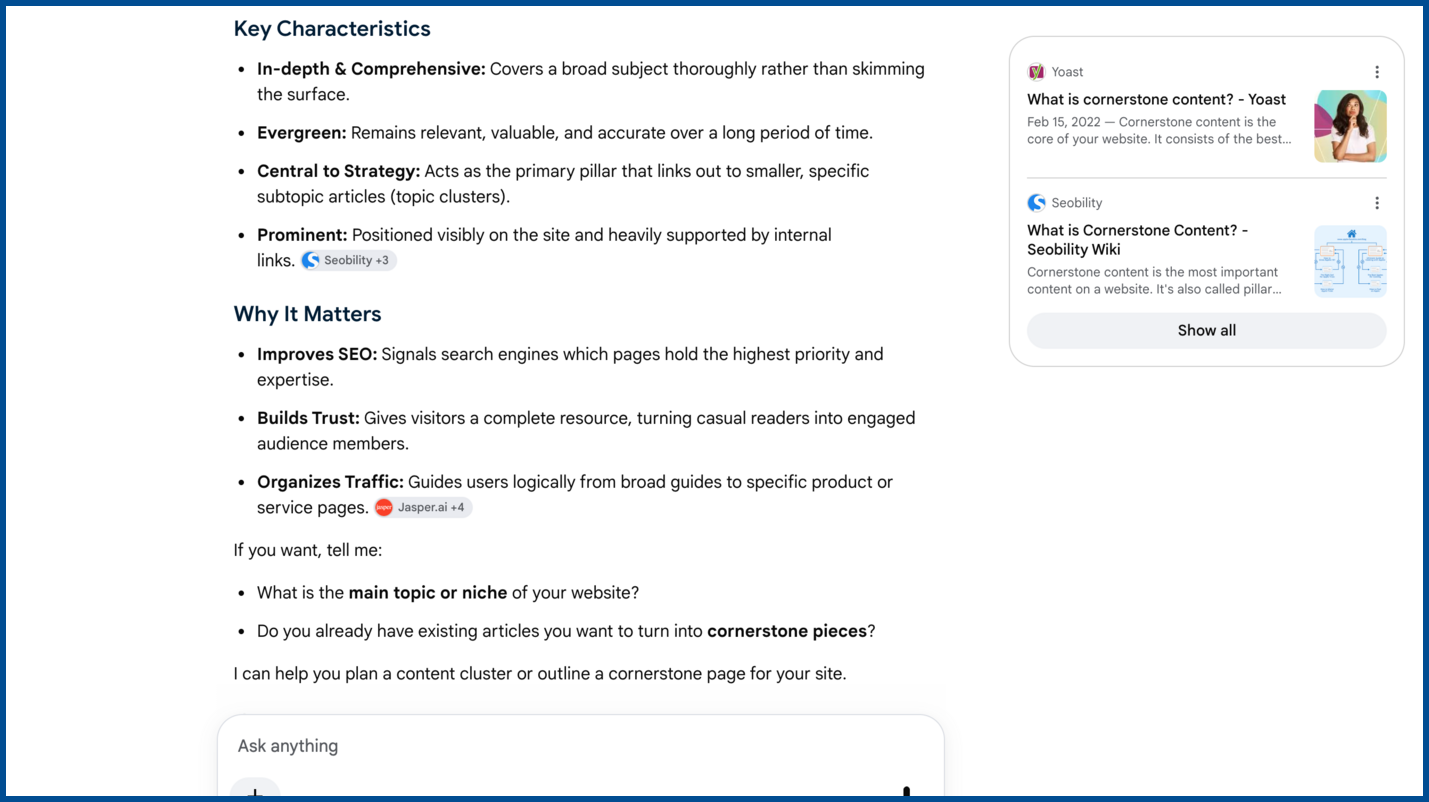
Cornerstone content is the small handful of pages on your site built to be the definitive resource on a topic, not just a quick answer to one search. Typically 2,000 to 10,000 words, packed with original insight, and linked to from every related post you publish.
The term was popularized by Yoast, the SEO plugin running on over 13 million websites. The idea: not every page deserves equal attention, so pick your 5 to 10 most important topics and build the single best page on the internet for each one.
That was smart advice in 2015. In 2026, it’s closer to mandatory.
Here’s why. A short post answering “what is X” in 500 words is exactly what an AI Overview was built to replace. There’s nothing in it Google’s summary can’t already say.The same goes for drafts produced with AI writers: a round of AI checking before publishing shows which sections still read as generic, machine-made filler that needs real expertise added. A cornerstone page holds original data, tools, and depth that simply doesn’t fit inside a three-sentence summary. Readers still have to come to you for that.
Thin content answers a question. Cornerstone content solves a problem. Only one of those still needs a human visitor.
The Real Numbers Behind the AI Overview Problem
This isn’t a hunch; it’s measurable, and it’s getting worse every quarter.
- Ahrefs found that when an AI Overview appears, the top result’s click-through rate, or CTR (the share of people who click after seeing a link), drops by about 58%. That’s up from a 34.5% drop just eight months earlier.
- Pew Research tracked real browsing behavior and found people click a normal result 8% of the time when an AI Overview shows up, versus 15% when it doesn’t. Roughly 1 in 4 of those searches end the moment the user reads the summary.
- SparkToro reports that 68% of US Google searches now end without a single click, to anywhere.
Here’s the part most articles skip: getting cited inside the AI Overview still beats being ignored. Seer Interactive tracked over 5 million queries and found pages the AI Overview actually names earn roughly 2.1% CTR, versus just 0.9% for pages that rank but go unmentioned.
Disappearing from AI answers entirely is the worst outcome. Being the source AI can’t help but point to is the goal. A thin, generic post gives it nothing to point to, since it already said everything the post had to say.
Sites with genuinely deep resources are the ones still pulling traffic. HubSpot’s long-form guides and Moz’s Beginner’s Guide to SEO, which gets a full update every year, both follow the same pattern: one authoritative page instead of fifty shallow ones.
What Actually Makes a Page Too Valuable to Just Summarize
Here’s where most people get cornerstone content wrong. They assume the goal is hitting a big word count. It isn’t.
One study of over 170,000 pages found almost no relationship between word count and whether AI cites a page. Padding a post to 3,000 words with filler doesn’t help. What actually moves the needle:
- Original data. Pages built around proprietary research get cited roughly 3 to 10 times more often than standard posts, because that information doesn’t exist anywhere else.
- Real tools. Calculators, templates, and interactive comparisons can’t be compressed into a text summary. People have to visit to use them.
- Genuine expertise. Specific examples and firsthand experience read differently than generic advice, to readers and AI alike.
- Clean structure. Clear headers with a direct answer underneath each one make a page easier to cite and to skim, which keeps human readers around longer.
- Fresh updates. Pages kept current earn meaningfully more citations than ones left untouched for years.
Comprehensive pages also naturally attract more backlinks. Backlinko’s own analysis found long-form pieces earn dramatically more links than short posts. Which brings up the real problem most sites have.
The New ROI Math: Stop Paying for Words, Start Paying for Depth
Run this math on your own budget for a second.
Ten freelance posts a month at fifty dollars each is $500 monthly, $6,000 a year, for dozens of posts that mostly rank nowhere and get summarized out of existence. The budget was never the problem. Where it went was.
Flip it. Put that same money into two or three cornerstone pages a year, each deep enough to actually own its topic. You need less writing volume, but every piece needs real research and structure behind it, which used to mean a painfully large check to a specialist.
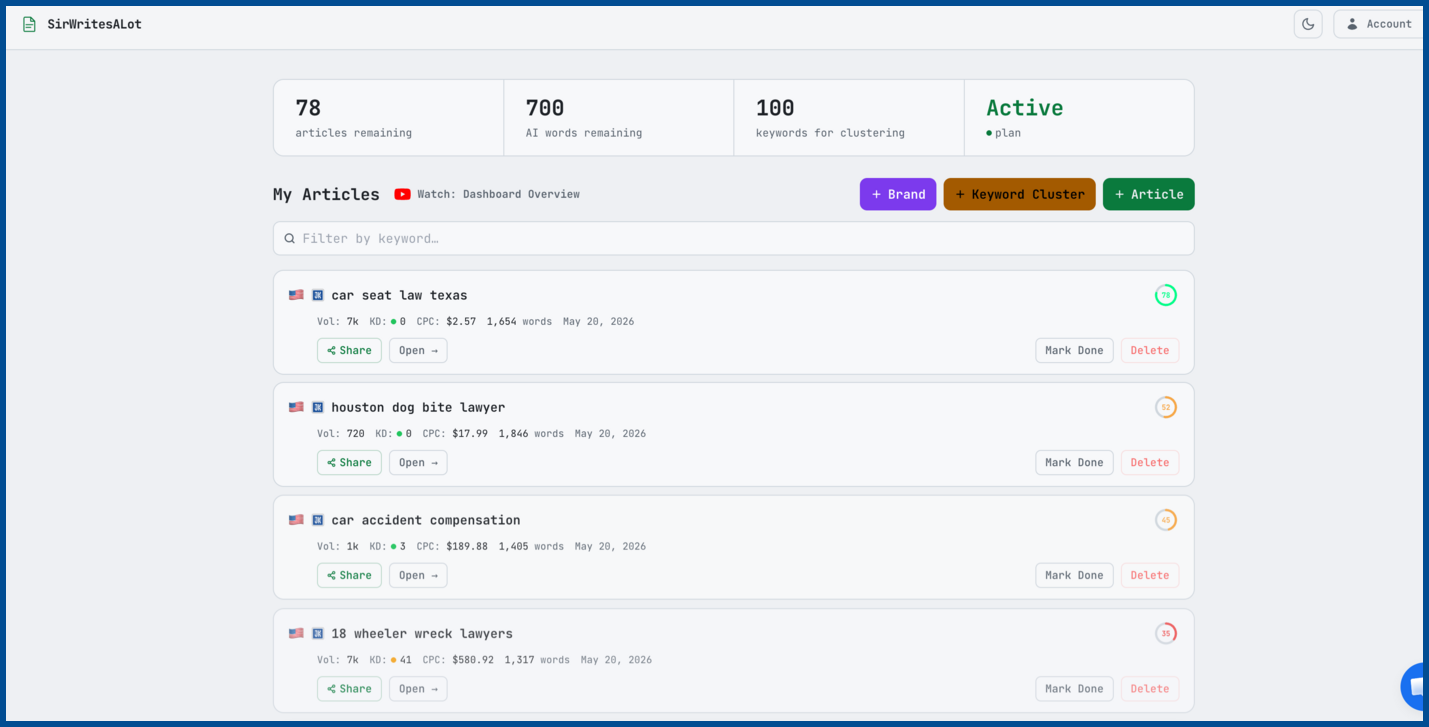
That math has genuinely changed. A tool like SirWritesALot is built for this shift. It studies your top-ranking competitors, pulls the specific terms and questions your page needs to cover, and helps you produce a data-backed cornerstone draft for a fraction of the time and cost of a traditional freelancer. You still guide it, fact-check it, and add your own expertise, but the heavy lifting gets far cheaper.
That’s step one. Step two is the part people usually skip.
A brilliant cornerstone page nobody links to is just a well-written page nobody finds. Once you’ve built something worth citing, the internet needs to actually cite it, and that means backlinks: other sites vouching for your page as the resource on its topic.
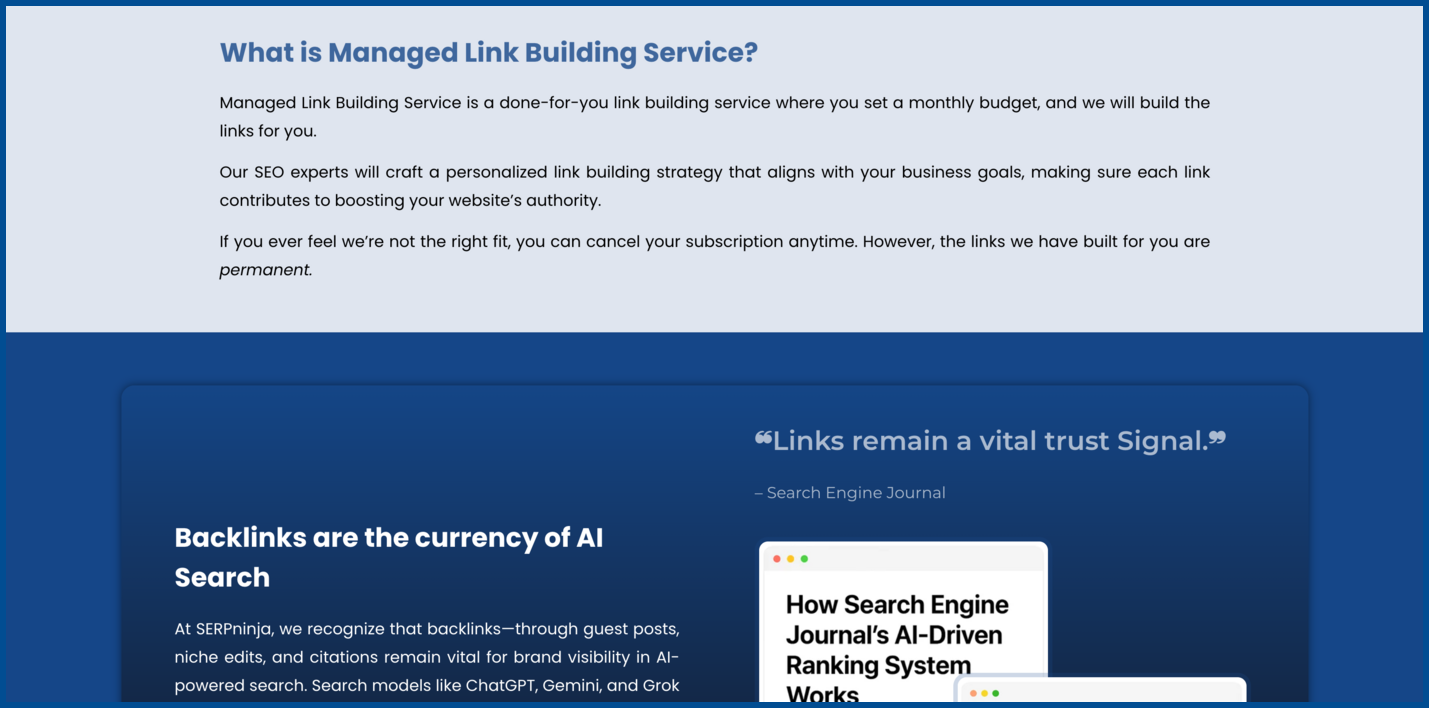
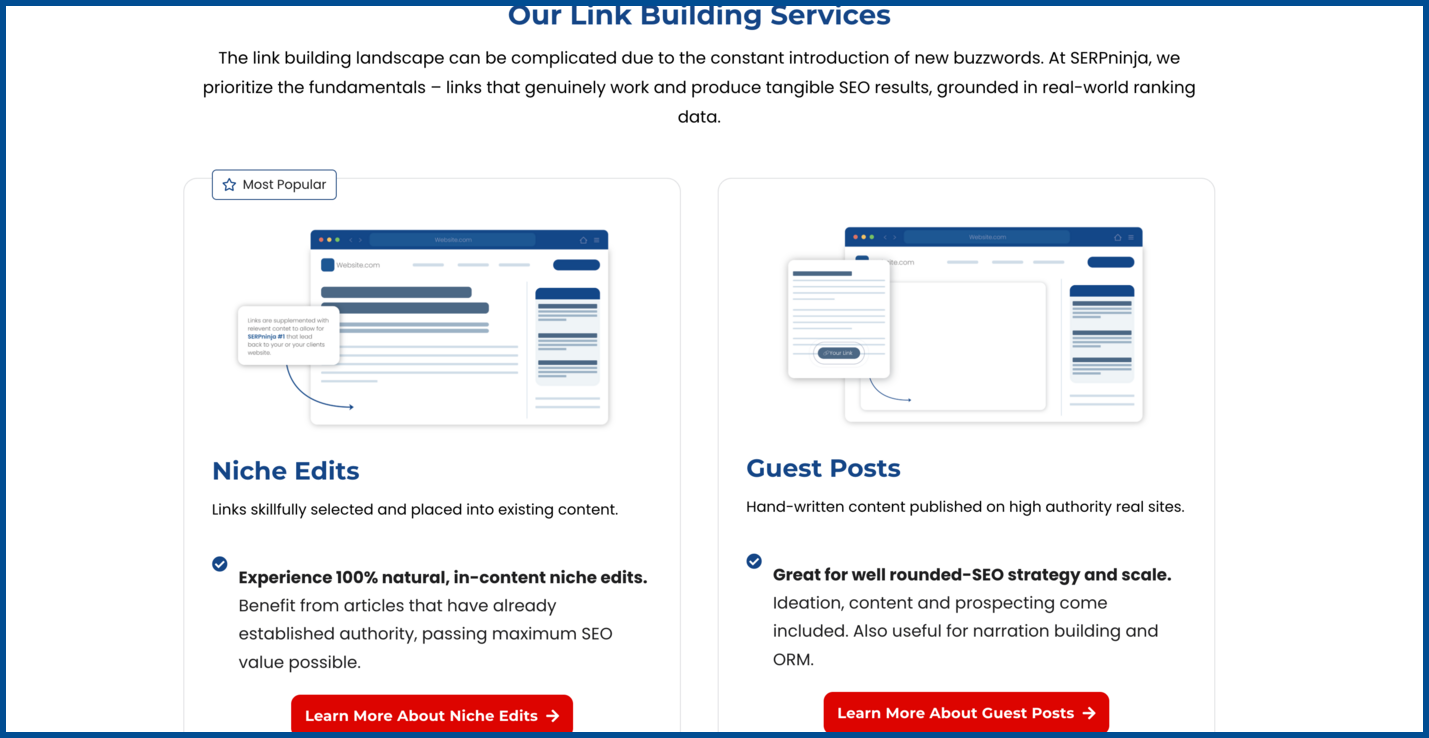
That’s exactly where the money you saved on content should go. Instead of spreading a thin budget across fifty forgettable posts, put real weight behind a handful of pages through a focused push, like the managed link building campaigns SERPninja runs. Guest posts, niche edits, and targeted outreach compound a page’s authority, helping it rank in traditional search while giving AI systems exactly the trust signal they look for when deciding what to cite.
Fewer pages. More depth. More link equity pointed at less real estate. That’s the new formula.
Conclusion
The old playbook, publish constantly, keep it short, chase every long-tail keyword, was built for a search engine that needed your content to answer questions. That engine is largely gone. Google answers most easy questions itself now.
What’s left is the hard stuff: pages too deep, original, and useful to sum up in three sentences. That’s cornerstone content, and it’s stopped being a nice-to-have. Right now, it’s close to the only kind of content still worth publishing.
Build fewer pages. Make each one genuinely the best answer on the internet for its topic. Then back it with real authority so it can’t be ignored, by readers or by Google. Pairing deep content with a real link-building strategy from a team like SERPninja is what separates sites still growing through this shift from the ones quietly watching their traffic disappear.
FAQs
What exactly counts as cornerstone content?
A comprehensive page built to be the single best resource on one of your core topics, usually 2,000+ words, that your other related posts link back to.
How is cornerstone content different from a regular blog post?
A blog post usually chases one narrow search term. Cornerstone content covers an entire topic in depth and works as the hub that related posts point back to.
Do I need to hit a specific word count for it to work?
No. Depth matters more than length. A page padded to 3,000 words with filler won’t beat a tighter page packed with original data and real examples.
Will AI Overviews eventually summarize cornerstone content too?
AI can summarize a fact easily. It’s far harder to compress a proprietary data set or genuine hands-on expertise into three sentences, which is exactly why depth still earns clicks.
How many cornerstone pages does a site actually need?
Most strategists point to somewhere between 5 and 10 well-built pages, each anchoring a core topic, rather than dozens of thin ones.
Do I still need regular blog posts at all?
Some, yes, but as support for your cornerstone pages rather than the main strategy. Smaller posts that link back to the hub work. A flood of standalone posts competing with each other doesn’t.


